
Hernando Cortez Biography Quotes 3 Report mistakes
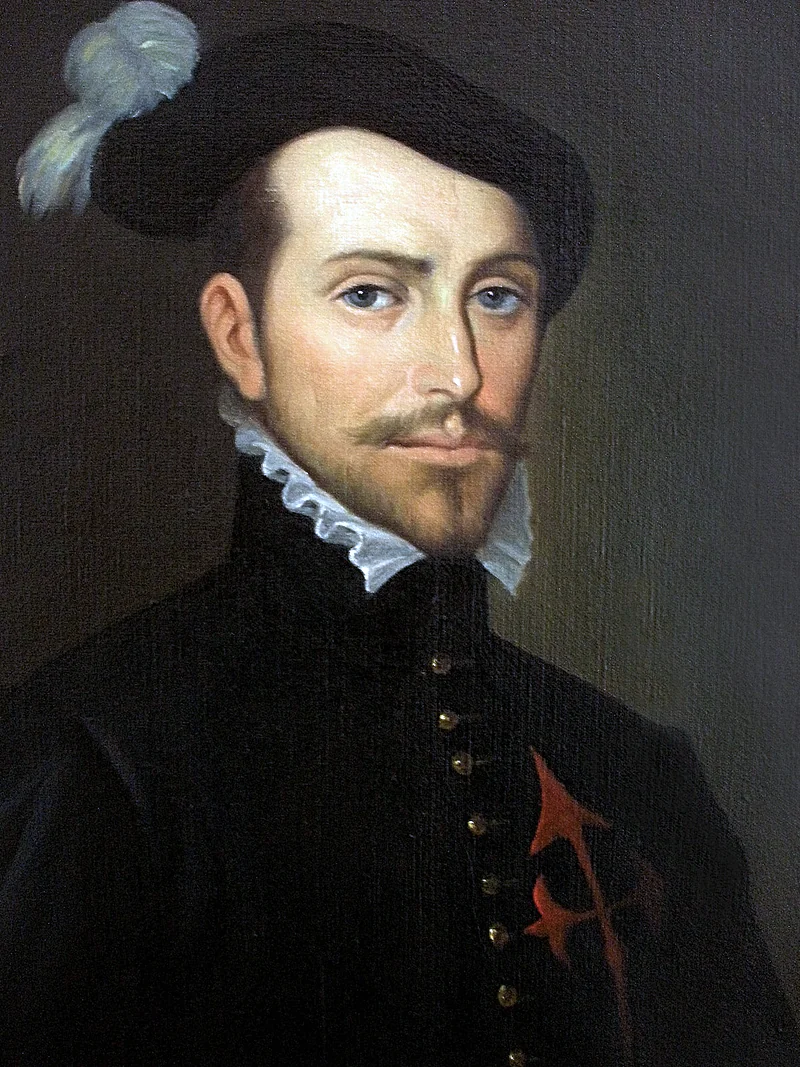
| 3 Quotes | |
| Known as | Hernan Cortes |
| Occup. | Explorer |
| From | Spain |
| Spouse | Doña Juana de Zúñiga |
| Born | 1485 AC Medellin, Extremadura, Spain |
| Died | 1547 AC Castilleja de la Cuesta, Spain |
| Cause | Natural Causes |
| Cite | |
Citation Formats
APA Style (7th ed.)
Hernando cortez biography, facts and quotes. (2026, February 11). FixQuotes. https://fixquotes.com/authors/hernando-cortez/
Chicago Style
"Hernando Cortez biography, facts and quotes." FixQuotes. February 11, 2026. https://fixquotes.com/authors/hernando-cortez/.
MLA Style (9th ed.)
"Hernando Cortez biography, facts and quotes." FixQuotes, 11 Feb. 2026, https://fixquotes.com/authors/hernando-cortez/. Accessed 12 Feb. 2026.
Early Life and Background
Hernan Cortes was born around 1485 in Medellin, Extremadura, a frontierlike region of Castile that bred ambitious hidalgos for whom land was scarce and honor was a daily contest. His father, Martin Cortes de Monroy, and his mother, Catalina Pizarro Altamirano, belonged to the minor nobility - respectable in lineage, thin in income - and the young Cortes absorbed early the era's hard arithmetic: prestige required patrons, and patrons required victories. Spain at the close of the Reconquista and the opening of the Atlantic world offered a new theater where violence, legalism, and faith could be fused into social ascent.Restless by temperament and prone to risk, he grew up during the first decades after Columbus, when Seville's docks and royal decrees turned rumor into routes and ships into ladders. The same society that taught him obedience to crown and church also rewarded the bold who could deliver revenue and souls. That tension - dutiful subject versus self-made conqueror - would define his inner life: pious language, legal petitions, and private calculation moving together like gears.
Education and Formative Influences
Cortes was sent to the University of Salamanca around 1499, nominally to study law, and though he did not complete a degree, the exposure mattered: he learned the grammar of petitions, property, and jurisdiction that later allowed him to wrap conquest in paperwork. Roman law concepts of sovereignty and vassalage, the crown's evolving imperial bureaucracy, and a culture of notaries and written proofs equipped him to argue that force could be made legitimate if translated into instruments, testimonies, and royal service - a skill as decisive as any sword.Career, Major Works, and Turning Points
In 1504 he sailed to Hispaniola, then to Cuba, where Diego Velazquez granted him encomiendas and office, and where Cortes learned the colonial economy of labor extraction and alliances. In 1519, appointed to lead an expedition to Mexico, he broke with Velazquez, founded Veracruz to claim direct authority from the crown, and destroyed his ships to bind his men to the venture. Marching inland, he relied on interpreters and intermediaries - notably Malintzin (Dona Marina) - and forged indigenous alliances, above all with Tlaxcala, against Mexica power. He entered Tenochtitlan in November 1519 and took Moctezuma II into custody; after Pedro de Alvarado's massacre and the uprising, Cortes fled in the Noche Triste (June 1520), rebuilt his coalition, and returned with brigantines and siege tactics to capture the city in August 1521. As governor and captain-general of New Spain he oversaw early colonial structures and sponsored expeditions, but faced lawsuits, royal suspicion, and a slow political sidelining; his most enduring written record is the series of letters to Charles V (Cartas de relacion), crafted both as reportage and as self-defense. He died near Seville in 1547, wealthy but litigated, famous but never fully secure.Philosophy, Style, and Themes
Cortes's inner logic fused movement with entitlement: a man who believed the world rewarded those who crossed boundaries first, yet who also feared the arrival point where rivals, auditors, and judges waited. His actions fit the psychology of perpetual advance, the mind that could admit, "I love to travel, but hate to arrive". In Mexico he repeatedly chose forward motion over consolidation - pushing inland from the coast, pressing a siege after catastrophe, launching new ventures even as legal challenges accumulated - because momentum itself became a form of safety, a way to outrun accountability.His style was tactical intimacy and strategic distance: he cultivated personal bonds with indigenous leaders, read local fractures, and turned diplomacy into weaponry, yet wrote to the king in a tone of loyal modesty that masked audacity. Gold, for Cortes, was both currency and proof - the material that validated conquest to soldiers, investors, and monarchs - and the craving could be confessed as cultural diagnosis: "We Spaniards know a sickness of the heart that only gold can cure". Alongside greed sat a hard asceticism of campaigning, the belief that speed and portability beat splendor: "He travels safest in the dark night who travels lightest". The phrase captures his method - small groups, improvisation, ruthless triage - and the ethical narrowing that came with it, where lives, cities, and rituals could be treated as obstacles to a lighter march.
Legacy and Influence
Cortes remains a founding figure of the Spanish conquest of the Americas, inseparable from the fall of the Mexica empire and the birth of colonial Mexico City atop Tenochtitlan's ruins. His legacy is double-edged: admired as an organizer who weaponized alliance networks, language mediation, and legal rhetoric; condemned for initiating a regime of dispossession, forced labor, and cultural destruction whose demographic catastrophe was compounded by disease and exploitation. The Cartas de relacion shaped European perceptions of Mesoamerica and offered a template for imperial self-justification, while his career became a case study in the early modern struggle between private ambition and royal control. In Mexican and Spanish memory he endures as symbol and argument - a man whose gifts of perception and persuasion magnified his violence, and whose need to keep moving helped remake a continent.Our collection contains 3 quotes written by Hernando, under the main topics: Wisdom - Wealth - Wanderlust.
Other people related to Hernando: Arthur Helps (Historian)
Hernando Cortez Famous Works
- 1519 Cartas de relación (Book)
Source / external links