
Herodotus Biography Quotes 40 Report mistakes
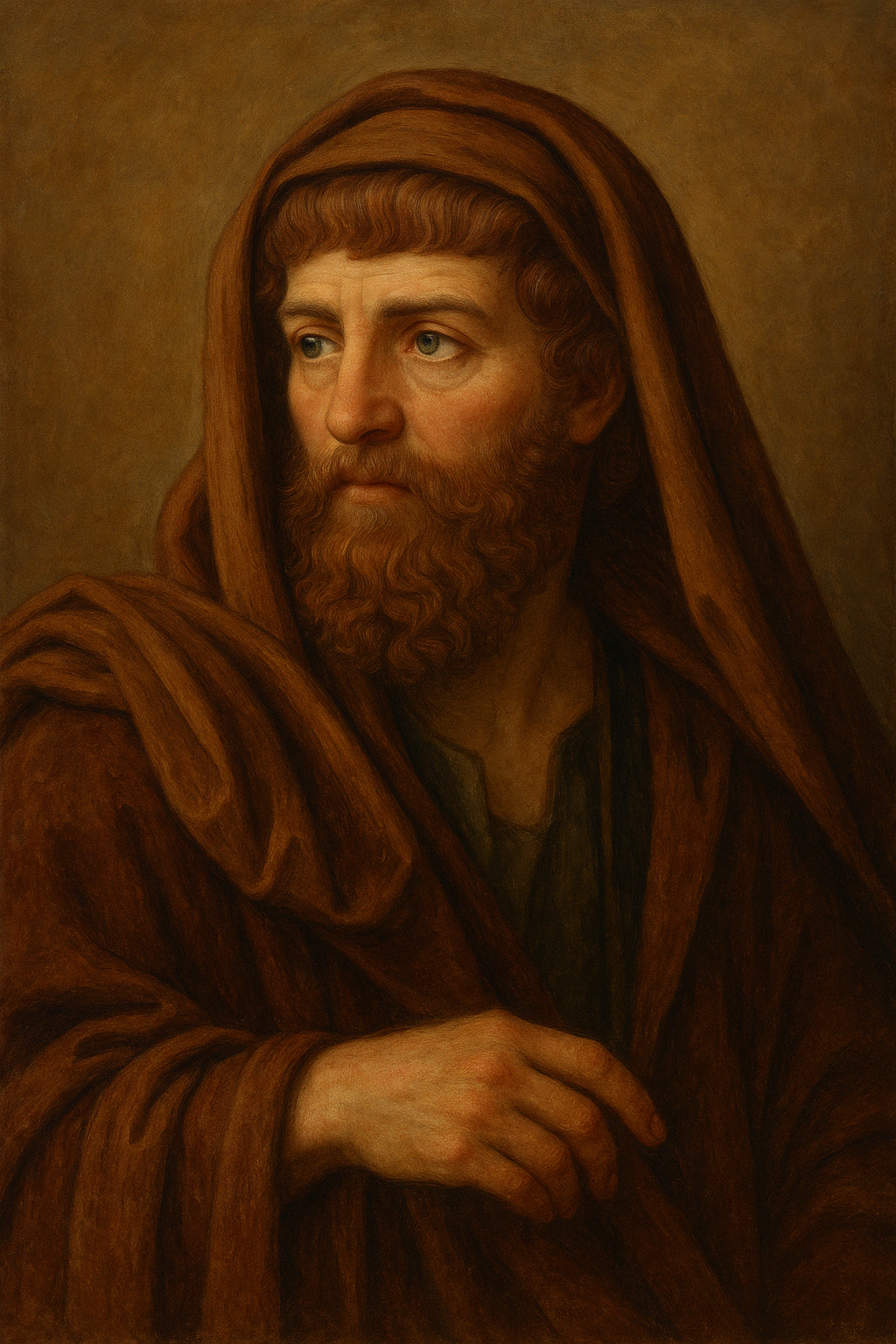
| 40 Quotes | |
| Known as | The Father of History |
| Occup. | Historian |
| From | Greece |
| Born | 484 BC Halicarnassus, Caria, Ancient Greece |
| Died | 425 BC Thurii, Magna Graecia, Ancient Greece |
| Cite | |
Citation Formats
APA Style (7th ed.)
Herodotus biography, facts and quotes. (2026, February 11). FixQuotes. https://fixquotes.com/authors/herodotus/
Chicago Style
"Herodotus biography, facts and quotes." FixQuotes. February 11, 2026. https://fixquotes.com/authors/herodotus/.
MLA Style (9th ed.)
"Herodotus biography, facts and quotes." FixQuotes, 11 Feb. 2026, https://fixquotes.com/authors/herodotus/. Accessed 6 Mar. 2026.
Early Life and Background
Herodotus was born around 484 BCE in Halicarnassus, a Greek city on the Carian coast of Asia Minor, where Greek civic traditions met Persian imperial power. His childhood unfolded in the long aftershock of the Ionian Revolt and on the eve of the great Persian invasions of mainland Greece. Halicarnassus itself was ruled by a dynastic tyrant, Artemisia I, famous for fighting for Xerxes at Salamis; that proximity to both Greek seafaring life and Persian administration helped form the double vision that later made him the great narrator of a world-system rather than a single polis.Ancient testimony places him among local elites and links him, sometimes uncertainly, to the poet Panyassis; whether literal kinship or cultural proximity, it suggests a household where stories, genealogies, and public memory mattered. He later associated tyranny at home with exile, a common crucible for Greek intellectuals, and the experience likely sharpened his sense that political order is fragile and that the fates of cities can pivot on personalities, rumor, and chance. By the time he began writing, the Greek world was already reinterpreting the Persian Wars as a moral drama; Herodotus would insist on something harder - explaining how men and states actually behaved.
Education and Formative Influences
Herodotus belonged to the Ionian tradition of inquiry (historia as investigation), drawing on logographers, temple records, local guides, veterans, and family lore, while also inheriting epic technique from Homer - catalogues, set speeches, and a taste for the telling detail. He traveled widely: to Egypt (up the Nile as far as Elephantine, if his itinerary is read straightforwardly), to Phoenicia and the Levant, through the Aegean, and into the Greek mainland; he also preserves information about Scythia and the Black Sea region that implies either firsthand travel or exceptionally careful interviewing. His education was thus less scholastic than accretive - built from seeing, listening, comparing accounts, and learning how different peoples explained themselves.Career, Major Works, and Turning Points
His single surviving masterpiece, the Histories, was composed over years and likely revised into the late 430s BCE, shaped by public recitation as much as by private study. Beginning with the rise of the Lydian king Croesus and widening through Persia, Egypt, Scythia, and Greece, the work culminates in the Persian Wars (Marathon, Thermopylae, Salamis, Plataea), but its true subject is why power expands and why it breaks. He spent time on Samos and later at Athens, where he encountered Periclean confidence and the new prestige of democratic speech; he also appears connected with the Panhellenic colony of Thurii in southern Italy (founded 444/443 BCE), a setting suited to his broad, comparative gaze. By his probable death around 425 BCE, Greece was deep in the Peloponnesian War - a grim confirmation that "Greek freedom" was not a stable endpoint but a contested practice.Philosophy, Style, and Themes
Herodotus wrote at the hinge between mythic memory and critical prose, and his signature method is to stage uncertainty rather than erase it. He reports competing versions, names informants, and distinguishes what he saw from what he heard, building a narrative ethics: the reader watches him weigh testimony, sift plausibility, and still admit the limits of knowledge. That epistemic humility is paired with a dramatic instinct for character and a moral sense attuned to reversal - the proud humbled, the secure undone, the victors haunted by what victory costs.His psychology, and perhaps his reason for writing at all, centers on the instability of human control. “Circumstances rule men; men do not rule circumstances”. That line fits the Histories' recurring lesson that empires and individuals overreach because they mistake temporary advantage for mastery. Yet he also recognizes how evidence works on the mind: “Men trust their ears less than their eyes”. The remark is not merely about rumor; it is an account of persuasion in a world where eyewitness status confers authority, and where Herodotus must compete with propaganda, patriotic simplification, and the seductions of a good story. Over all hangs his tragic anthropology: “Of all men's miseries the bitterest is this: to know so much and to have control over nothing”. In Herodotus, knowledge widens sympathy and foreknowledge, but it does not guarantee power to avert disaster - a perspective that makes room for both piety and irony, and helps explain his fascination with oracles, dreams, and the ways humans retrofit meaning to outcomes.
Legacy and Influence
Herodotus became, for later ages, both "Father of History" and a perennial defendant: praised for invention of large-scale narrative inquiry, criticized for credulity, then revalued as ethnographer, travel-writer, and analyst of cultural difference. Thucydides would answer him with a harsher, more forensic model of causation, but Herodotus set the template for explaining events through a mosaic of motives, institutions, geography, and belief. His Histories preserved irreplaceable traditions about Egypt, Persia, and the early Greek world, and his central warning - that power is intoxicating, that identity is unstable, and that stories are political instruments - continues to shape how historians write about empire, war, and the fragile boundary between what happened and what people say happened.Our collection contains 40 quotes written by Herodotus, under the main topics: Motivational - Wisdom - Truth - Justice - Never Give Up.
Other people related to Herodotus: Epicurus (Philosopher), Mary Renault (Novelist), Thales (Philosopher)
Frequently Asked Questions
- Herodotus Father of History: Honorific by Cicero for founding historical narrative based on investigation
- Histories Herodotus: A nine-book account of the Greco-Persian Wars with cultural and geographic digressions
- Why Herodotus is called Father of history: He pioneered systematic inquiry and source critique; Cicero called him the “Father of History”
- Herodotus meaning: From Greek Herodotos, “gift to Hera”/“given to Hera”
- Herodotus Books: The Histories (his only surviving work)
- Herodotus pronunciation: huh-ROD-uh-tus (hə-ROD-ə-təs)
Source / external links