
Hervey Allen Biography Quotes 6 Report mistakes
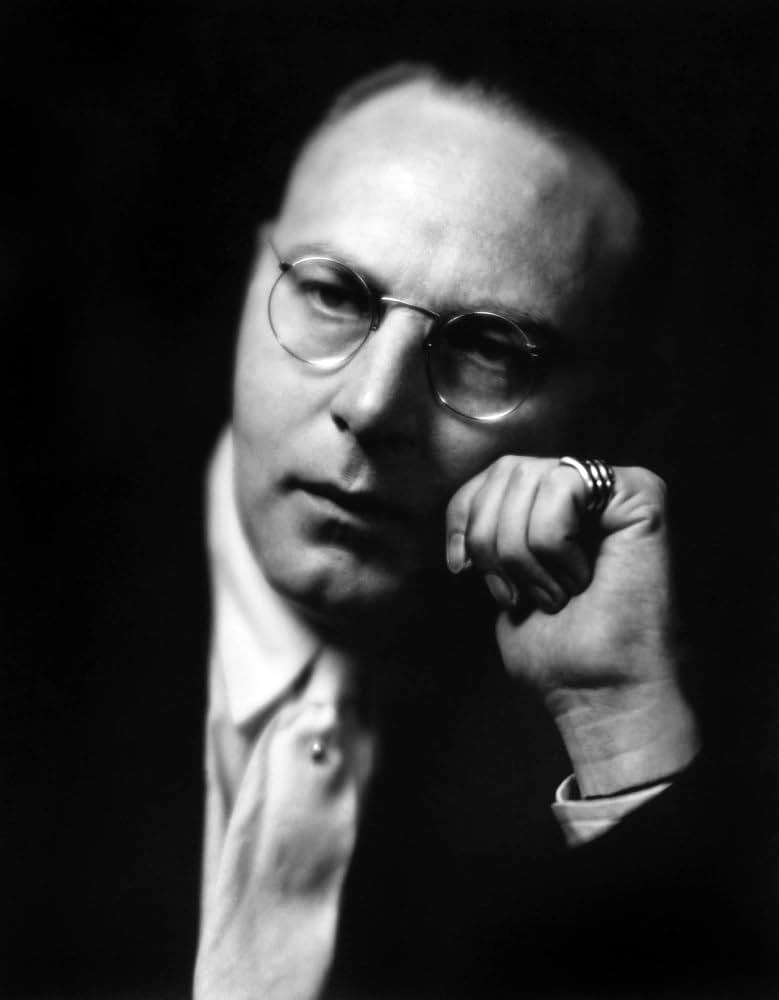
| 6 Quotes | |
| Occup. | Author |
| From | USA |
| Born | December 8, 1889 |
| Died | December 28, 1949 |
| Aged | 60 years |
| Cite | |
Citation Formats
APA Style (7th ed.)
Hervey allen biography, facts and quotes. (2026, March 3). FixQuotes. https://fixquotes.com/authors/hervey-allen/
Chicago Style
"Hervey Allen biography, facts and quotes." FixQuotes. March 3, 2026. https://fixquotes.com/authors/hervey-allen/.
MLA Style (9th ed.)
"Hervey Allen biography, facts and quotes." FixQuotes, 3 Mar. 2026, https://fixquotes.com/authors/hervey-allen/. Accessed 7 Apr. 2026.
Early Life and Background
Hervey Allen was born on December 8, 1889, in Pittsburgh, Pennsylvania, into a region where industrial wealth and immigrant labor coexisted with an older Western Pennsylvania memory of frontier forts, French-and-British rivalry, and river trade. That doubleness - soot and legend, modern velocity and deep time - would become the emotional engine of his best-known fiction. He grew up hearing how places keep their stories: not as archives, but as family talk, local names, and the half-remembered claims a community makes about itself.
His early sense of America was therefore both intensely geographic and quietly anxious. In an era when the United States was remaking itself through mechanization and mass migration, Allen felt how quickly the present could erase the texture of the past. His later work repeatedly tries to salvage a usable memory from that churn - not with the antiquarian's neutrality, but with the novelist's instinct for drama, allegiance, and loss.
Education and Formative Influences
Allen attended the U.S. Naval Academy at Annapolis, an education that trained his attention to discipline, hierarchy, and the stark consequences of choice; after leaving the service, he turned decisively toward literature and the life of letters. The academy's rigor did not make him a doctrinaire stylist so much as a writer who prized structure - the long view, the campaign map, the sweep of causes and effects - and who later brought a strategic sense of pacing to historical narrative.
Career, Major Works, and Turning Points
During World War I he served with U.S. forces in France, and the war sharpened his sense of civilization as a thin crust over primitive impulses, a theme that would recur in his judgments about progress. In the 1920s and 1930s he built a reputation as a poet, editor, and historical novelist, culminating in his most famous book, Anthony Adverse (1933), an epic of identity, exile, and moral compromise set across the 18th-century Atlantic world; its popularity - amplified by the 1936 film adaptation - made Allen a national figure. He also wrote widely on American regional history and legend, treating place not as scenery but as destiny, and he spent much of his later life sustaining a serious literary practice while navigating the distorting glare of a single blockbuster success.
Philosophy, Style, and Themes
Allen's imagination was fundamentally historical, but not pedantically factual. He believed the past becomes meaningful only when shaped into story, and his best pages move with the confidence of someone who thinks narrative is a form of truth-telling, not a betrayal of it. “Legends are material to be moulded, and not facts to be recorded”. That line is not just a craft note - it reveals a psychology wary of mere documentation, drawn instead to the moral weather of events: who was elevated, who was used, what was paid for ambition. In Anthony Adverse, individuals drift through empires and markets that feel both providential and pitiless, and Allen's sympathy often settles on the internally divided - characters who survive by becoming strangers to themselves.
He also wrote as an American regionalist who distrusted parochialism even while feeding on it. “Local color has a fatal tendency to remain local; but it is also true that the universal often borders on the void”. The tension is central to his style: thickly observed landscapes, dialects, and customs set inside large philosophical frames about power, fate, and human appetite. Underneath is a somber view of cultural continuity, a suspicion that every era must be re-tamed by its own children - “Each new generation is a fresh invasion of savages”. For Allen, this was less an insult than an admission of perpetual beginning: civilization requires retelling, re-teaching, and sometimes re-inventing, because memory decays faster than desire.
Legacy and Influence
Allen died on December 28, 1949, leaving a body of work that still illustrates how popular historical fiction can be intellectually ambitious without forfeiting narrative momentum. Anthony Adverse remains his emblem: a novel that helped define the interwar appetite for panoramic, morally charged epics, while his essays and regional histories modeled a way of writing about American places as layered with myth, conflict, and competing inheritances. Though later tastes shifted away from his grand manner, his enduring influence lies in his argument - implicit in all his best work - that America cannot understand itself without turning legend into a disciplined art and letting the local speak to the universal without dissolving into either trivia or abstraction.
Our collection contains 6 quotes written by Hervey, under the main topics: Writing - Book - Aging - Legacy & Remembrance - Youth.
Hervey Allen Famous Works
- 1933 Anthony Adverse (Novel)