
Hilaire Belloc Biography Quotes 25 Report mistakes
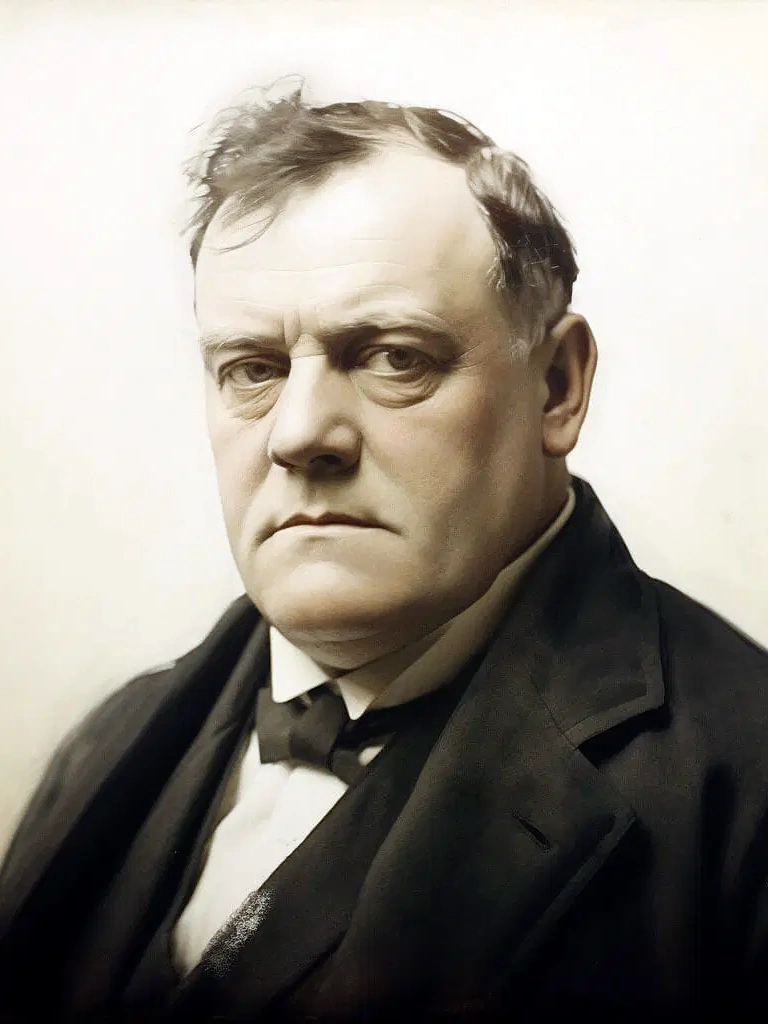
Attr: Poem Analysis
| 25 Quotes | |
| Occup. | Poet |
| From | England |
| Born | July 27, 1870 La Celle-Saint-Cloud, France |
| Died | July 16, 1953 Guildford, Surrey, England |
| Aged | 82 years |
| Cite | |
Citation Formats
APA Style (7th ed.)
Hilaire belloc biography, facts and quotes. (2026, February 11). FixQuotes. https://fixquotes.com/authors/hilaire-belloc/
Chicago Style
"Hilaire Belloc biography, facts and quotes." FixQuotes. February 11, 2026. https://fixquotes.com/authors/hilaire-belloc/.
MLA Style (9th ed.)
"Hilaire Belloc biography, facts and quotes." FixQuotes, 11 Feb. 2026, https://fixquotes.com/authors/hilaire-belloc/. Accessed 5 Mar. 2026.
Early Life and Background
Hilaire Belloc was born on July 27, 1870, at La Celle-Saint-Cloud near Paris, into a bicultural household that never let him forget the continent. His father, Louis Belloc, was a French lawyer of Languedoc descent; his mother, Bessie Rayner Parkes Belloc, was an English writer and activist who moved in circles of Victorian reform and letters. The French defeat in the Franco-Prussian War and the unsettled politics of the early Third Republic formed the first large backdrop to his imagination - a childhood steeped in the sense that nations are mortal, and that public life is ruled as much by myth and loyalty as by policy.After his father died in 1872, Belloc grew up under his mother's formidable guidance and moved with her to England, living largely in the Sussex world that later became his spiritual home. He was Catholic by inheritance and conviction in a predominantly Protestant public culture, a difference that sharpened his instinct for combat and for belonging at once. From early on he cultivated the posture that would define him: genial conviviality on the surface, but an interior readiness to argue, to satirize, and to defend what he took for permanent things.
Education and Formative Influences
Belloc was educated at the Oratory School in Birmingham, founded by John Henry Newman, where English Catholicism offered him both intellectual discipline and a sense of embattled continuity. He served in the French artillery as a young man and later studied history at Balliol College, Oxford, taking a First; Oxford gave him the debating arena he craved, but also confirmed his suspicion that fashionable opinion travels faster than truth. Medieval Europe, the Catholic inheritance, and the living textures of place - roads, rivers, parishes, and inns - became his preferred evidence against abstract theory.Career, Major Works, and Turning Points
Belloc made himself, by sheer output and force of personality, a public man of letters: poet, satirist, historian, travel writer, and polemicist, often collaborating with G.K. Chesterton while also remaining unmistakably his own. His Edwardian years brought notoriety in journalism and in Parliament as Liberal MP for Salford South (1906-1910), where he discovered that party machinery and financial interests could suffocate honest politics. He wrote The Path to Rome (1902), the verse of Cautionary Tales for Children (1907) and The Bad Child's Book of Beasts (1896), along with major controversial history and argument - Danton (1899), Napoleon (1912), The Servile State (1912), Europe and the Faith (1920), and The Great Heresies (1938) - combining narrative verve with thesis-driven combat. Personal bereavements, including the early death of his wife Elodie in 1914 and later losses in his family, hardened his tone; in old age he suffered strokes and decline, yet he remained for decades a reference point for Catholic polemic and for a peculiarly English kind of roaming, tavern-haunted lyricism rooted in the land.Philosophy, Style, and Themes
Belloc's inner life was an alloy of piety and pugnacity: he sought joy as a duty, but he distrusted modernity as a solvent. At his best he wrote like a man walking fast, singing and arguing in the same breath - a style of clipped certainties, bright anecdote, and sudden song. He resisted the age's worship of managerial measurement, insisting that “Statistics are the triumph of the quantitative method, and the quantitative method is the victory of sterility and death”. The sentence is more than a quip; it reveals a temperament that equated the human with the particular - the face, the feast, the shrine - and read impersonal systems as a threat to freedom and memory.Yet his work is not merely reactionary complaint; it is animated by a philosophy of fellowship and mortal courage. In poem and prose alike he returns to the tavern table, the road, the shared laugh, because he believed community is the last defense against both loneliness and political coercion: “From quiet homes and first beginning, out to the undiscovered ends, there's nothing worth the wear of winning, but laughter and the love of friends”. Beneath the convivial voice lies a metaphysic of paradoxical consolation, the conviction that shadow proves light and that loss does not cancel meaning: “Loss and possession, death and life are one, There falls no shadow where there shines no sun”. This is Belloc's psychology in miniature - a man who needed song to keep faith with grief, and argument to keep faith with song.
Legacy and Influence
Belloc's enduring influence runs through Catholic social thought, through the distributist critique of monopoly capitalism, and through a tradition of English letters that treats landscape as history made visible. Admirers still cite his brio, his sense for the medieval foundations of Europe, and his defense of small property and local life; critics note his aggressiveness and the darker polemical edges that accompanied his certainty. Even so, his best writing - the walking book, the ballad, the historical provocation - remains hard to replace: it offers a portrait of an era when a poet could still try to be a public conscience, and when wit, faith, and political economy might be forced to share the same page.Our collection contains 25 quotes written by Hilaire, under the main topics: Witty One-Liners - Ethics & Morality - Friendship - Music - Mortality.
Other people related to Hilaire: Joseph McCabe (Writer), Ruth Pitter (Musician)
Hilaire Belloc Famous Works
- 1920 Europe and the Faith (Non-fiction)
- 1912 The Servile State (Non-fiction)
- 1907 Cautionary Tales for Children (Children's book)
- 1904 The Old Road (Non-fiction)
- 1902 The Path to Rome (Non-fiction)
- 1902 The Four Men: A Farrago (Novel)
- 1896 The Bad Child's Book of Beasts (Children's book)