
Hilary Putnam Biography Quotes 2 Report mistakes
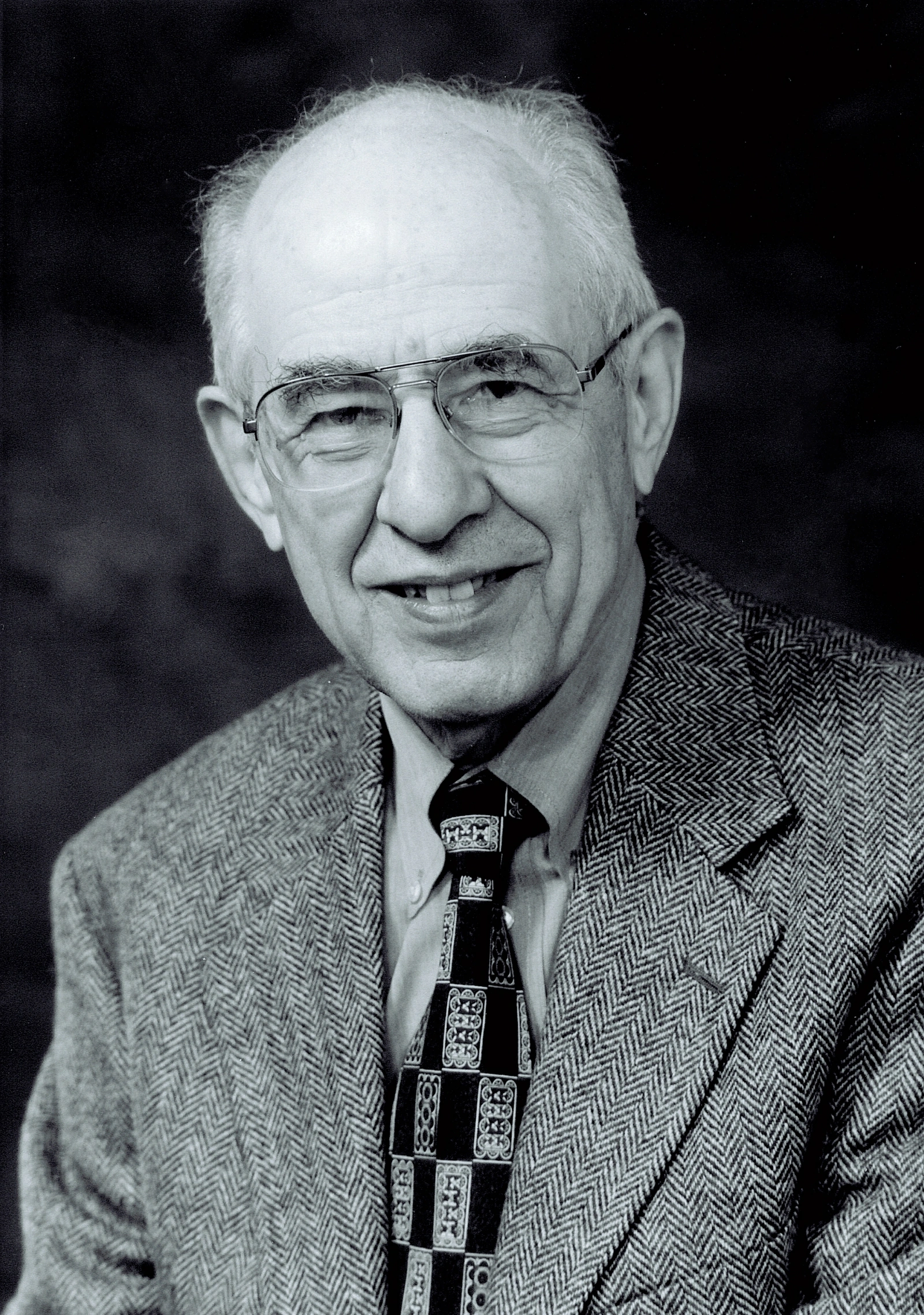
| 2 Quotes | |
| Born as | Hilary Whitehall Putnam |
| Occup. | Philosopher |
| From | USA |
| Born | July 31, 1926 Chicago, Illinois, U.S. |
| Age | 99 years |
| Cite | |
Citation Formats
APA Style (7th ed.)
Hilary putnam biography, facts and quotes. (2026, February 11). FixQuotes. https://fixquotes.com/authors/hilary-putnam/
Chicago Style
"Hilary Putnam biography, facts and quotes." FixQuotes. February 11, 2026. https://fixquotes.com/authors/hilary-putnam/.
MLA Style (9th ed.)
"Hilary Putnam biography, facts and quotes." FixQuotes, 11 Feb. 2026, https://fixquotes.com/authors/hilary-putnam/. Accessed 12 Feb. 2026.
Early Life and Background
Hilary Whitehall Putnam was born on July 31, 1926, in Chicago, Illinois, into a politically engaged, intellectually ambitious Jewish family that moved west during his youth. His father, Samuel Putnam, was a translator and writer with left-wing commitments; the household combined literary culture with the moral urgency of Depression-era politics. That mixture - books everywhere, arguments about justice, and a sense that ideas mattered in public life - became a durable template for Putnam's later habit of treating philosophy as both rigorous inquiry and ethical self-scrutiny.Growing up against the backdrop of the Great Depression, World War II, and the early Cold War, Putnam matured in a United States newly confident in science and technology yet anxious about ideology. The era's prestige of physics and mathematics, along with the shadows of propaganda and totalitarianism, helped shape his lifelong preoccupation: how to keep rationality, realism, and democratic values from collapsing either into dogmatism or into a cynical relativism that treats truth as mere social fashion.
Education and Formative Influences
Putnam studied at the University of Pennsylvania, then earned a PhD in philosophy at UCLA (1951), working with Hans Reichenbach and absorbing the logical empiricist ideal of clarity and the technical power of modern logic. He also studied mathematics at Harvard, encountered W.V.O. Quine's naturalism and skepticism about sharp analytic-synthetic boundaries, and learned from Rudolf Carnap's formal discipline even as he later criticized Carnapian reductions. These mentors, together with the postwar boom in computation and formal methods, positioned him to move fluently between philosophy of mind, philosophy of language, philosophy of science, and mathematical logic.Career, Major Works, and Turning Points
After early appointments (including Princeton and MIT), Putnam became a central figure at Harvard University, where he taught for decades and influenced generations of philosophers. His work repeatedly reset debates: in philosophy of mind, his functionalism and the "multiple realizability" argument challenged identity theories that equated mental states with specific brain states; in philosophy of language and science, "The Meaning of 'Meaning'" (1975) advanced semantic externalism and the famous Twin Earth thought experiment; in metaphysics, his model-theoretic arguments and the doctrine of "internal realism" (notably in Reason, Truth and History, 1981) pressed realism to account for reference and objectivity without pretending to a God's-eye standpoint. Over time he publicly revised or abandoned positions - from early sympathy with operationalism and a more scientistic outlook to later critiques of metaphysical inflation, and from internal realism to a renewed, ethically inflected realism - making his career a rare record of philosophical self-correction rather than brand management.Philosophy, Style, and Themes
Putnam's style married technical argument to intellectual conscience: he treated a clever proof as incomplete if it purchased clarity by amputating lived meaning. He moved between mathematics, linguistics, and ethics with the conviction that philosophy is responsible both to the sciences and to ordinary practices of justification. Even his attraction to formalism was never merely aesthetic; he enjoyed its strange power while recognizing its psychological pull, once remarking, "I think part of the appeal of mathematical logic is that the formulas look mysterious - You write backward Es!" The joke signals something serious: Putnam saw that philosophers can fall in love with symbol systems, mistaking their elegance for insight, so he continually demanded that formal results be interpreted in relation to how language hooks onto the world and how inquiry earns authority.A persistent theme is his refusal to let disagreement be a solvent that dissolves truth. Against fashionable subjectivisms, he insisted, "No sane person should believe that something is subjective merely because it cannot be settled beyond controversy". That line captures his psychological posture: wary of certainty, but equally wary of the comfort of shrugging. Whether discussing reference, realism, or values, he tried to show that objectivity is not an occult property possessed only by an imagined "view from nowhere", but a hard-won achievement of responsible practices - scientific, linguistic, and moral. His later work, increasingly engaged with pragmatism (William James and John Dewey) and with ethics (including sustained dialogues with thinkers like Martha Nussbaum), reframed truth and rationality as inseparable from human flourishing without reducing them to preference.
Legacy and Influence
Putnam died in 2016, leaving an oeuvre that reshaped postwar analytic philosophy by making it less insular: more historically aware, more ethically serious, and more honest about the limits of formalization. His arguments remain live in debates over functionalism, externalism, scientific realism, and the nature of objectivity; just as importantly, his career models an intellectual virtue that is itself influential - the willingness to revise, retract, and rethink in public. For students and readers, Putnam endures not only as a maker of famous thought experiments, but as a philosopher of inner discipline: someone who treated philosophy as an ongoing attempt to deserve one's own conclusions.Our collection contains 2 quotes written by Hilary, under the main topics: Truth - Reason & Logic.
Other people related to Hilary: Robert Nozick (Philosopher), Willard Van Orman Quine (Philosopher)
Hilary Putnam Famous Works
- 2004 Ethics without Ontology (Book)
- 2002 The Collapse of the Fact/Value Dichotomy (Book)
- 1999 The Threefold Cord: Mind, Body, and World (Book)
- 1983 Realism and Reason: Philosophical Papers Volume 3 (Book)
- 1981 Reason, Truth and History (Book)
- 1979 Philosophical Papers: Volume 1, Mathematics, Matter and Method (Book)
- 1978 Meaning and the Moral Sciences (Book)
- 1975 Philosophical Papers: Volume 2, Mind, Language and Reality (Book)
- 1975 Mathematics, Matter and Method (Book)
- 1971 Philosophy of Logic (Book)
Source / external links