
Hillary Clinton Biography Quotes 41 Report mistakes
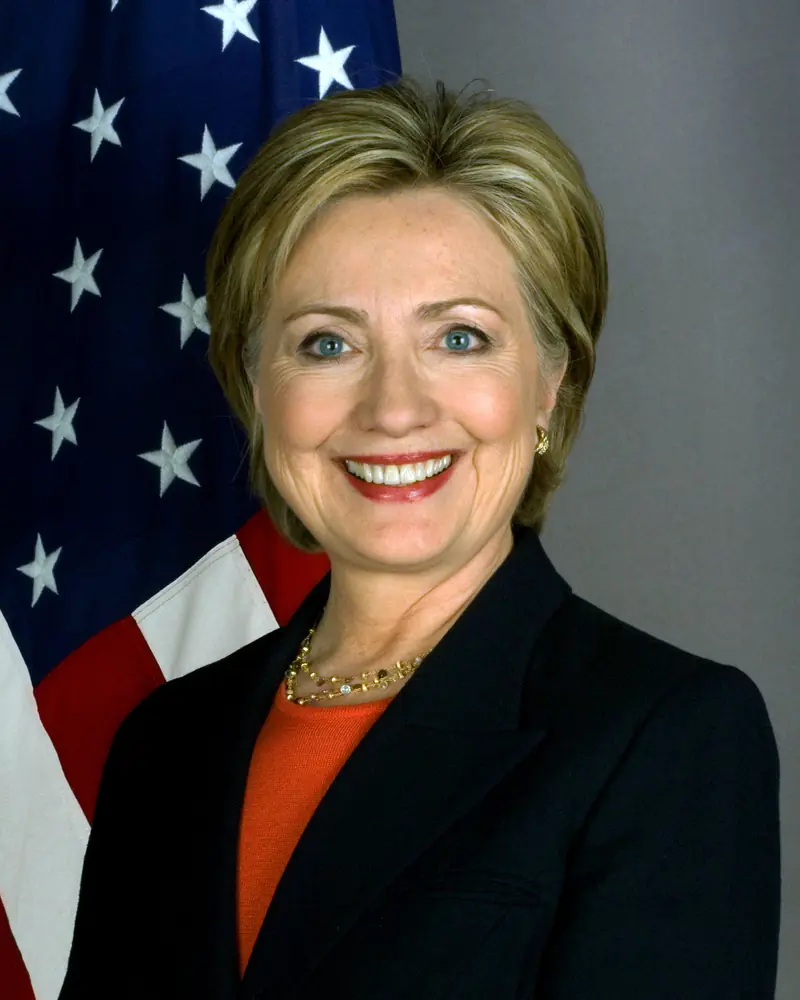
| 41 Quotes | |
| Born as | Hillary Diane Rodham |
| Occup. | Politician |
| From | USA |
| Born | October 26, 1947 Chicago, Illinois |
| Age | 78 years |
Hillary Diane Rodham Clinton was born on October 26, 1947, in Chicago and raised in Park Ridge, Illinois. Her father, Hugh E. Rodham, managed a small textile business, and her mother, Dorothy Howell Rodham, instilled in her a sense of resilience and civic duty. A strong student and active in youth organizations and church groups, she began her political life as a Republican in her teens, inspired in part by the ideas of Barry Goldwater, before her views evolved during the civil rights movement and the turbulence of the 1960s. Influenced by figures such as Martin Luther King Jr., she shifted toward the Democratic Party. At Wellesley College, she served in student leadership and in 1969 became the first student to deliver a commencement address, gaining national attention. She then attended Yale Law School, where she worked in child advocacy clinics and met Bill Clinton, a fellow law student whose partnership would shape both their lives.
Legal and Advocacy Career
After graduating from Yale Law School in 1973, she worked for the Children's Defense Fund under the leadership of Marian Wright Edelman, helping document educational barriers for children with disabilities and marginalized families. In 1974 she served on the staff of the U.S. House Judiciary Committee's impeachment inquiry related to President Richard Nixon, working under John Doar. She moved to Arkansas to be with Bill Clinton, marrying him in 1975. Clinton taught at the University of Arkansas School of Law in Fayetteville and, in 1977, joined the Rose Law Firm, later becoming its first female partner. She also chaired the Legal Services Corporation after being appointed by President Jimmy Carter, advocating for access to counsel for low-income Americans. Her early career blended law and policy with a steady focus on children and families, themes that would define her public life.
Arkansas and the Rise to National Prominence
As Arkansas's First Lady during Bill Clinton's terms as governor, she became a key policy partner. She chaired the Arkansas Education Standards Committee, working with educators and legislators to reform curricula, set testing standards, and improve teacher training. Clinton served on several boards, including a major retailer in the 1980s, adding private-sector experience to her portfolio. Her work signaled a pragmatic, data-driven approach to social policy and drew supporters and critics alike. Colleagues from that era, including policy adviser Ira Magaziner on later federal projects, reflected the technocratic circle surrounding her efforts.
First Lady of the United States
When Bill Clinton won the presidency in 1992, Hillary Clinton became First Lady and took an unusually active role in policy formation. She led a health care reform task force in 1993 that aimed to expand coverage and control costs. The effort, developed with Ira Magaziner and other advisers, faltered in Congress amid intense opposition, but it established her as a prominent national figure with deep interest in health policy. Her advocacy for children culminated in the publication of It Takes a Village (1996), for which she later won a Grammy for the audiobook. She championed women's rights globally, famously declaring that women's rights are human rights at a 1995 international conference in Beijing.
The administration faced investigations into Whitewater real estate dealings, the White House travel office, and handling of FBI background files. Independent Counsel Kenneth Starr conducted widely publicized inquiries. During Bill Clinton's impeachment related to his relationship with Monica Lewinsky, she was a central public figure, choosing to continue her public work while supporting the president. Through these crises, their daughter Chelsea Clinton was a grounding presence for the family and often noted in accounts of the period.
United States Senator from New York
In 2000, Clinton ran successfully for the U.S. Senate from New York, defeating Rick Lazio. She worked closely with Senator Chuck Schumer and New York officials such as Representative Peter King on recovery and health care for first responders after the September 11, 2001 attacks. Serving on the Senate Armed Services Committee, she engaged deeply with defense issues and voted in 2002 to authorize the use of force in Iraq, a decision she later said she regretted. Re-elected in 2006, she built a reputation for detailed committee work, bipartisan negotiations on veterans' affairs and rural health, and sustained attention to New York's economic needs.
In 2008 she ran for the Democratic presidential nomination against Barack Obama and others, winning substantial support but ultimately endorsing Obama after a hard-fought primary. Her campaign organization and donor networks, featuring advisers such as Huma Abedin and policy veterans from the Clinton years, would remain central to her future political efforts.
Secretary of State
Appointed by President Barack Obama, Clinton served as Secretary of State from 2009 to 2013. She promoted a foreign policy that emphasized alliances, development, and economic statecraft. Early initiatives included a public diplomacy push and efforts to elevate women and girls in U.S. foreign policy. She was a prominent advocate for LGBTQ rights internationally, declaring in 2011 that gay rights are human rights. She worked with counterparts such as Sergei Lavrov on a U.S.-Russia diplomatic reset that later faced significant strains, and helped build sanctions regimes, including those that set the stage for later negotiations on Iran's nuclear program. She traveled extensively, supporting a pivot to Asia and managing challenges from the global financial crisis to the Arab Spring.
Her tenure also brought controversy. In 2012, the attack on U.S. facilities in Benghazi, Libya, killed four Americans, including Ambassador J. Christopher Stevens. Clinton testified before multiple congressional committees, including a marathon hearing chaired by Representative Trey Gowdy, defending decisions and calling for improved security. The tragedy remained a flashpoint in partisan debates about U.S. policy and oversight.
2016 Presidential Campaign
Clinton entered the 2016 presidential race as a former senator and secretary of state with unparalleled name recognition. She faced a spirited primary challenge from Bernie Sanders, reflecting divisions within the Democratic Party's coalition. After securing the nomination, she confronted questions about her use of a private email server while Secretary of State. FBI Director James Comey publicly criticized her handling of classified material in July 2016 while recommending no charges, and then, days before the election, announced the review of additional emails linked to a device associated with Anthony Weiner, the estranged husband of senior aide Huma Abedin. He later reaffirmed that the conclusion remained unchanged, but the episode dominated the final stretch.
The campaign also unfolded amid Russian interference aimed at influencing voter perceptions, with email disclosures involving campaign chair John Podesta and the Democratic National Committee, whose chair Debbie Wasserman Schultz stepped down during the convention. Clinton won nearly three million more votes nationally but lost the Electoral College to Donald Trump in November 2016. Many observers parsed the electoral map, the impact of the Comey announcements, and broader trends in media and polarization to explain the result.
Later Work, Writing, and Public Voice
After 2016, Clinton remained active in public life as an author, speaker, and advocate. She launched Onward Together to support progressive organizations and candidates, and continued her longstanding involvement with the Clinton Foundation and the Clinton Global Initiative alongside Bill Clinton and Chelsea Clinton. Her books from this period include What Happened, an analysis of the 2016 campaign; The Book of Gutsy Women, co-authored with Chelsea; and State of Terror, a political thriller co-written with Louise Penny. She supported Democratic candidates in subsequent election cycles, endorsed Joe Biden and Kamala Harris in 2020, and spoke frequently about democracy, voting rights, and U.S. leadership abroad. In academia, she took on roles that allowed her to mentor students and engage in policy dialogues, extending her influence beyond electoral politics.
Legacy and Influence
Hillary Clinton's career spans local activism, national policymaking, and global diplomacy. From the halls of Wellesley and Yale to Arkansas courtrooms, congressional hearing rooms, and foreign capitals, she marshaled legal expertise and political skill to advance children's welfare, women's rights, and U.S. interests. Figures around her have shaped, challenged, and defined her trajectory: Bill Clinton as partner and collaborator; Chelsea as a public presence in family and foundation work; Barack Obama as a rival turned colleague; John Kerry as her successor at State; Condoleezza Rice as her predecessor; James Comey as a central figure in 2016; Bernie Sanders and Donald Trump as pivotal campaign opponents; and international counterparts from Sergei Lavrov to critics of U.S. policy. Her story is equally one of resilience through intense scrutiny, from Kenneth Starr's investigations to Benghazi hearings and the email controversy.
Clinton's impact is visible in policy debates on health care, education, and human rights; in the normalization of women at the highest levels of American politics; and in the networks of public servants and advocates she helped train and inspire. Whether praised as a trailblazer or criticized as emblematic of a polarized era, she remains one of the most consequential American political figures of her generation.
Our collection contains 41 quotes who is written by Hillary, under the main topics: Witty One-Liners - Justice - Friendship - Leadership - Overcoming Obstacles.
Other people realated to Hillary: James Carville (Lawyer), Madeleine Albright (Statesman), Peggy Noonan (Writer), Debbie Wasserman Schultz (Politician), Dennis Quaid (Actor), Vernon Jordan (Businessman), Charles Schumer (Politician), Howard Fineman (Journalist), John Edwards (Politician), Dinesh D'Souza (Author)
Source / external links