
Hjalmar Branting Biography Quotes 20 Report mistakes
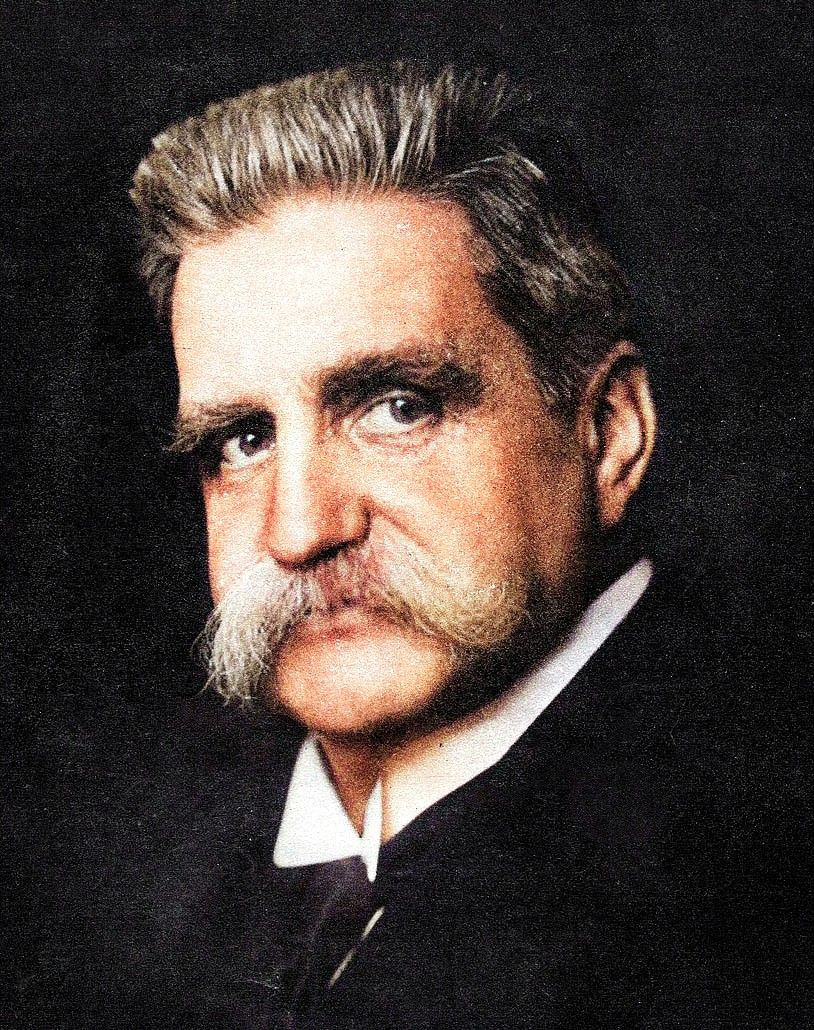
| 20 Quotes | |
| Occup. | Statesman |
| From | Sweden |
| Born | November 23, 1860 Stockholm, Sweden |
| Died | February 24, 1925 Stockholm, Sweden |
| Cause | Cerebral hemorrhage |
| Aged | 64 years |
| Cite | |
Citation Formats
APA Style (7th ed.)
Hjalmar branting biography, facts and quotes. (2026, February 11). FixQuotes. https://fixquotes.com/authors/hjalmar-branting/
Chicago Style
"Hjalmar Branting biography, facts and quotes." FixQuotes. February 11, 2026. https://fixquotes.com/authors/hjalmar-branting/.
MLA Style (9th ed.)
"Hjalmar Branting biography, facts and quotes." FixQuotes, 11 Feb. 2026, https://fixquotes.com/authors/hjalmar-branting/. Accessed 12 Feb. 2026.
Early Life and Background
Hjalmar Branting was born on November 23, 1860, in Stockholm, into a Sweden that still carried the long shadow of the lost Finnish provinces and the rise of a modern constitutional monarchy. His father, Lars Gabriel Branting, was a respected professor; his mother, Emma af Georgii, came from a milieu where education and civic responsibility were assumed virtues. The young Branting grew up amid the capital's newspapers, lecture halls, and political clubs, absorbing the language of public debate while watching industrialization tighten its grip on Swedish life.That contrast between learned culture and the new working-class city became his lifelong psychological engine: a patrician upbringing paired with an increasingly radical sense that democracy had to be made social, not merely formal. He matured during an era when Sweden was exporting people by the hundreds of thousands and importing the ideas of mass politics. The tensions of class, emigration, and national self-definition were not abstractions to him; they were the atmosphere of his youth, and they shaped the earnest, morally charged tone that later defined his public life.
Education and Formative Influences
Branting studied at Uppsala University, but his deeper education came from journalism, scientific interests, and the late-19th-century Scandinavian conversation about progress - Darwinism, secular ethics, and the possibility of reform without violent rupture. He was drawn to the emerging socialist movement less as a romantic of barricades than as a rationalist convinced that poverty and political exclusion were solvable problems of institutions. This blend of intellectual confidence and ethical impatience led him into labor politics in the 1880s, when Swedish Social Democracy was still finding its language and its audience.Career, Major Works, and Turning Points
Branting became the leading public voice of Swedish Social Democracy through the press and parliament, eventually editing and shaping the party newspaper Social-Demokraten and helping define the party's reformist strategy. Elected to the Riksdag, he pressed for expanded suffrage, social insurance, and labor rights, arguing that democratic legitimacy required material security. In 1917, amid wartime strain and constitutional crisis, he entered government as finance minister in a coalition that marked a decisive turn toward parliamentary democracy; after full democratization and the breakthrough election of 1921, he served as Sweden's prime minister (1920, 1921-1923, 1924-1925). His final years fused domestic reform with international statesmanship: he was a Swedish delegate to the League of Nations, helped settle the Aland Islands dispute between Sweden and Finland through international arbitration, and received the 1921 Nobel Peace Prize for his work for international cooperation. He died on February 24, 1925, still identified with the effort to bind social reform to international peace.Philosophy, Style, and Themes
Branting's inner life was governed by a faith that moral sentiment could be institutionalized. He was not naive about power, but he insisted that politics should educate desire rather than flatter it. His rhetoric often began from anthropology - what people long for when fear recedes - and climbed toward law. "Fraternity among nations, however, touches the deepest desire of human nature". For Branting, that sentence was not decoration; it was a diagnosis. He believed the same impulse that makes citizens want fairness at home can, with patient architecture, make states accept rules abroad. In this he differed from both revolutionary maximalists and conservative fatalists: he expected conflict, but he refused to treat it as destiny.The First World War, and the shattered hopes that preceded it, hardened his realism without extinguishing his method. He scrutinized the prewar faith that labor solidarity could simply prevent catastrophe, noting: "Before the war there were many who were more or less ignorant of the international labor movement but who nevertheless turned to it for salvation when the threat of war arose. They hoped that the workers would never permit a war". The disappointment did not push him toward cynicism; it pushed him toward governance - toward procedures, sanctions, arbitration, and a League that could outlive the moods of great powers. Hence his insistence that "All in all, the League of Nations is not inevitably bound, as some maintain from time to time, to degenerate into an impotent appendage of first one, then another of the competing great powers". In temperament, he was a reformer who hated improvisation: he trusted gradualism not because he lacked urgency, but because he feared the political vacuum in which demagogues thrive.
Legacy and Influence
Branting's enduring influence lies in how he made Swedish Social Democracy credible as a governing force while tying its legitimacy to both parliamentary democracy and international responsibility. He helped normalize the idea that labor politics could be statecraft, and that national welfare reform could coexist with supranational law. Later architects of the Swedish model built on the path he cleared - an ethic of negotiation, coalition, and institution-building - even as they extended it beyond his era. Internationally, his League work and the Aland settlement offered an early example of small-state diplomacy through arbitration rather than arms, a legacy that remains central to Sweden's self-image as a principled, procedural actor in world affairs.Our collection contains 20 quotes written by Hjalmar, under the main topics: Freedom - Equality - Peace - Tough Times - War.
Source / external links