
Hjalmar Schacht Biography Quotes 24 Report mistakes
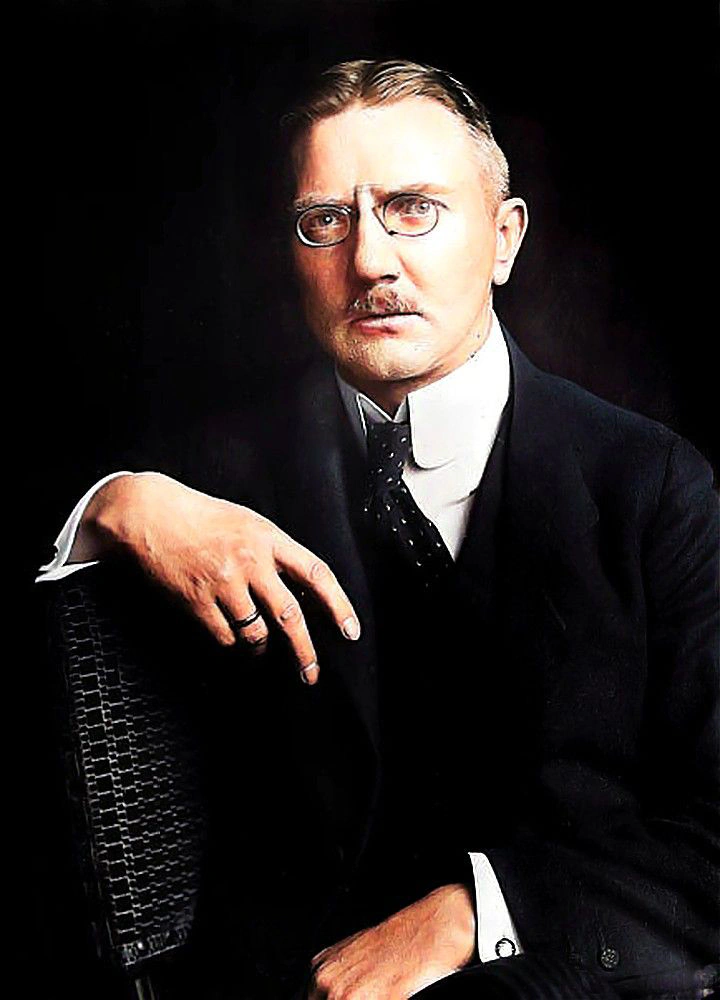
Attr: Bain News Service
| 24 Quotes | |
| Born as | Hjalmar Horace Greeley Schacht |
| Occup. | Economist |
| From | Germany |
| Spouse | Carola von Schacht |
| Born | January 22, 1877 Tinglev, Schleswig-Holstein, Germany |
| Died | June 3, 1970 Munich, Germany |
| Cause | Natural Causes |
| Aged | 93 years |
| Cite | |
Citation Formats
APA Style (7th ed.)
Hjalmar schacht biography, facts and quotes. (2026, February 11). FixQuotes. https://fixquotes.com/authors/hjalmar-schacht/
Chicago Style
"Hjalmar Schacht biography, facts and quotes." FixQuotes. February 11, 2026. https://fixquotes.com/authors/hjalmar-schacht/.
MLA Style (9th ed.)
"Hjalmar Schacht biography, facts and quotes." FixQuotes, 11 Feb. 2026, https://fixquotes.com/authors/hjalmar-schacht/. Accessed 12 Feb. 2026.
Early Life and Background
Hjalmar Horace Greeley Schacht was born on January 22, 1877, in Tinglev (then in Prussia, today in Denmark), into a mobile, educated milieu shaped by the borderlands of Schleswig and the self-confidence of Germany's newly unified empire. His father, a merchant with international ties, signaled the family's outward gaze by naming him after the American editor Horace Greeley, a gesture that sat oddly but tellingly beside Schacht's later nationalism. From the start, he absorbed a sense that commerce, credit, and state power were inseparable levers in modern life.Coming of age under Wilhelm II, Schacht watched Germany turn industrial might into geopolitical ambition, and he learned to treat money less as a moral category than as a system of signals that could be managed. The trauma that defined his early adulthood was the First World War and its aftermath: defeat, revolution, and the destabilization of everyday exchange. That lived experience of currency breakdown - contracts evaporating, savings wiped out, social trust corroded - became the emotional basement of his later fixation on monetary order and his readiness to accept hard political bargains to restore it.
Education and Formative Influences
Schacht studied economics and related subjects in Berlin, Munich, Kiel, and Paris, earning a doctorate in 1899 at Kiel, then entering the world of high finance through Dresdner Bank. The formative influence was not a single professor so much as the era's lesson that modern states could not rule without markets, and markets could not function without credible money. He developed a technocrat's confidence in central banking and an operator's instinct for international negotiation - skills that would later place him at the hinge between Weimar stabilization and Nazi rearmament.Career, Major Works, and Turning Points
Schacht rose during the Weimar crisis to become Currency Commissioner in 1923 and soon President of the Reichsbank, helping engineer the stabilization that ended hyperinflation through the Rentenmark and fiscal discipline, then serving as a key negotiator in reparations diplomacy, including the Dawes-era financial architecture that reconnected Germany to global capital. The Great Depression and the collapse of parliamentary authority opened his fateful turning point: he supported Adolf Hitler's appointment in 1933, returned to the Reichsbank presidency, and became Minister of Economics (1934-1937). He devised the MEFO bills system to finance public works and, crucially, covert rearmament while limiting immediate inflation and conserving foreign exchange. As power shifted to Hermann Goering's Four Year Plan apparatus and as rearmament demands overran his preference for monetary prudence, Schacht lost influence, leaving the Economics Ministry in 1937 and the Reichsbank in 1939. Later, he moved in conservative opposition circles, was arrested after the July 20, 1944 plot, survived the war, and at Nuremberg was acquitted of crimes against peace - a verdict that did not erase the record of his earlier enablement.Philosophy, Style, and Themes
Schacht's inner life was marked by a tension between the banker who prized stability and the political gambler who believed stability could be purchased with authoritarian power. His writings and public statements returned to the idea that confidence is the hidden infrastructure of an economy, and that mishandling credit can become a social contagion. "The economy is a very sensitive organism". This was not mere metaphor: for Schacht, the central bank was a physician of trust, and policy had to be staged, timed, and messaged to keep the patient from panicking.Yet his managerial realism shaded into moral evasion when he yoked technique to dictatorship. He presented loyalty to Hitler as the anchor of national recovery, insisting, "Germany stays and falls with the success of the policy of Hitler". The statement reads like a confession of dependence - a man binding his own legitimacy to a leader's triumph, narrowing the space for dissent as the price of order. Most damning is his later candor about what his credit innovations materially enabled: "With the aid of this credit policy, however, Germany created an armament second to none, and this armament in turn made possible the results of our policy". In that sentence the technician and the accomplice merge, revealing a psychology that treated instruments as neutral even when their endpoint was war.
Legacy and Influence
Schacht endures as one of the 20th century's most consequential monetary operators and one of its most cautionary. In economic history he is credited with helping end hyperinflation and with pioneering inventive state finance under constraints, influencing later debates about off-balance-sheet funding, central bank independence, and crisis management. In moral and political history he stands as a case study in how expertise can lubricate authoritarian projects: a man who understood that confidence underwrites money, yet helped build a regime that destroyed confidence in law, truth, and human life. His career remains a reminder that economic genius does not absolve political choice, and that stabilizing a currency can, in the wrong hands, stabilize a catastrophe.Our collection contains 24 quotes written by Hjalmar, under the main topics: Justice - Leadership - Hope - Equality - Human Rights.
Other people related to Hjalmar: Robert Ley (Soldier), Fritz Todt (Soldier)
Source / external links