
Ho Chi Minh Biography Quotes 13 Report mistakes
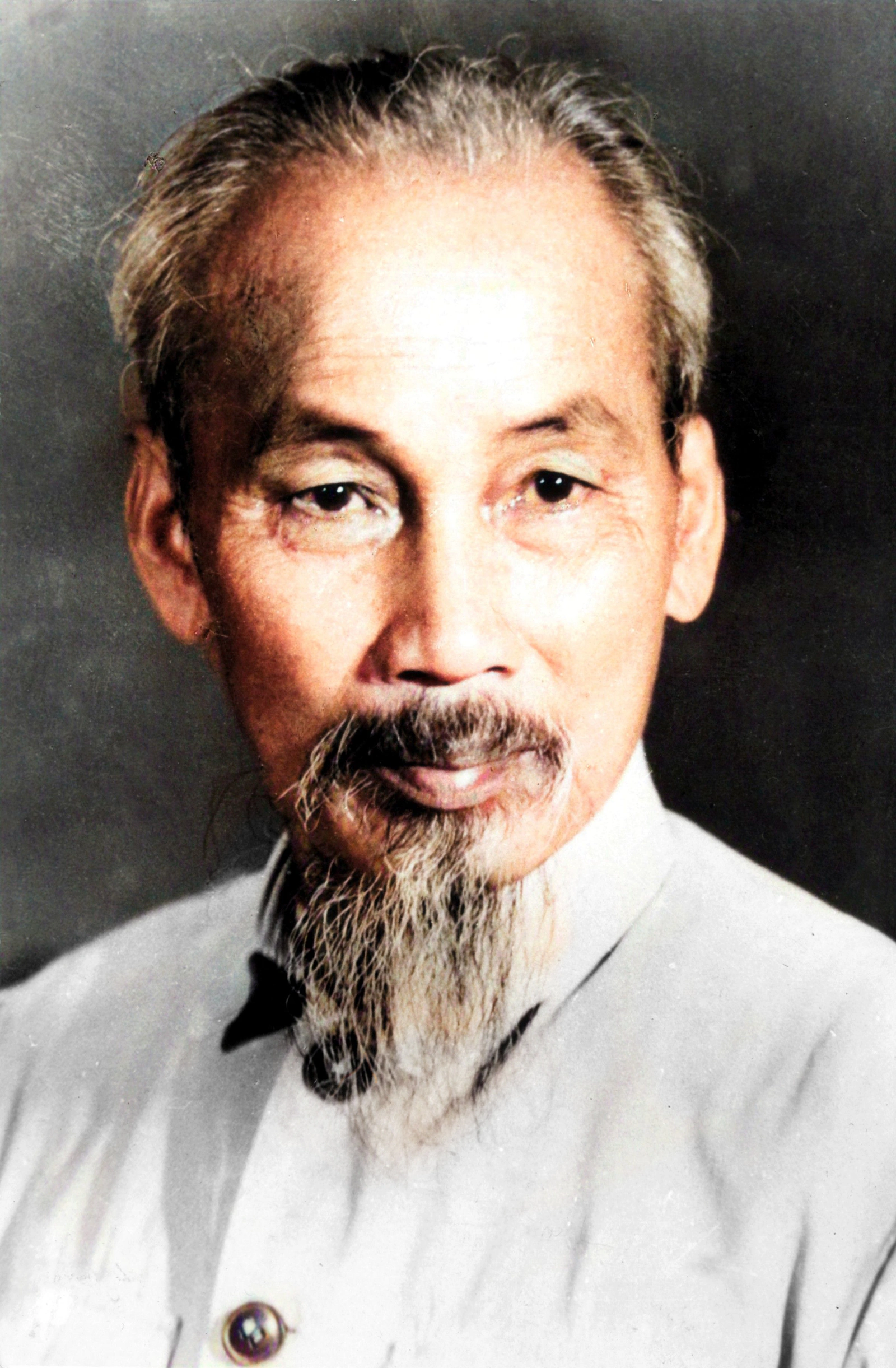
| 13 Quotes | |
| Born as | Nguyễn Sinh Cung |
| Occup. | Revolutionary |
| From | Vietnam |
| Born | May 19, 1890 Nghệ An Province, French Indochina |
| Died | September 2, 1969 Hanoi, Democratic Republic of Vietnam |
| Cause | Heart failure |
| Aged | 79 years |
| Cite | |
Citation Formats
APA Style (7th ed.)
Ho chi minh biography, facts and quotes. (2026, February 11). FixQuotes. https://fixquotes.com/authors/ho-chi-minh/
Chicago Style
"Ho Chi Minh biography, facts and quotes." FixQuotes. February 11, 2026. https://fixquotes.com/authors/ho-chi-minh/.
MLA Style (9th ed.)
"Ho Chi Minh biography, facts and quotes." FixQuotes, 11 Feb. 2026, https://fixquotes.com/authors/ho-chi-minh/. Accessed 6 Mar. 2026.
Early Life and Background
Nguyen Sinh Cung was born on May 19, 1890, in Kim Lien village (Hoang Tru), Nam Dan district, Nghe An province, in French Indochina. The region was known for anti-colonial tradition and hard rural discipline, and his family stood at the intersection of village learning and imperial service. His father, Nguyen Sinh Sac, a Confucian scholar who later served as a mandarin, embodied both the prestige and the moral compromises of the Nguyen court under French pressure; his mother, Hoang Thi Loan, died when he was young, leaving a quiet wound that contemporaries later sensed beneath his controlled public manner.He grew up amid punitive taxes, corvee labor, and the daily humiliations of colonial rule, experiences that made politics feel less like ideology than survival. In adolescence he used several names - Nguyen Tat Thanh among them - a pattern that became a lifelong tactic: identity as shelter, and reinvention as method. By the time he left central Vietnam, the question that drove him was not abstract revolution but how a small, occupied people might recover dignity in a world run by empires.
Education and Formative Influences
He received a classical Confucian grounding and also encountered French-language schooling, absorbing both the moral vocabulary of scholar-official culture and the modern administrative language of colonial power. Around 1911 he departed Vietnam as a ship's worker, beginning years of travel through ports and working-class districts that formed his political instincts: London and Paris among them, where he read widely, observed labor movements, and learned how propaganda, unions, and newspapers could bind strangers into a cause. In France after World War I, he pressed the "Eight Demands of the Annamite People" at the Versailles moment, then entered the socialist milieu that split into communist and reformist camps, choosing the faction that promised anti-imperial force rather than sympathetic speeches.Career, Major Works, and Turning Points
In the 1920s he helped found Vietnamese revolutionary networks abroad, wrote polemics such as "The French Colonialism on Trial", and trained cadres in southern China; in 1930 he was central to the creation of the Indochinese Communist Party. Arrested in Hong Kong in 1931 and moving through periods of peril and underground work, he returned to Vietnam in 1941, built the Viet Minh front, and during World War II maneuvered between Chinese Nationalists, local forces, and fleeting contacts with American OSS officers to position his movement as the legitimate national alternative. On September 2, 1945, in Hanoi, he proclaimed the Democratic Republic of Vietnam, quoting revolutionary language that echoed both French and American traditions, then fought a long war against the returning French, culminating in Dien Bien Phu (1954) and the Geneva division. As president and emblem in the North, he functioned less as a day-to-day administrator than as a legitimating figure while the party-state pursued land reform, consolidation, and later the escalating conflict with the United States; he died in Hanoi on September 2, 1969, as the war that would define his posthumous image raged on.Philosophy, Style, and Themes
Ho Chi Minh's inner logic fused moral patriotism with a hard appraisal of power. He insisted, “It was patriotism, not communism, that inspired me”. , a line that reveals both genuine self-understanding and a strategic grammar for coalition-building: nationalism as the broad tent, Marxism-Leninism as the engine room. He was careful to present himself as the ascetic servant rather than the caudillo, cultivating plain dress, spare habits, and a pedagogy of clarity - not only to persuade villagers but to discipline cadres. His insistence that cadres communicate simply - “Write in such a way as that you can be readily understood by both the young and the old, by men as well as women, even by children”. - was an aesthetic and a political technology, turning language into mass mobilization.The darker side of that simplicity was his acceptance of protracted suffering as a strategic resource. “You can kill ten of our men for every one we kill of yours. But even at those odds, you will lose and we will win”. The sentence is less bravado than psychological warfare, aimed at breaking an adversary's time horizon while stiffening his own side against despair. Across his speeches and letters, the recurring themes are endurance, unity, and legitimacy: the revolution as a test of national character, the party as the vessel of independence, and sacrifice as the currency required to outlast materially stronger foes.
Legacy and Influence
Ho Chi Minh remains Vietnam's foundational revolutionary symbol - a leader whose name marks cities, monuments, and a political tradition that still claims continuity with his image of modest service. Internationally he became a touchstone for anti-colonial movements, proof that an organized nationalist-communist coalition could defeat European empire and challenge American power. Yet his legacy is inseparable from the costs of war and the party-state built in its wake: a unifying national story that also compresses dissent and complexity. His enduring influence lies in the fusion he popularized - independence as sacred, mass politics as technique, and patience as strategy - a model studied by admirers and opponents alike.Our collection contains 13 quotes written by Ho, under the main topics: Writing - Leadership - Freedom - Kindness - Resilience.
Source / external links