
Holbrook Jackson Biography Quotes 12 Report mistakes
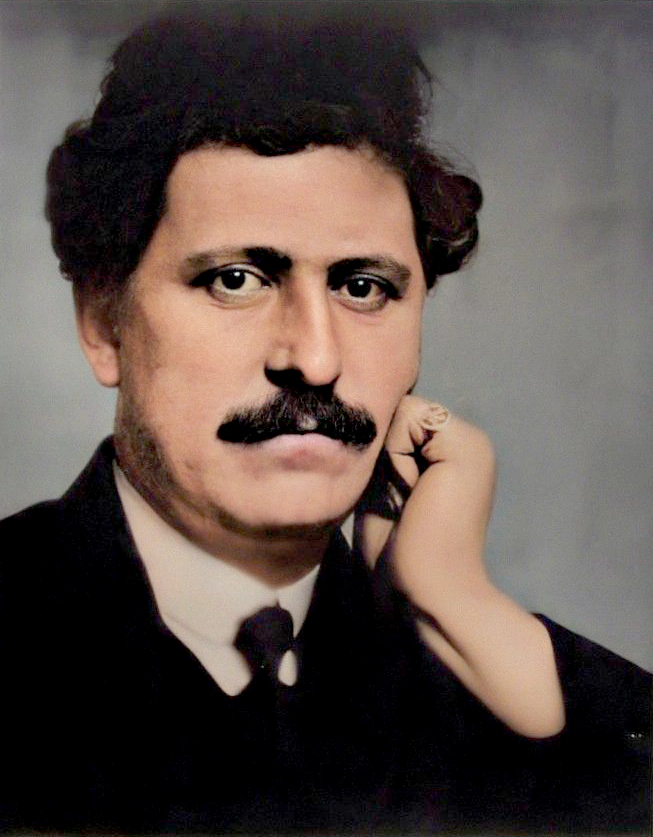
| 12 Quotes | |
| Born as | George Holbrook Jackson |
| Occup. | Writer |
| From | England |
| Born | December 31, 1874 Liverpool, England |
| Died | June 16, 1948 Bournemouth, Hampshire, England |
| Aged | 73 years |
| Cite | |
Citation Formats
APA Style (7th ed.)
Holbrook jackson biography, facts and quotes. (2026, February 11). FixQuotes. https://fixquotes.com/authors/holbrook-jackson/
Chicago Style
"Holbrook Jackson biography, facts and quotes." FixQuotes. February 11, 2026. https://fixquotes.com/authors/holbrook-jackson/.
MLA Style (9th ed.)
"Holbrook Jackson biography, facts and quotes." FixQuotes, 11 Feb. 2026, https://fixquotes.com/authors/holbrook-jackson/. Accessed 12 Feb. 2026.
Early Life and Background
George Holbrook Jackson was born on December 31, 1874, in England, in the late-Victorian moment when cheap print, rising literacy, and municipal libraries were remaking ordinary lives. He grew up amid the moral self-confidence and economic anxieties of an industrial society that promised improvement while stratifying it. That tension - between the democratization of culture and the gatekeeping of taste - became the central drama of his adulthood: he would spend his career arguing that books were not ornaments of class but instruments of experience.Jackson was never only a "man of letters" in the drawing-room sense. He was a self-educating, periodical-shaped mind, formed in the noisy overlap of journalism, radical politics, and the expanding marketplace of ideas. His later persona - the bibliophile as public moralist - rested on an early conviction that reading had to earn its keep in life, not merely decorate it, and that modern society needed interpreters who could connect the private act of reading to public intelligence.
Education and Formative Influences
His education was piecemeal and practical rather than narrowly academic, conducted through voracious reading and the discipline of editorial work. The decisive influences were the late-19th-century revolt against complacent Victorian pieties, the ferment of socialism and guild thinking, and the periodical culture that trained writers to be lucid, timely, and opinionated. In that environment Jackson learned to treat the book not as sacred relic but as living technology - portable, repeatable, and socially consequential - while also absorbing the Arts and Crafts-inflected belief that workmanship, including literary workmanship, carried ethical weight.Career, Major Works, and Turning Points
Jackson became prominent as a British writer, editor, and critic whose range ran from cultural commentary to bookish essays that turned reading into a philosophy of everyday life. He wrote for and edited influential journals, moving within the circles where modernism, reform politics, and literary criticism jostled. His best-known books include The Eighteen-Nineties (a landmark study that helped define the decade's decadent and aesthetic energies), The Anatomy of Bibliomania (a witty casebook of book-collecting fever that is also an x-ray of desire), and Dreamers of Dreams (portraits of imaginative rebels). Across these works he refined a voice that could be scholarly without pedantry and intimate without confessionalism, and he used the book world - libraries, collectors, publishers, reviewers - as a map of social aspiration and spiritual hunger. The First World War and its aftermath sharpened his suspicion of cant and made him more insistent that culture had to answer to lived reality, not merely to tradition or prestige.Philosophy, Style, and Themes
Jackson's governing belief was that reading is an active ethic, not passive leisure. He wrote as if books were instruments for enlarging consciousness, and he kept returning to the question of what a cultivated life should be in a mass society. That is why he insisted, "The end of reading is not more books but more life". The sentence is both prescription and self-diagnosis: he knew how easily devotion to books could become retreat, and he disciplined bibliophilia by demanding that it return dividends in sympathy, judgment, and courage. In the same spirit he treated the library as autobiography, not status display - "Your library is your portrait". - which reveals his psychological premise that taste is character, and that the arrangement of one's reading is a visible record of one's private longings.Stylistically he balanced epigram with inventory: quick, memorable judgments alongside catalogues of writers, movements, and editions. That mixture mirrors his inner conflict between the collector's appetite and the moralist's need for order. He also defended reading as a practice available to anyone, anytime, a quiet defiance of both class barriers and modern busyness: "The time to read is any time: no apparatus, no appointment of time and place, is necessary". Behind that declaration is a democratic psychology - the belief that inward freedom can be exercised in the smallest intervals, and that culture is most powerful when it becomes habitual rather than ceremonious.
Legacy and Influence
Holbrook Jackson died on June 16, 1948, leaving behind a model of the writer as cultural mediator: part historian of movements, part diagnostician of motives, part advocate for the ordinary reader. He helped fix the public image of the 1890s and preserved its texture for later scholars, while his essays on reading and collecting continue to circulate as touchstones for librarians, bibliophiles, and critics who want a humane rather than merely technical account of books. His enduring influence lies in how he reconciled ardor with usefulness - turning the private passion for reading into a public argument about how a modern person might live.Our collection contains 12 quotes written by Holbrook, under the main topics: Witty One-Liners - Motivational - Wisdom - Meaning of Life - Equality.
Holbrook Jackson Famous Works
- 1947 Bookman's Pleasure: A Recreation for Booklovers
- 1947 The Reading of Books (Book)
- 1932 The Fear of Books (Book)
- 1930 The Anatomy of Bibliomania (Book)
- 1913 The Eighteen Nineties (Book)
Source / external links