
Homer Biography Quotes 27 Report mistakes
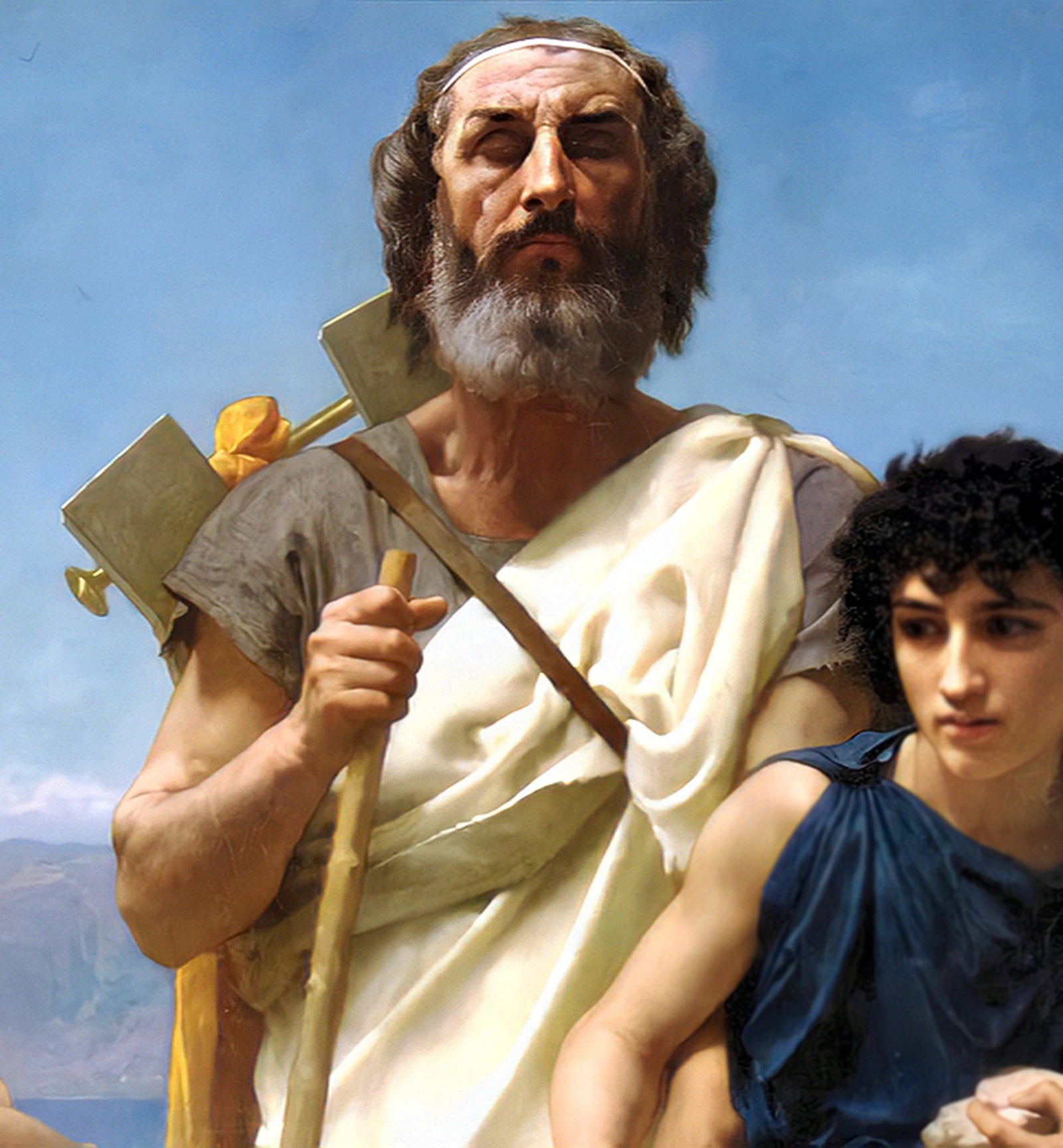
| 27 Quotes | |
| Occup. | Poet |
| From | Greece |
| Born | 750 BC Greece |
| Died | 700 BC Ios, Greece |
| Cite | |
Citation Formats
APA Style (7th ed.)
Homer biography, facts and quotes. (2026, February 11). FixQuotes. https://fixquotes.com/authors/homer/
Chicago Style
"Homer biography, facts and quotes." FixQuotes. February 11, 2026. https://fixquotes.com/authors/homer/.
MLA Style (9th ed.)
"Homer biography, facts and quotes." FixQuotes, 11 Feb. 2026, https://fixquotes.com/authors/homer/. Accessed 26 Mar. 2026.
Early Life and Background
Homer stands at the threshold of Greek literature like a half-seen figure behind a blazing door: immensely real in cultural consequence, elusive in biography. Ancient tradition placed his life in the 8th century BCE (often c. -750 to -700) and tied him to Ionia, the Greek-speaking coastal world of Asia Minor, with Smyrna and Chios most frequently named. Later portraits made him blind, a singer dependent on memory and voice, a detail that may preserve a truth about the prestige of oral artistry rather than a medical fact. What can be stated with confidence is that "Homer" became the organizing name for a poetic intelligence that gathered older heroic song into monumental form.His era was one of recovery and invention. After the collapse of Mycenaean palace culture, Greek communities re-formed around kin groups, local basileis (chiefs), and widening trade routes that carried stories as readily as goods. In that ferment, heroic narrative served as both entertainment and social blueprint - a way to think about honor, property, household order, guest-friendship, and the violence that always threatened them. The poems attributed to Homer preserve memories of a Bronze Age world, yet speak in the idiom and anxieties of the early archaic age, when identity and prestige were being renegotiated in public speech and song.
Education and Formative Influences
Homer, whether an individual master poet or the emblem of a long-evolving tradition, was formed in the disciplined ecology of oral composition: formulaic diction, recurring scenes (arming, feasting, supplication), and genealogies that anchored listeners to a shared past. He drew on Panhellenic myth, local Ionian performance circuits, and the competitive culture of festivals where rhapsodes recited and refined inherited material. The eventual spread of alphabetic writing in Greece likely changed the afterlife of such poetry, helping stabilize versions that had previously lived in performance, but the poems themselves retain the marks of oral craft - speed, clarity, and a relentless sense of what an audience must feel next.Career, Major Works, and Turning Points
The Iliad and the Odyssey are the works for which Homer is credited, and they represent a turning point in world literature: not simply long poems, but systems for thinking about the human under pressure. The Iliad concentrates the Trojan War into a few weeks of rage, reconciliation, and catastrophic insight, shaping Achilles into a study of glory bought with grief. The Odyssey redirects heroism into endurance, disguise, persuasion, and homecoming, making Odysseus a man who survives by reading motives as much as by wielding force. Later antiquity added a cluster of "Homeric Hymns" and other epics to the orbit of his name, but the Iliad and Odyssey remain the definitional achievements - texts that transformed scattered heroic lays into narratives with moral architecture.Philosophy, Style, and Themes
Homeric style is outwardly lucid and forward-driving, yet psychologically exact. He writes as if human motives can be named without being simplified: honor and tenderness, vanity and loyalty, piety and opportunism. A recurrent theme is how fragile social bonds become under strain, and how carefully they must be tested. The poems treat friendship as both salvation and risk - a sacred tie that exposes you to betrayal, loss, and the unbearable arithmetic of obligation. This is why a line like “Nothing shall I, while sane, compare with a friend”. feels Homeric in spirit: it catches the poems' conviction that comradeship can rival all other goods, yet is never guaranteed by blood or reputation alone.Just as central is Homeric inheritance: sons living in the shadow of fathers, trying to equal legends while confronting their own limitations. “For rarely are sons similar to their fathers: most are worse, and a few are better than their fathers”. The Iliad stages this in its catalog of lineages and the aching desire to be "worthy" of a name, while the Odyssey makes it intimate through Telemachus, who must learn to become himself without the certainty that his father's story will return. Homer also understands labor as a collective burden and a moral measure; armies, households, and ships move only when many hands cooperate, and failure of shared effort becomes tragedy. “Light is the task where many share the toil”. In these themes, the inner life is inseparable from the social world: character is revealed not by confession but by choices made in public, under oath, in grief, and in temptation.
Legacy and Influence
Homer became Greece's foundational author, the one later writers argued with in order to define themselves. Greek education treated the epics as moral and linguistic bedrock; dramatists adapted Homeric plots into tragedy and reinterpreted his heroes; philosophers mined him as both authority and problem, and historians borrowed his methods of scene and speech. Through Roman adaptation, Renaissance humanism, and modern translation, Homer shaped conceptions of epic, heroism, and narrative realism, proving that ancient song could carry enduring psychological truth. Whether "Homer" was one voice or many, the poems attributed to him created a shared imaginative past for the Greeks and a lasting template for how literature can hold violence, beauty, and moral ambiguity in the same steady gaze.Our collection contains 27 quotes written by Homer, under the main topics: Motivational - Wisdom - Friendship - Resilience - Honesty & Integrity.
Other people related to Homer: Alexander Pope (Poet), Aeschylus (Playwright), Herodotus (Historian), Matthew Arnold (Poet), Dan Castellaneta (Actor), Alexander the Great (Leader), Hesiod (Poet), Marcus Terentius Varro (Author), William Cowper (Poet), Jean Racine (Dramatist)
Homer Famous Works
- -725 The Odyssey (Epic Poem)
- -762 The Iliad (Epic Poem)
Source / external links