
Horace Mann Biography Quotes 28 Report mistakes
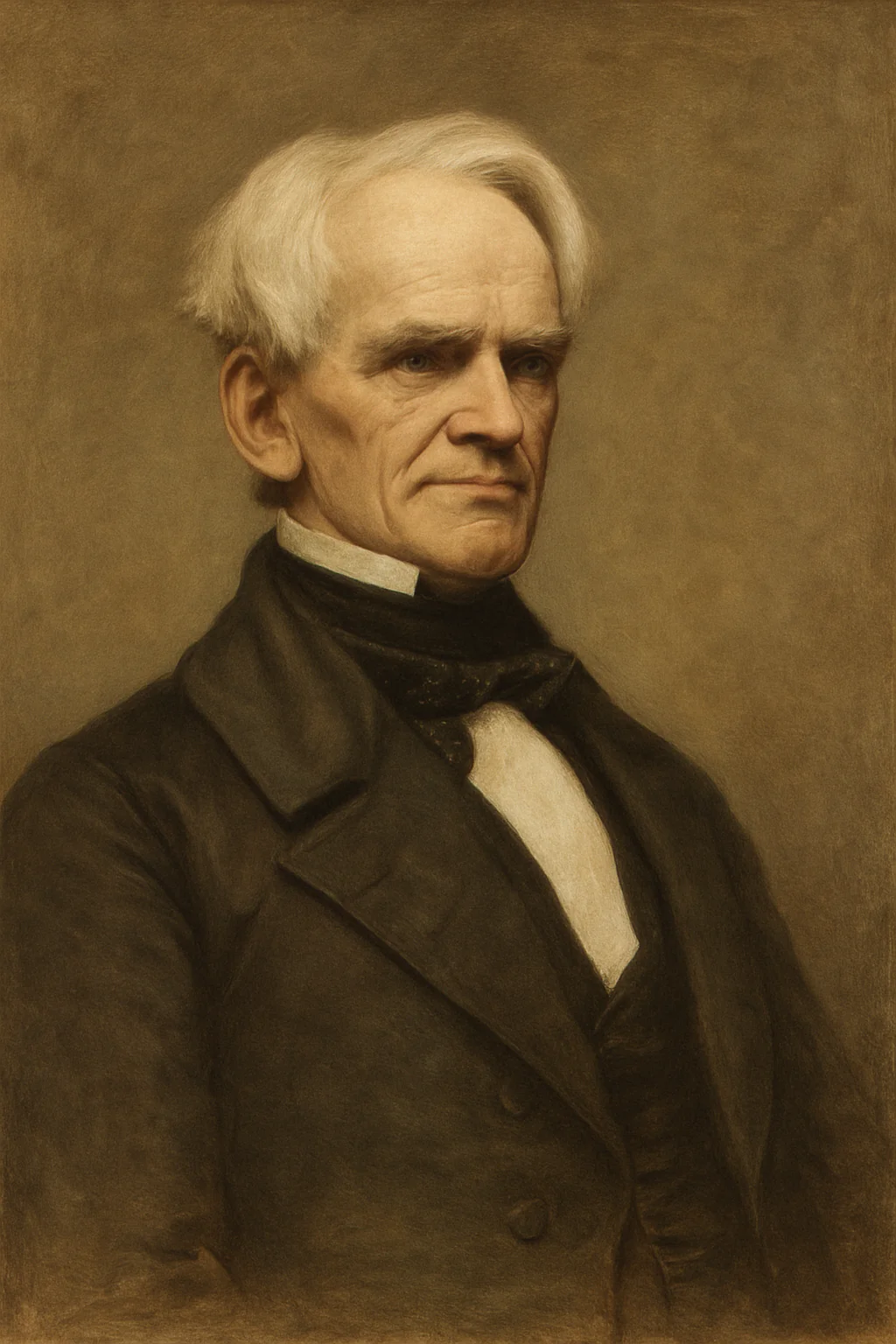
Attr: By Southworth & Hawes - ImageZeno.org, ID number 20001902687
| 28 Quotes | |
| Occup. | Educator |
| From | USA |
| Born | May 4, 1796 Franklin, Massachusetts, United States |
| Died | August 2, 1859 Yellow Springs, Ohio, United States |
| Cause | Typhoid fever |
| Aged | 63 years |
| Cite | |
Citation Formats
APA Style (7th ed.)
Horace mann biography, facts and quotes. (2026, February 11). FixQuotes. https://fixquotes.com/authors/horace-mann/
Chicago Style
"Horace Mann biography, facts and quotes." FixQuotes. February 11, 2026. https://fixquotes.com/authors/horace-mann/.
MLA Style (9th ed.)
"Horace Mann biography, facts and quotes." FixQuotes, 11 Feb. 2026, https://fixquotes.com/authors/horace-mann/. Accessed 5 Mar. 2026.
Early Life and Background
Horace Mann was born on May 4, 1796, in Franklin, Massachusetts, a small town of stony fields and strict Congregational habits, where survival depended on thrift, repetition, and self-command. His family life was marked by limited means and the early death of his father, leaving Mann to experience, firsthand, how easily promise could be narrowed by circumstance. In that New England world, moral worth was often measured in discipline, but opportunity was uneven - a tension that would become the engine of his public career.As a boy he worked the farm and attended district schools that were typical of the era: short terms, uneven teachers, and scarce materials. The local library, when he could reach it, widened his horizons beyond Franklin, and the contrast between what books offered and what most children received formed his earliest sense of social injustice. From the beginning, he was less interested in private advancement than in the question of what a community owed its children.
Education and Formative Influences
Mann entered Brown University and graduated in 1819, absorbing the period's faith in moral improvement and the new language of republican citizenship. He then studied law at Litchfield Law School in Connecticut, a training ground for ambitious young men who believed institutions could be redesigned by reason. The intellectual climate - post-Revolutionary confidence, evangelical reform energy, and the early stirrings of industrial change - pushed him toward the idea that character and competence were not simply inherited but cultivated, and that the state could legitimately act to cultivate them.Career, Major Works, and Turning Points
After admission to the bar, Mann practiced law in Dedham, Massachusetts, and entered politics as a state legislator, eventually serving as president of the Massachusetts Senate. Personal grief - including the death of his first wife, Charlotte Messer - deepened his seriousness and helped shift his ambition from courtroom success to reform work. In 1837 he accepted the newly created post of secretary of the Massachusetts Board of Education, a decisive turning point that made him the nation's best-known advocate of common schools. Through annual reports, relentless travel, teacher institutes, and campaigns for longer school terms, better schoolhouses, public funding, and professional training, he tried to replace patchwork charity with a coherent public system. His reports became a kind of blueprint for Northern states, and his 1843-1844 visit to Europe, especially Prussia, supplied comparative evidence that schooling could be organized at scale. Later, after controversies over religion in schools and his push for "nonsectarian" moral instruction, he served in the U.S. House of Representatives (1848-1853) and finished his public life as president of Antioch College in Yellow Springs, Ohio, where he again pressed the link between learning, citizenship, and conscience.Philosophy, Style, and Themes
Mann's central conviction was that education was not a private luxury but a public instrument of democracy, able to reduce the brutalities of class and the temptations of vice. He argued in the language of systems and stability, seeing schools as preventive institutions that could do what punishments could not. The most famous crystallization of this belief is his claim, “Education then, beyond all other devices of human origin, is the great equalizer of the conditions of men, the balance-wheel of the social machinery”. Behind that sentence is a psychological portrait: a man who feared social fracture in an age of immigration, early factory discipline, and widening wealth, and who sought a peaceful lever - schooling - to keep the republic from hardening into hereditary ranks.His style fused moral urgency with practical admonition. He distrusted drift and romanticized genius; he trusted habit, time, and trained effort, sounding at times like a secular preacher of self-government. “Habit is a cable; we weave a thread of it each day, and at last we cannot break it”. The line reveals the inward logic of his reformism: if character is constructed daily, then institutions must be designed to shape daily life - attendance, punctuality, reading, recitation, and the steady presence of competent teachers. Yet Mann was no mere bureaucrat; he carried a restless sense of unfinished duty that pressed him beyond comfort toward a life of service. “Be ashamed to die until you have won some victory for humanity”. That imperative helped him endure ridicule, political backlash, and the exhausting logistics of building consensus one town meeting at a time.
Legacy and Influence
Mann died on August 2, 1859, but by then the architecture of common-school reform - public funding, supervision, normal schools for teachers, graded classrooms, and the ideal of universal access - had become a national aspiration, even when unevenly realized. He is remembered as the "father of the common school" less for inventing public education than for giving it a moral rationale and a bureaucratic method strong enough to outlast him. His influence ran through later Progressive-era school expansion and the enduring American belief that schooling can be a civic remedy - a belief that continues to inspire reformers and to invite debate about whose values schools should teach, how equality should be measured, and what obligations a democracy owes the child who cannot purchase opportunity.Our collection contains 28 quotes written by Horace, under the main topics: Motivational - Ethics & Morality - Truth - Learning - Parenting.
Other people related to Horace: Horace Walpole (Author), George Combe (Educator), Olympia Brown (Activist)
Frequently Asked Questions
- Horace Mann School tuition: Around the mid-$60,000s per year; check the school’s site for current rates.
- Horace Mann Jr: His son (1844–1868), an American botanist known for work on Hawaiian flora.
- Horace Mann High School: Name used by multiple U.S. high schools named after him.
- Horace Mann what did he do: Led the U.S. common school movement and reformed public education.
- Horace Mann School: Private K-12 college-prep school in the Bronx, New York City.
- How old was Horace Mann? He became 63 years old
Source / external links