
Horace Mann Biography Quotes 28 Report mistakes
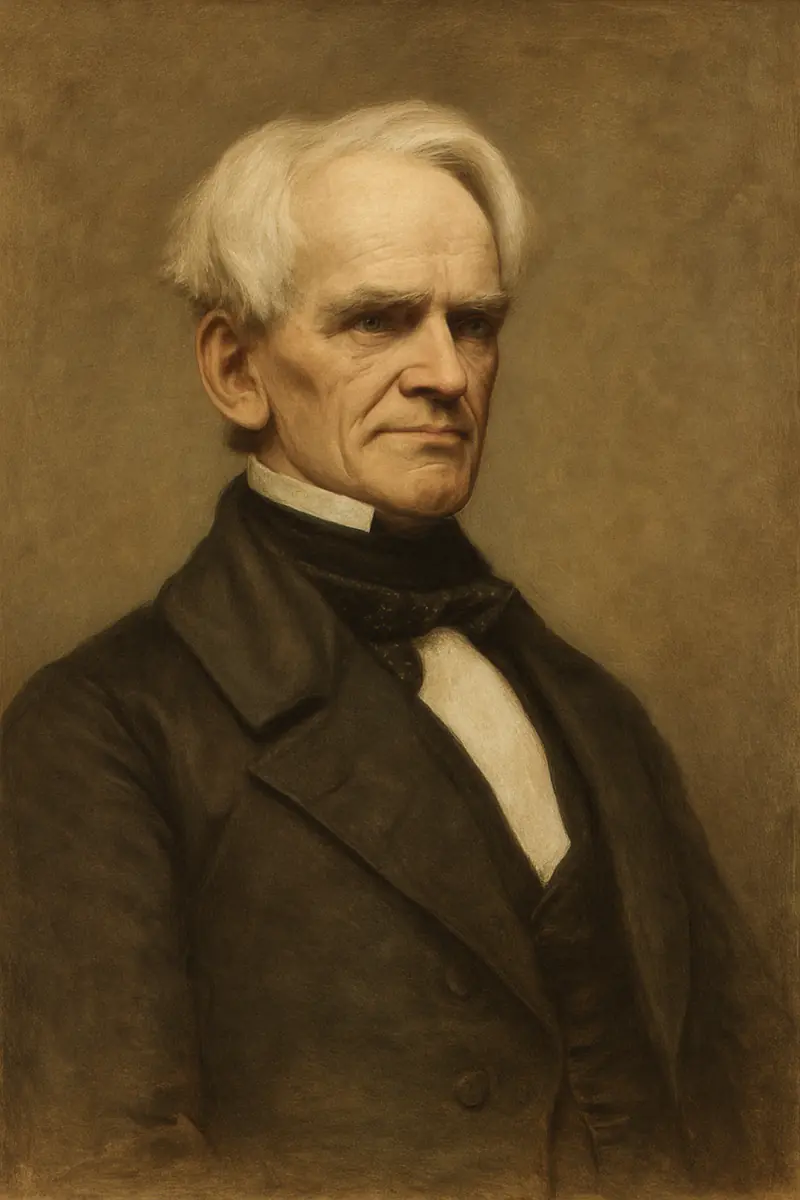
Attr: By Southworth & Hawes - ImageZeno.org, ID number 20001902687
| 28 Quotes | |
| Occup. | Educator |
| From | USA |
| Born | May 4, 1796 Franklin, Massachusetts, United States |
| Died | August 2, 1859 Yellow Springs, Ohio, United States |
| Cause | Typhoid fever |
| Aged | 63 years |
Horace Mann was born on May 4, 1796, in Franklin, Massachusetts, into a modest farming family. Largely self-educated in childhood, he drew heavily on the town's public library, stocked with books purchased from funds donated by Benjamin Franklin, an experience that shaped his lifelong conviction that publicly supported institutions could elevate all citizens. Mann entered Brown University in 1816, excelled in the classics and moral philosophy, and graduated as valedictorian in 1819. He served briefly as a tutor and librarian at Brown before reading law in Wrentham and studying at the Litchfield Law School.
Legal and Early Political Career
Admitted to the bar in 1823, Mann practiced law in Dedham and later in Boston. He entered public life as a reform-minded Whig, winning election to the Massachusetts House of Representatives (1827, 1833) and then the State Senate (1833, 1837), serving as Senate president from 1836 to 1837. In the legislature he worked on public health, temperance, and especially state-supported care for the mentally ill, helping lay the groundwork for the Worcester State Lunatic Asylum. These efforts reflected his broader belief that well-designed public institutions could mitigate social ills.
Founding Secretary of the Massachusetts Board of Education
In 1837 Massachusetts established the nation's first state Board of Education, and Mann became its inaugural secretary, a role he held until 1848. Backed by industrialist and philanthropist Edmund Dwight, he launched a program to professionalize teaching and modernize public schools. Mann helped open the first state normal schools for teacher training at Lexington (1839), Barre (which soon moved to Westfield), and Bridgewater, initiatives supported by reformers such as Charles Brooks and in conversation with the work of Henry Barnard in neighboring states.
Mann founded and edited the Common School Journal (beginning in 1838), disseminating model curricula and methods. He advocated:
- Free, universal, tax-supported "common schools" for all children.
- Nonsectarian moral instruction, with the Bible used for ethical teaching but without sectarian doctrine.
- Professional teacher preparation and higher salaries.
- Longer school terms, age grading, and standardized textbooks.
- Safe, well-ventilated schoolhouses and the abolition of routine corporal punishment.
A pivotal 1843 tour of European schools, especially the Prussian system, informed his Eighth Annual Report, which praised teacher training, age-grading, and state oversight. His recommendations sparked a pamphlet war with some Boston schoolmasters who favored traditional rote methods and corporal punishment; Mann defended child-centered pedagogy influenced by Johann Heinrich Pestalozzi and argued that modern methods were compatible with rigorous learning and civic education.
Ideas, Writings, and Reform Philosophy
Mann saw public schooling as the "great equalizer of the conditions of men", a means to social mobility and republican citizenship. His reports and later collections such as Lectures and Reports on Education articulated a comprehensive reform vision: schools should cultivate both intellect and character, as well as equip a diverse citizenry for self-government. He sometimes embraced then-fashionable sciences such as phrenology, reflected in his friendship with George Combe, while remaining fundamentally pragmatic, seeking evidence-based improvements in teacher training, curriculum, and school governance.
National Politics and Antislavery Stance
When former President and Massachusetts Congressman John Quincy Adams died in 1848, Mann won the special election to succeed him in the U.S. House of Representatives. He served from 1848 to 1853, initially as a Whig and then aligned with the Free Soil movement. In Congress he emerged as a firm opponent of slavery and denounced the Fugitive Slave Act of 1850, clashing publicly with Daniel Webster after Webster's "Seventh of March" speech in support of compromise with slaveholding interests. Mann ran unsuccessfully for governor of Massachusetts as a Free Soil candidate in 1852 but remained a prominent voice for free labor, civil liberty, and educational nation-building.
Antioch College Presidency
In 1853 Mann accepted the presidency of Antioch College in Yellow Springs, Ohio, a pioneering nonsectarian institution committed to coeducation. He recruited a capable faculty (including Thomas Hill, later president of Harvard) and worked to build a college whose ethos reflected his common school ideals: intellectual rigor entwined with moral purpose, open to women and men and attentive to the practical needs of a democratic society. Antioch struggled financially, and Mann's health suffered under the strain, but he persisted, teaching, fundraising, and mentoring students. His oft-quoted charge to Antioch's first graduating class, "Be ashamed to die until you have won some victory for humanity", encapsulated his educational creed.
Personal Life
Mann married Charlotte Messer, daughter of Brown University president Asa Messer, in 1830; she died in 1832. In 1843 he married Mary Tyler Peabody, a writer and educator from the notable Peabody family. Through Mary he was connected to a circle of New England intellectuals: her sister Elizabeth Peabody was an educational innovator and early kindergarten advocate; her sister Sophia married novelist Nathaniel Hawthorne. Horace and Mary's children included Horace Mann Jr., a promising botanist, and Benjamin Pickman Mann; another son, George Combe Mann, named for the Scottish phrenologist, reflects the couple's engagement with contemporary scientific thought. Mary Peabody Mann was a close collaborator, publishing and extending her husband's ideas after his death.
Allies, Contemporaries, and Adversaries
Mann's reform work intersected with a wide network:
- Allies and collaborators: Edmund Dwight (philanthropist), Henry Barnard (educational reformer in Connecticut and Rhode Island), Samuel Gridley Howe (social reformer), Barnas Sears (Mann's successor as Massachusetts education secretary), Thomas Hill (educator), and Elizabeth Palmer Peabody (educational pioneer).
- Antislavery and political associates: Charles Sumner and other Free Soilers; he often stood at odds with Daniel Webster over slavery and sectional compromise.
- Critics: Boston schoolmasters who opposed his pedagogical reforms; religious leaders who argued that "nonsectarian" schooling still privileged Protestant norms; and defenders of corporal punishment and rote learning who viewed his methods as untested innovations.
Death
Horace Mann died on August 2, 1859, in Yellow Springs, Ohio, while still serving as Antioch's president. His final years were marked by unrelenting effort to stabilize and define the college, even as his health declined.
Legacy and Influence
Mann is widely regarded as the foremost architect of the 19th-century common school movement. In Massachusetts he helped institutionalize teacher training, professional supervision, graded schools, improved facilities, and a statewide framework for public education, standards that influenced other states and later national policy. His advocacy contributed to the cultural and legislative momentum that led Massachusetts to enact the first statewide compulsory attendance law in 1852. Normal schools evolved into state teachers colleges and, later, public universities; the Board of Education model spread widely; and the ideal of tax-supported, nonsectarian schooling became a cornerstone of American civic life.
While historians note tensions in his program, especially around religion in schools and the limits of "nonsectarian" instruction, Mann's synthesis of moral purpose, professionalization, and public investment reshaped American education. His words to Antioch graduates remain a distillation of his life's work: education should prepare individuals not only to prosper but to advance the common good.
Our collection contains 28 quotes who is written by Horace, under the main topics: Motivational - Ethics & Morality - Truth - Learning - Parenting.
Other people realated to Horace: Horace Walpole (Author), Edward Everett (Statesman), Olympia Brown (Activist)
Frequently Asked Questions
- Horace Mann School tuition: Around the mid-$60,000s per year; check the school’s site for current rates.
- Horace Mann Jr: His son (1844–1868), an American botanist known for work on Hawaiian flora.
- Horace Mann High School: Name used by multiple U.S. high schools named after him.
- Horace Mann what did he do: Led the U.S. common school movement and reformed public education.
- Horace Mann School: Private K-12 college-prep school in the Bronx, New York City.
- How old was Horace Mann? He became 63 years old
Source / external links