
Horatio Nelson Biography Quotes 23 Report mistakes
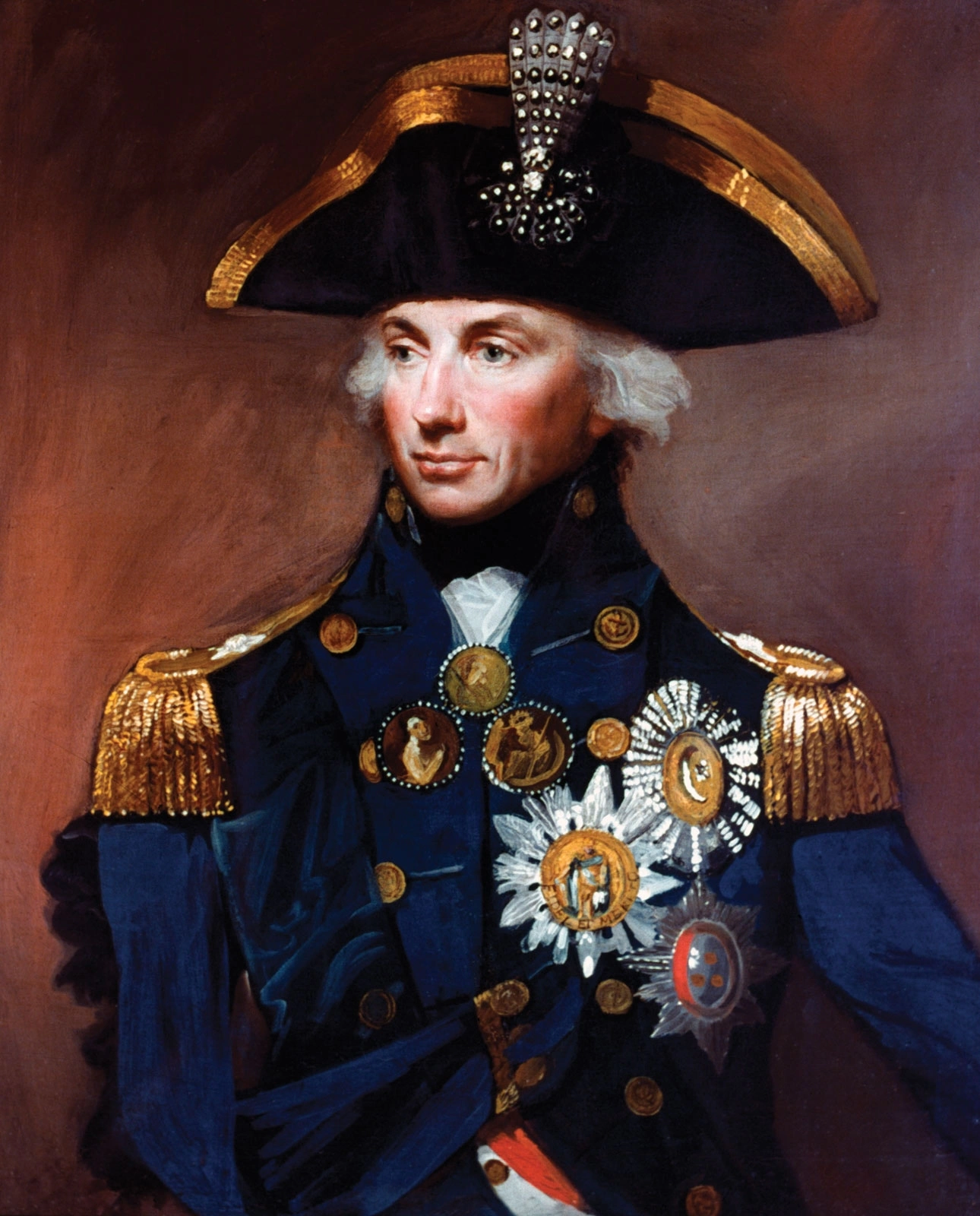
| 23 Quotes | |
| Occup. | Soldier |
| From | United Kingdom |
| Born | September 29, 1758 Burnham Thorpe, Norfolk, England |
| Died | October 21, 1805 Cape Trafalgar, Spain |
| Aged | 47 years |
| Cite | |
Citation Formats
APA Style (7th ed.)
Horatio nelson biography, facts and quotes. (2026, February 11). FixQuotes. https://fixquotes.com/authors/horatio-nelson/
Chicago Style
"Horatio Nelson biography, facts and quotes." FixQuotes. February 11, 2026. https://fixquotes.com/authors/horatio-nelson/.
MLA Style (9th ed.)
"Horatio Nelson biography, facts and quotes." FixQuotes, 11 Feb. 2026, https://fixquotes.com/authors/horatio-nelson/. Accessed 5 Mar. 2026.
Early Life and Background
Horatio Nelson was born on September 29, 1758, in Burnham Thorpe, Norfolk, into a provincial clerical family whose connections were modest but real. His father, the Rev. Edmund Nelson, served as rector; his mother, Catherine Suckling, came from a lineage with naval and court ties that would later help open doors. The England of Nelson's childhood was maritime and commercial, living in the long afterglow of the Seven Years' War and already eyeing renewed rivalry with Bourbon France and Spain. In such a world, the sea was not romance but national infrastructure, and a career in the Royal Navy could turn a younger son into a man of consequence.Loss and ambition marked him early. Catherine died when he was nine, and Nelson grew up with a private urgency that contemporaries would later read as both sensitivity and fierce self-assertion. Slight in build and often unwell, he nevertheless cultivated an identity of stubborn endurance - a boy who would not be reduced to a spectator by frailty. That inner tension, between physical vulnerability and a hunger for distinction, became one of the engines of his adult life: he needed the service not only as employment, but as a stage on which to prove will over circumstance.
Education and Formative Influences
Nelson attended local schooling and, more decisively, the floating education of the quarterdeck: he entered the navy in 1771 under the patronage of his maternal uncle, Capt. Maurice Suckling. Early voyages took him from the North Sea to the West Indies and, famously, toward the Arctic with Constantine Phipps in 1773, experiences that hardened his seamanship and taught him how quickly weather, ice, and chance could make mockery of human plans. Commissioned lieutenant in 1777 and captain soon after, he absorbed a culture that prized initiative within hierarchy, personal bravery as professional currency, and the moral claim that Britain's survival depended on control of sea lanes.Career, Major Works, and Turning Points
Nelson's rise was forged in the wars of the French Revolution and Napoleon, when Britain fought for maritime supremacy against an ideologically charged continental coalition. He distinguished himself in the West Indies in the 1780s, then returned to global war: at Cape St. Vincent (1797) he broke formation to strike decisively, winning fame; at Tenerife (1797) he lost his right arm, turning bodily sacrifice into public symbol. Promoted and entrusted with independent command, he helped crush the French fleet at the Battle of the Nile (Aboukir Bay, 1798), isolating Napoleon in Egypt and making Nelson a household name. Copenhagen (1801) showcased his tactical audacity and political nerve; the long blockade of Toulon tested his endurance; and Trafalgar (October 21, 1805) - the climactic fleet action off Cape Trafalgar - ended with a British victory and Nelson mortally wounded, his death consecrating him as the navy's exemplary martyr. His private life, including his troubled marriage to Frances Nisbet and his celebrated relationship with Emma, Lady Hamilton, ran alongside his public career, complicating the saintly image with human dependency, longing, and the search for emotional refuge.Philosophy, Style, and Themes
Nelson's leadership fused calculation and theater. He mastered the navy's administrative realities - signaling, logistics, blockade routine - but he also understood that men fought harder for a commander who made victory feel inevitable and personal. “England expects that every man will do his duty”. The line, sent into battle at Trafalgar, was not only national propaganda; it was a mirror of Nelson's own self-demand, the voice of a man who converted private anxiety into public obligation. He treated morale as a weapon: affection for him became a substitute for fear of death, and his captains were trained to act aggressively without waiting for detailed direction.At the same time, Nelson was not a simple authoritarian. He prized initiative, even rule-bending, when it served decisive action, and he was candid about the limits of command amid nature and chaos: “I cannot command winds and weather”. That realism - almost fatalistic - sat beside a gambler's instinct for timing and shock. His famous refusal to acknowledge a signal at Copenhagen became legend because it dramatized a principle he lived by: “I have only one eye, I have a right to be blind sometimes... I really do not see the signal!” Psychologically, the gesture reveals both his need to control the narrative of risk and his conviction that greatness required responsibility for disobedience, not excuses.
Legacy and Influence
Nelson's afterlife shaped Britain as much as his battles did: his state funeral, the monumentality of Trafalgar Square, and the steady publication of letters and dispatches turned him into a civic scripture of duty, sacrifice, and maritime identity. Strategically, his methods - close action, concentration on the enemy's line, delegated initiative within a coherent plan - became a template for naval aggression well beyond the age of sail. Culturally, he remains a study in the costs of heroic public performance: a physically damaged, emotionally hungry man who still imposed clarity on confusion and made national survival feel like a personal promise.Our collection contains 23 quotes written by Horatio, under the main topics: Witty One-Liners - Wisdom - Leadership - Resilience - Faith.
Other people related to Horatio: William Bligh (Soldier)
Source / external links