
Howard Dean Biography Quotes 38 Report mistakes
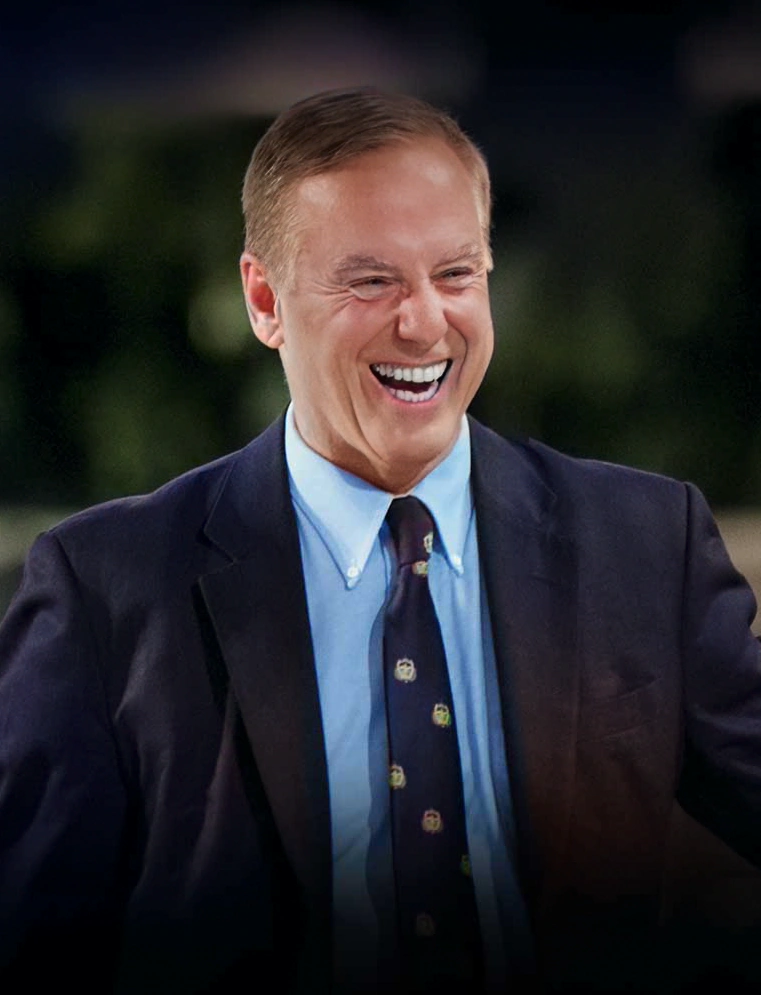
| 38 Quotes | |
| Born as | Howard Brush Dean III |
| Occup. | Politician |
| From | USA |
| Spouse | Judith Steinberg (1981) |
| Born | November 17, 1948 East Hampton, New York, USA |
| Age | 77 years |
| Cite | |
Citation Formats
APA Style (7th ed.)
Howard dean biography, facts and quotes. (2026, February 11). FixQuotes. https://fixquotes.com/authors/howard-dean/
Chicago Style
"Howard Dean biography, facts and quotes." FixQuotes. February 11, 2026. https://fixquotes.com/authors/howard-dean/.
MLA Style (9th ed.)
"Howard Dean biography, facts and quotes." FixQuotes, 11 Feb. 2026, https://fixquotes.com/authors/howard-dean/. Accessed 26 Mar. 2026.
Early Life and Background
Howard Brush Dean III was born on November 17, 1948, in New York City, into an old New England-rooted family whose public standing came with expectations of service and self-command. His father, Howard Brush Dean Jr., was an investment banker and later chaired the National Council on Alcoholism; the household blended patrician assurance with a frank awareness of social damage, including addiction and the quiet costs families pay behind closed doors.Dean grew up moving between Manhattan and the family base in New England, absorbing an America that was simultaneously triumphant and fraying - postwar prosperity shadowed by civil rights struggle, Vietnam, and an emerging skepticism toward authority. He has described himself as a restless, competitive young man who learned early how status can insulate people from consequence - and how moral language is often used to police others while excusing insiders. That tension between privilege and accountability became a lifelong engine: a desire to belong to institutions, and an equally strong impulse to challenge what they protected.
Education and Formative Influences
He attended the elite St. Pauls School in Concord, New Hampshire, then earned a BA from Yale University in 1971, a period marked by campus politics and national turbulence. After graduation he worked briefly before turning to medicine, receiving his MD from Columbia University College of Physicians and Surgeons in 1978. Clinical training in New York - followed by residency and family practice work - gave him a physicians intimacy with ordinary vulnerability and bureaucratic failure, sharpening his later political focus on public health, insurance access, and pragmatic administration rather than ideological purity.Career, Major Works, and Turning Points
Dean moved to Vermont and built a career as a practicing physician in Burlington before entering politics. After serving in the Vermont House of Representatives and as lieutenant governor, he became governor in 1991 when Gov. Richard Snelling died in office; Dean then won election and served five full terms through 2003. As governor he balanced budgets while expanding childrens health coverage and pushing incremental health reform in a small state allergic to grandiose promises. Nationally he became a Democratic star during the Iraq War debate, running for president in 2004 as an early, outspoken critic of the invasion; his campaign surged on grassroots enthusiasm and internet fundraising but collapsed after weak early-state finishes and the instantly replayed "Dean scream" in Iowa. He later reinvented himself as chair of the Democratic National Committee (2005-2009), building the 50-state strategy that invested in local party infrastructure and helped set the table for Democratic gains in 2006 and Barack Obamas victory in 2008.Philosophy, Style, and Themes
Deans inner life as a politician was shaped by a doctors habit of direct speech - diagnosis first, comforting later. He treated politics as a problem of systems and incentives, which made him impatient with ceremonial bipartisanship when he believed the facts were being bent. That impatience sometimes read as anger, but it was also a deliberate tactic: he wanted to pull conflict into the open rather than let it metastasize under polite language. His strategic core was democratic in the literal sense - power should be rebuilt where people live. “At every turn when there has been an imbalance of power, the truth questioned, or our beliefs and values distorted, the change required to restore our nation has always come from the bottom up from our people”. In that sentence is Deans enduring bet: institutions will not redeem themselves without organized pressure from outside their comfort.His rhetoric often fused moral critique with a refusal to perform moral purity. He could admit fallibility as a form of credibility - a rare posture in an era of scripted certainty. “I've waffled before. I'll waffle again”. The line is comic, but psychologically revealing: he preferred the risk of looking inconsistent to the larger sin of pretending policy is static in a changing world. Yet he was equally willing to weaponize moral language against opponents he saw as hypocritical or coercive, especially on culture-war issues. “From a religious point of view, if God had thought homosexuality is a sin, he would not have created gay people”. This was not merely a provocation; it framed tolerance as a religiously grounded ethic and exposed his broader theme - that public morality should protect the marginalized, not patrol them.
Legacy and Influence
Dean never became president, but he changed the mechanics and mood of modern Democratic politics: small-donor internet fundraising, decentralized organizing, and year-round investment in state parties became mainstream partly because his 2004 insurgency proved they could work. As DNC chair he professionalized field operations beyond coastal strongholds and helped normalize the idea that building power in hostile territory is not naivete but infrastructure. His blunt style remains divisive, yet it also anticipated a later era in which authenticity, anger at hypocrisy, and bottom-up mobilization became central currencies. In that sense, Deans biography is less a story of failed ambition than of institutional redesign - a physician-politician who treated the party itself as a patient and insisted the cure begin in the grassroots.Our collection contains 38 quotes written by Howard, under the main topics: Witty One-Liners - Ethics & Morality - Justice - Sarcastic - Leadership.
Other people related to Howard: Wes Boyd (Activist), Dick Gephardt (Politician)
Source / external links