
Huey Newton Biography Quotes 17 Report mistakes
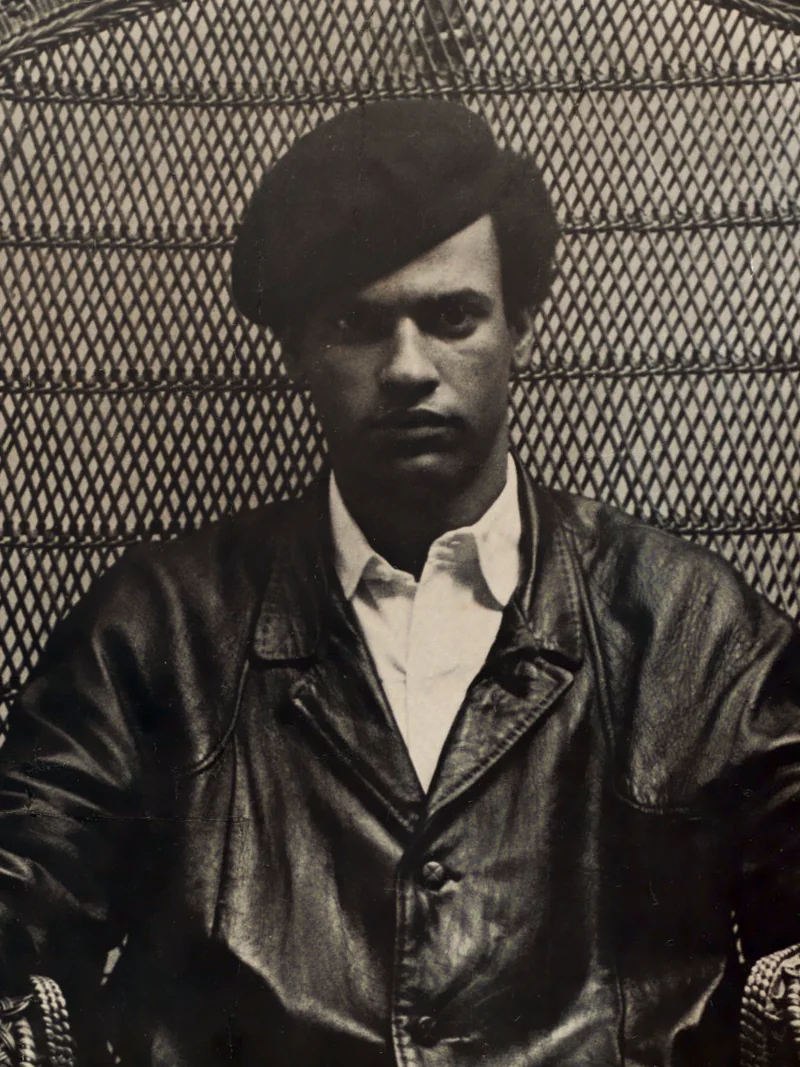
| 17 Quotes | |
| Born as | Huey Percy Newton |
| Known as | Huey P. Newton |
| Occup. | Activist |
| From | USA |
| Born | February 17, 1942 Monroe, Louisiana, USA |
| Died | August 22, 1989 Oakland, California, USA |
| Cause | gunshot wound |
| Aged | 47 years |
| Cite | |
Citation Formats
APA Style (7th ed.)
Huey newton biography, facts and quotes. (2026, February 11). FixQuotes. https://fixquotes.com/authors/huey-newton/
Chicago Style
"Huey Newton biography, facts and quotes." FixQuotes. February 11, 2026. https://fixquotes.com/authors/huey-newton/.
MLA Style (9th ed.)
"Huey Newton biography, facts and quotes." FixQuotes, 11 Feb. 2026, https://fixquotes.com/authors/huey-newton/. Accessed 22 Mar. 2026.
Early Life and Background
Huey Percy Newton was born on February 17, 1942, in Monroe, Louisiana, the youngest child in a large working-class family shaped by the Jim Crow South. His parents, Walter Newton and Armelia Johnson Newton, joined the wartime and postwar Black migration west, settling in Oakland, California, a port city where shipyard labor and police surveillance grew side by side. Newton came of age as the Bay Area became a laboratory of Cold War prosperity and racial containment - segregated housing, underfunded schools, and an aggressive police presence that made everyday movement feel conditional.Newton later described an early sense of humiliation and rage that was less a single trauma than a steady pressure: the mismatch between American democratic language and Black life as lived. He struggled with reading as a child and carried the stigma of being labeled slow, but he also developed a sharp sensitivity to power - who could speak, who could stop you, who could make rules look like nature. That sensitivity, sharpened on Oakland streets, would become his lifelong instrument and his lifelong wound.
Education and Formative Influences
Determined to master what school had withheld, Newton taught himself to read seriously in adolescence, then moved through Merritt College, where he met Bobby Seale and studied Black history, law, and revolutionary theory with the urgency of someone auditing the state that policed him. He absorbed Malcolm X, Frantz Fanon, and Marxist and anti-colonial writing, but also the practical lessons of California gun law and police procedure - knowledge he treated as both shield and curriculum for the poor.Career, Major Works, and Turning Points
In October 1966 Newton and Seale founded the Black Panther Party for Self-Defense in Oakland, marrying armed monitoring of police with a program demanding housing, jobs, education, and an end to state violence. Newtons 1967 arrest after a traffic stop and shootout that killed Officer John Frey made him a symbol as the Free Huey movement swelled; convicted of voluntary manslaughter in 1968, he was released when the conviction was overturned in 1970. Under his co-leadership the Panthers expanded nationally while launching survival programs such as Free Breakfast for Children and community health initiatives, even as COINTELPRO infiltration, internal conflict, and escalating violence battered the organization. Newtons later years were marked by exile in Cuba (1974-1977), a 1977 conviction for voluntary manslaughter in the killing of Kathleen Smith (later overturned), and a strained return to Oakland amid addiction, factional decline, and increasing personal volatility; he was shot and killed on August 22, 1989, in West Oakland.Philosophy, Style, and Themes
Newton thought in the hard grammar of power: who monopolizes force, who gets defined as a threat, and how the law converts inequality into procedure. He insisted that vulnerability was not a moral condition but a political one - “Any unarmed people are slaves, or are subject to slavery at any given moment”. This was not an abstract romance of weapons so much as a diagnosis of how policing and racial hierarchy operated in his neighborhood, and why dignity required visible refusal. Yet his most enduring originality was strategic: he paired confrontation with care, turning breakfast lines and clinics into evidence that the state could be challenged not only with protest but with replacement.His writing and speeches reveal a mind that mixed icy realism with almost religious devotion to collective possibility. “The first lesson a revolutionary must learn is that he is a doomed man”. The line reads like bravado, but in Newton it also signals a psychological wager - accept the likelihood of punishment so fear cannot be used as leash. In the same vein, he framed political meaning as the antidote to annihilation: “My fear was not of death itself, but a death without meaning”. That hunger for meaning helps explain both his charisma and his self-destructiveness: the more the Panthers were hunted, fractured, and mythologized, the more he seemed to search for a role large enough to justify the cost, even when the role began to consume the man.
Legacy and Influence
Newton remains one of the most consequential architects of late-20th-century Black radicalism: a founder who helped shift civil rights discourse toward self-determination, community control, and an explicit critique of policing and political economy. The Panthers survival programs anticipated later mutual-aid frameworks, while their battles with surveillance and infiltration became case studies in state counterinsurgency. Newtons legacy is inseparable from contradiction - theorist and street tactician, advocate of disciplined service and a figure undone by violence and addiction - but that tension is precisely why he endures: he forced America to face how quickly democratic ideals collapse when power is protected by guns, courts, and narrative control, and he left a template for movements that combine protest with institutions of care.Our collection contains 17 quotes written by Huey, under the main topics: Motivational - Never Give Up - Leadership - Freedom - Meaning of Life.
Other people related to Huey: Bobby Seale (Activist), George Jackson (Activist), Melvin Van Peebles (Actor)