
Hugh Leonard Biography Quotes 20 Report mistakes
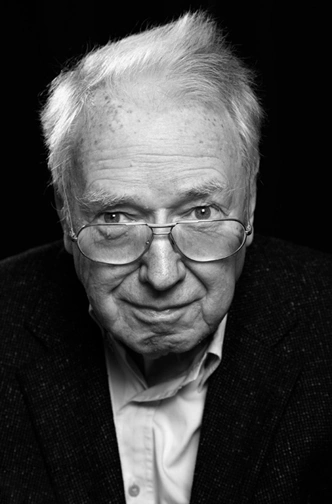
| 20 Quotes | |
| Born as | John Keyes Byrne |
| Occup. | Dramatist |
| From | Ireland |
| Born | November 9, 1926 Dublin, Ireland |
| Died | February 12, 2009 Dalkey, Republic of Ireland |
| Aged | 82 years |
| Cite | |
Citation Formats
APA Style (7th ed.)
Hugh leonard biography, facts and quotes. (2026, February 11). FixQuotes. https://fixquotes.com/authors/hugh-leonard/
Chicago Style
"Hugh Leonard biography, facts and quotes." FixQuotes. February 11, 2026. https://fixquotes.com/authors/hugh-leonard/.
MLA Style (9th ed.)
"Hugh Leonard biography, facts and quotes." FixQuotes, 11 Feb. 2026, https://fixquotes.com/authors/hugh-leonard/. Accessed 6 Mar. 2026.
Early Life and Background
Hugh Leonard was born John Keyes Byrne on November 9, 1926, in Dublin, in a new Irish state still defining itself through church authority, civil service steadiness, and a guarded cultural nationalism. He was adopted as an infant, and the fact of adoption - private, half-said, socially delicate in mid-century Ireland - became an early lesson in how identity could be both given and withheld. That doubleness later surfaced in his stage people: quick with talk, slow with confession, comic on the surface and quietly cornered underneath.His formative home life was shaped by forceful domestic energies rather than public ideology. He would later sum up the household power balance with blunt clarity: “My mother was passionate. She was stubborn, the dominant one in the family. She dominated my father”. That kind of family weather - love as pressure, affection as argument - fed an instinct for dialogue as collision and for comedy as a way of keeping feelings survivable in cramped rooms.
Education and Formative Influences
Leonard was educated in Dublin, moving through the practical track available to a bright young man without inherited privilege: clerical work, journalism, and the habit of listening for how people talk when they are trying to win. Irish theatre after Yeats and O'Casey had trained audiences to expect public questions - nation, class, church - to arrive through private scenes, and Leonard absorbed that tradition while reacting against its pieties. He learned to distrust official eloquence and to prize the sharp, ordinary phrase, the kind that reveals status, fear, and self-deception in a single sentence.Career, Major Works, and Turning Points
He began as a journalist and scriptwriter, but his defining reputation came from plays that made middle-class Irish life speak in its own accents, unheroic and unafraid of laughter. His breakthrough, "Da" (1973), drew on adoption, memory, and the emotional debt between a son and the man who raised him; it became his best-known work and traveled successfully beyond Ireland, helping to reframe Irish drama as something that could be intimate without being parochial. Later work, including "A Life" (1980), continued his interest in how families mythologize themselves, while his criticism and broadcasting presence made him a public commentator on Irish culture during decades when the country moved from conservative stagnation toward modernity and self-scrutiny.Philosophy, Style, and Themes
Leonard wrote with a dramatist's ear for the tiny humiliations and sudden tendernesses that structure everyday power. His people negotiate love through jokes, evasions, and declarations that arrive too late - a style that mirrors an Irish social training in which feeling is safer when disguised as wit. He was also suspicious of national self-flattery, insisting that cultural brilliance did not automatically yield craft or professionalism: “The problem with Ireland is that it's a country full of genius, but with absolutely no talent”. The line is comic, but it also reveals his private ethic: impatience with excuses, a craftsman's respect for hard work, and a fear of squandered potential.At the psychological center of Leonard's theatre is division - between the self that performs and the self that knows. He expressed the split as a basic fact of authorship: “I think with every writer there are two people there”. That internal doubleness animates "Da", where memory becomes a stage on which affection, guilt, and resentment compete for narrative authority, and it fuels his characteristic tone: laughter used as leverage against pain. Yet his work is not a nostalgia machine; it treats the present as morally urgent, not merely the outcome of childhood. “My life is every moment of my life. It is not a culmination of the past”. The statement reads like self-defense against autobiography even as his best plays transform personal material into public art, insisting that what matters is not origin but the choices made in the room, today.
Legacy and Influence
Hugh Leonard died on February 12, 2009, having helped carry Irish drama from the heroic and the rural into the subtler battleground of domestic memory and middle-class speech. His influence persists in playwrights who treat family as a political unit and dialogue as the most reliable form of truth-telling in a society skilled at silence. "Da" remains a touchstone because it demonstrates how an Irish story can be fiercely local yet structurally universal: a son confronting the stories that made him, and learning that comedy is not the opposite of sorrow but one of its most intelligent forms.Our collection contains 20 quotes written by Hugh, under the main topics: Witty One-Liners - Ethics & Morality - Writing - Live in the Moment - Work Ethic.
Source / external links