
Hulk Hogan Biography Quotes 12 Report mistakes
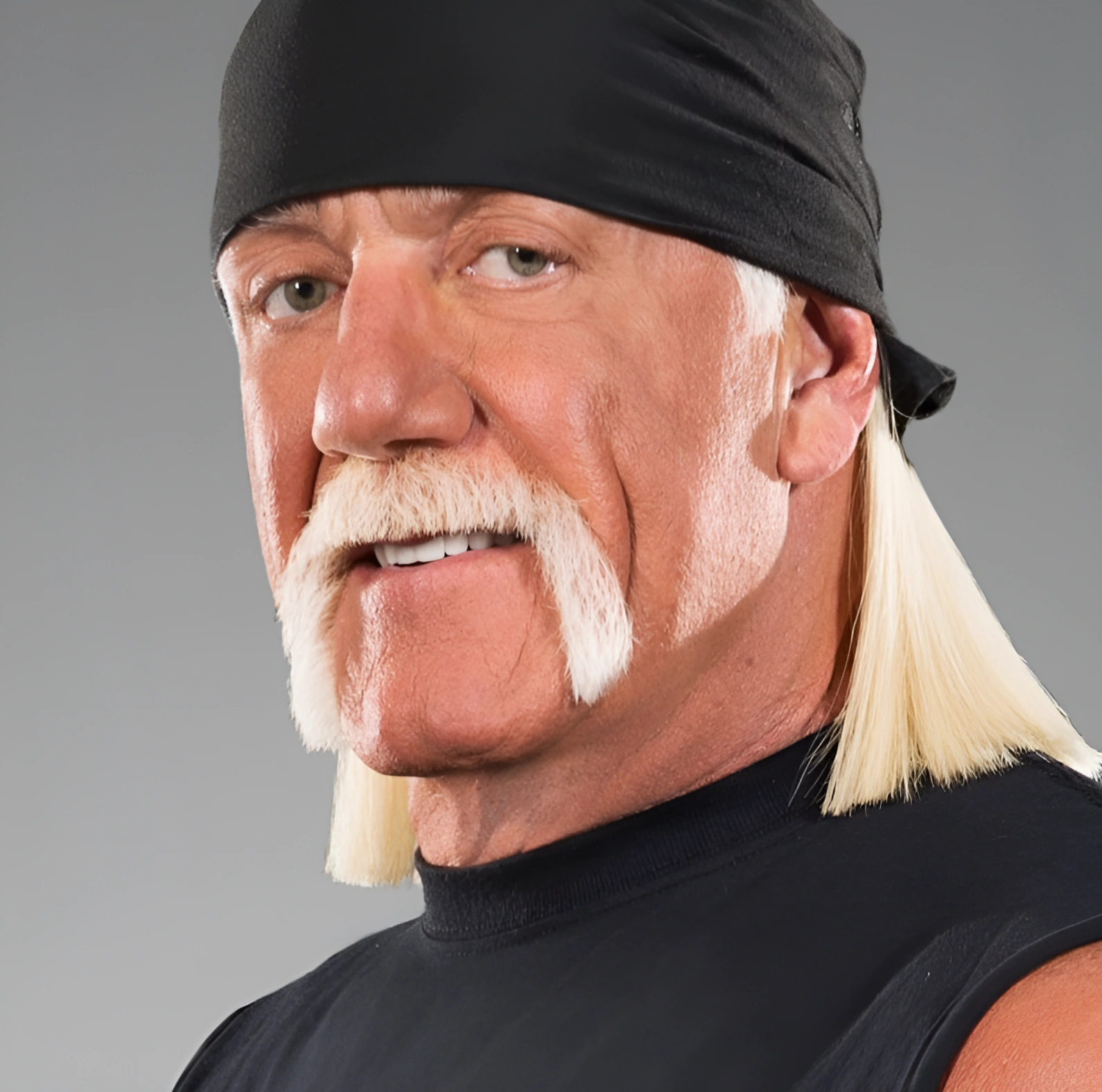
| 12 Quotes | |
| Born as | Terry Eugene Bollea |
| Occup. | Celebrity |
| From | USA |
| Born | August 11, 1953 Augusta, Georgia, USA |
| Age | 72 years |
| Cite | |
Citation Formats
APA Style (7th ed.)
Hulk hogan biography, facts and quotes. (2026, February 11). FixQuotes. https://fixquotes.com/authors/hulk-hogan/
Chicago Style
"Hulk Hogan biography, facts and quotes." FixQuotes. February 11, 2026. https://fixquotes.com/authors/hulk-hogan/.
MLA Style (9th ed.)
"Hulk Hogan biography, facts and quotes." FixQuotes, 11 Feb. 2026, https://fixquotes.com/authors/hulk-hogan/. Accessed 23 Mar. 2026.
Early Life and Background
Terry Eugene Bollea was born on August 11, 1953, in Augusta, Georgia, and grew up largely in the Tampa Bay area of Florida after his family relocated. His father, Pietro "Pete" Bollea, worked as a foreman in construction; his mother, Ruth, was a homemaker and later a dance teacher. The postwar South he came up in prized toughness, conformity, and showmanship in equal measure - the kind of environment where a big body could be both a shield and a spotlight.As a teenager he gravitated toward music and sports, playing baseball and developing into an imposing, broad-shouldered presence long before the ring made it famous. Florida in the late 1960s and early 1970s was also a wrestling hotbed, with regional promotions drawing loud crowds to civic centers and TV studios. Bollea absorbed that world as a local culture: exaggerated heroes, clear villains, and the idea that charisma could be engineered, not merely possessed.
Education and Formative Influences
He attended Robinson High School in Tampa and briefly went to Hillsborough Community College, but the stronger pull was the local entertainment circuit - bands, clubs, and the nearby wrestling territories that rewarded physical spectacle. He played bass guitar, including in a group called Ruckus, and his size and visibility brought him to the attention of wrestling people in Florida. Training under Hiro Matsuda, he learned early that the business was as much about pain tolerance and discipline as it was about applause, a lesson that would shape both his ambition and his willingness to sacrifice his body for a reaction.Career, Major Works, and Turning Points
After early work in the late 1970s, Bollea became "Hulk Hogan", a name that fused comic-book immediacy with a made-for-TV grin. A detour into mainstream visibility came with Rocky III (1982) as Thunderlips, previewing how wrestling personas could travel beyond the ring. His true turning point arrived when the World Wrestling Federation positioned him as the centerpiece of its national expansion: a clean-cut, muscle-bound hero who headlined WrestleMania and carried the company through the 1980s boom, most famously in the 1987 WrestleMania III main event against Andre the Giant. In the 1990s, as tastes darkened, he reinvented himself in World Championship Wrestling as the villainous "Hollywood" Hogan and helped ignite the nWo storyline, one of modern wrestling's most commercially potent arcs. Later years mixed nostalgia runs, film and TV appearances, and a turbulent public life - including a highly publicized privacy lawsuit and reputational damage from racist remarks - that complicated the legend with consequences beyond the arena.Philosophy, Style, and Themes
Hogan's core philosophy was a kind of motivational theater: he sold belief as a commodity and treated the audience like a congregation. The catchphrases and rituals were not incidental but constitutive - a call-and-response religion of empowerment aimed especially at kids and families. “To all my little Hulkamaniacs, say your prayers, take your vitamins and you will never go wrong”. The line reads like simplistic counsel, yet psychologically it reveals his method: convert private anxieties into public routine, turning health, faith, and obedience into a shared script that made the hero feel reachable.His in-ring style matched that mission. He was never the most technically intricate worker of his era, but he mastered pacing, facial expression, and the calibrated "comeback" that taught crowds when to hope. His body was his billboard, and he understood the audience's appetite for invulnerability - then monetized it as an identity. “Whatcha gonna do when Hulkamania runs wild on you?” The threat is playful but telling: Hogan's character was not merely strong; it was contagious, a force that could overtake opponents and fans alike. Over time, the act carried real costs, and he sometimes spoke with rare candor about what the performance demanded from cartilage and scar tissue, an admission that the myth of effortless power was built on accumulated damage.
Legacy and Influence
Hulk Hogan remains one of the most recognizable figures professional wrestling has produced, a central architect of its shift from regional attraction to global entertainment brand. He proved that a wrestler could function like a pop star - anchored by a repeatable persona, slogans, and a narrative of moral clarity - and his 1990s reinvention demonstrated that even the most established hero could be retooled for a more cynical age. Yet his legacy is inseparable from controversy: the same culture-machine that amplified him also exposed him, and his public failings forced fans and the industry to reckon with the gap between character and person. Even so, later generations of wrestlers still borrow his template of crowd control, branding, and dramatic simplicity, evidence that "Hulkamania" was not just a gimmick but a durable language of spectacle.Our collection contains 12 quotes written by Hulk, under the main topics: Witty One-Liners - Motivational - Sports - Health - Human Rights.
Other people related to Hulk: Rick Derringer (Musician), Bill Goldberg (Athlete)
Source / external links