
Hun Sen Biography Quotes 9 Report mistakes
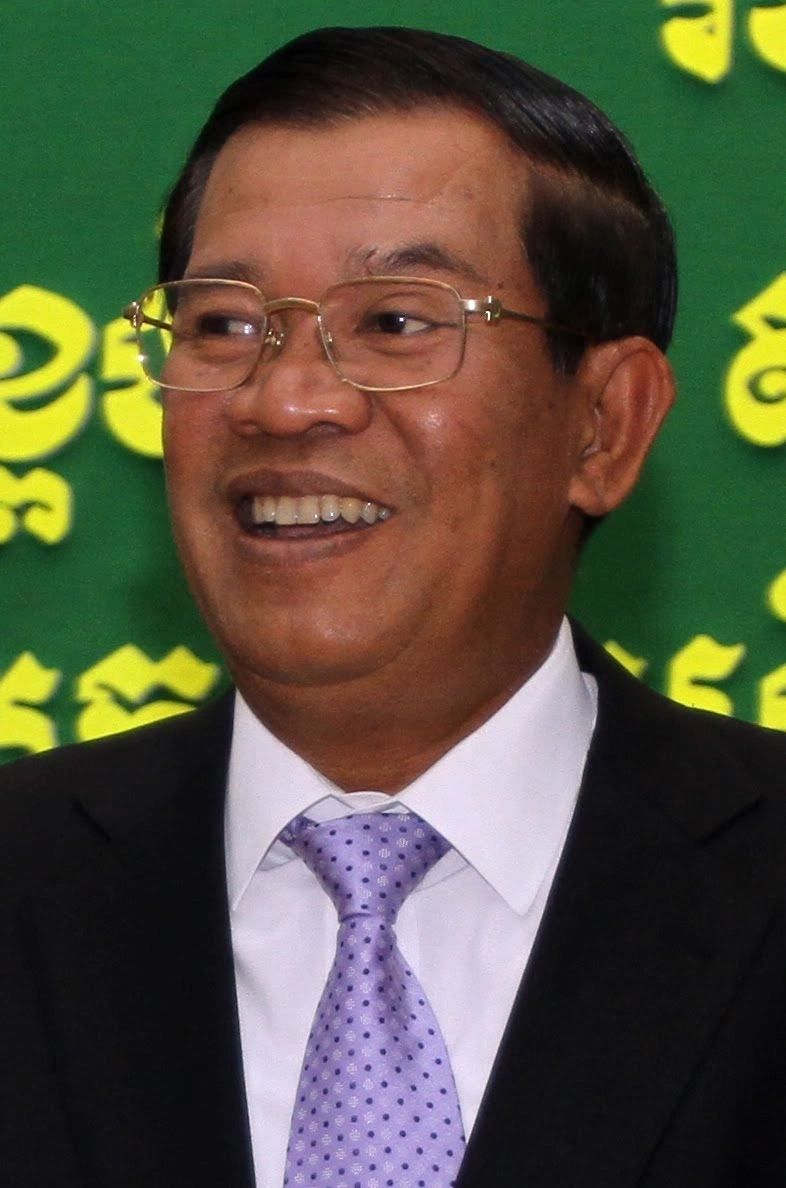
| 9 Quotes | |
| Born as | Hun Bunal |
| Known as | Samdech Hun Sen |
| Occup. | Statesman |
| From | Cambodia |
| Spouse | Bun Rany |
| Born | August 5, 1952 Peam Koh Sna, Indochina (now Cambodia) |
| Age | 73 years |
| Cite | |
Citation Formats
APA Style (7th ed.)
Hun sen biography, facts and quotes. (2026, March 1). FixQuotes. https://fixquotes.com/authors/hun-sen/
Chicago Style
"Hun Sen biography, facts and quotes." FixQuotes. March 1, 2026. https://fixquotes.com/authors/hun-sen/.
MLA Style (9th ed.)
"Hun Sen biography, facts and quotes." FixQuotes, 1 Mar. 2026, https://fixquotes.com/authors/hun-sen/. Accessed 29 Mar. 2026.
Early Life and Background
Hun Sen was born Hun Bunal on August 5, 1952, in Kampong Cham province, a rural heartland of Cambodia shaped by rice farming, patronage networks, and the long shadow of French colonialism and post-independence turmoil. He came of age as Prince Norodom Sihanouk's Cambodia lurched between neutrality and polarization, and as a generation of young Cambodians encountered both modern state-building and the radicalizing pressures of war on the Vietnamese borderlands.The collapse of the Cambodian state in 1970 after the Lon Nol coup, followed by civil war and American bombing, created the brutal conditions in which many youths were swept into armed movements. Hun Sen joined the Khmer Rouge in the early 1970s, a choice later framed by him as survival and anti-regime resistance, but inseparable from the wider dynamic that turned local grievances into revolutionary violence. During the Democratic Kampuchea years (1975-1979), he served as a cadre and was wounded - losing an eye - before breaking with the movement and fleeing into Vietnam in 1977, a decisive act that remade his life and placed him on the side of the coming Vietnamese-backed overthrow.
Education and Formative Influences
His formal schooling was limited and repeatedly disrupted by war, but his political education was intense: clandestine organizing inside the Khmer Rouge, battlefield command, and then apprenticeship within the Vietnamese-aligned Cambodian People's Revolutionary Party after 1979. That milieu emphasized discipline, party hierarchy, and a Leninist understanding of state power, while the memory of mass death under Pol Pot gave moral urgency to stability as an end in itself; Hun Sen learned to treat security, bureaucracy, and the management of rivals as the real curriculum of governance.Career, Major Works, and Turning Points
After Vietnam's intervention toppled Democratic Kampuchea in January 1979, Hun Sen rose quickly in the People's Republic of Kampuchea: foreign minister by 1979, then prime minister in 1985, becoming one of the world's longest-serving heads of government. The 1991 Paris Peace Agreements and the 1993 UN-supervised elections forced him into uneasy power-sharing with Prince Norodom Ranariddh as a "second prime minister", but the arrangement collapsed into the 1997 factional fighting that left Hun Sen dominant. Subsequent elections were marked by a mix of patronage-driven development, tight control of security institutions, and recurring accusations of intimidation. His later turning points included the 1998 end of major Khmer Rouge insurgency, Cambodia's deeper integration into ASEAN, the establishment of the Extraordinary Chambers in the Courts of Cambodia (ECCC) with UN participation, and a generational transition culminating in his step-down in 2023 in favor of his son Hun Manet, while retaining significant influence as ruling-party leader.Philosophy, Style, and Themes
Hun Sen's governing philosophy is anchored in a trauma-born doctrine: peace is not merely a public good but the prerequisite that justifies nearly any consolidation. He repeatedly portrayed the end of civil war as an existential achievement, insisting that “Peace, so elusive in the past many decades, now finally prevails all over the country”. Psychologically, this framing functions as both memorial and mandate - a way to convert personal and national catastrophe into a continuing argument for firm control, depicting disorder as a gateway back to annihilation.His political style is transactional and prosecutorial: reward loyalty, fragment opposition, and define the permissible boundaries of dissent. The impulse surfaces in blunt directives - “We want to see all demonstrations stopped”. - revealing a mindset that reads public protest less as democratic expression than as a spark in a landscape once drenched in gasoline. On justice, he favored narrowly bounded accountability, seeking to contain the past so it would not unravel the postwar state or implicate too many living networks: “The trial organized with U.N. participation of some kind will be for crimes committed by Khmer Rouge leaders from 1975 to 1979. That's it”. Underneath is a consistent theme: history should be managed like security - acknowledged enough to legitimate the present, but circumscribed to protect governing continuity.
Legacy and Influence
Hun Sen's legacy is paradoxical and deeply Cambodian: he presided over the country's long exit from civil war and helped stabilize a traumatized society, while also building a dominant-party system criticized for shrinking political space, press freedom, and independent institutions. To supporters, he is the architect of order, infrastructure, and a pragmatic foreign policy balancing China, Vietnam, and the West; to critics, he is the centralizer who treated state institutions as extensions of party and family. Either way, his life traces Cambodia's modern arc from revolution and genocide through peacebuilding and contested democracy, and his methods - the fusion of patronage, security power, and peace rhetoric - remain the template that will shape Cambodian politics well beyond his formal premiership.Our collection contains 9 quotes written by Hun, under the main topics: Justice - Kindness - War - Peace - Human Rights.
Source / external links