
Ian St. John Biography Quotes 9 Report mistakes
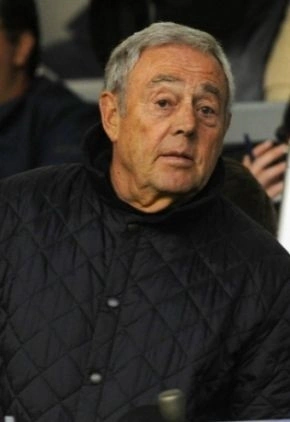
| 9 Quotes | |
| Occup. | Athlete |
| From | Scotland |
| Born | June 7, 1938 Motherwell, Lanarkshire, Scotland |
| Age | 87 years |
| Cite | |
Citation Formats
APA Style (7th ed.)
Ian st. john biography, facts and quotes. (2026, February 11). FixQuotes. https://fixquotes.com/authors/ian-st-john/
Chicago Style
"Ian St. John biography, facts and quotes." FixQuotes. February 11, 2026. https://fixquotes.com/authors/ian-st-john/.
MLA Style (9th ed.)
"Ian St. John biography, facts and quotes." FixQuotes, 11 Feb. 2026, https://fixquotes.com/authors/ian-st-john/. Accessed 12 Feb. 2026.
Early Life and Beginnings
Ian St John was born on 7 June 1938 in Motherwell, Lanarkshire, Scotland, and grew up in a community shaped by steelworks and football. From an early age he showed a fierce competitive edge and a natural instinct in front of goal. As he progressed through local and youth football, his talent caught the attention of Motherwell, the hometown club that would give him his professional start. At Fir Park he came under the guidance of manager Bobby Ancell, whose emphasis on technical ability and quick, attacking football shaped St John's development. At Motherwell he became part of the celebrated Ancell Babes, a cluster of gifted youngsters including Pat Quinn, Willie Hunter, John Martis, and Andy Weir. The group gave Motherwell a distinctive style and a reputation for fearlessness. St John's explosive leap, timing, and bravery in the air marked him out, and one blistering burst of goals against Hibernian produced one of the fastest hat-tricks recorded in Scottish top-flight football.Motherwell and the Ancell Babes
Under Bobby Ancell, Motherwell played with fluency and imagination, and St John thrived as a centre forward who could both battle defenders and link play. He learned to press from the front and to attack crosses with aggression, combining an eye for space with a rugged willingness to take knocks. The influence of teammates like Pat Quinn, a clever inside-forward, helped him refine his movement and finishing. By the turn of the 1960s he had become one of Scotland's most coveted strikers, attracting the interest of leading English clubs.Liverpool and the Shankly Revolution
In 1961 Bill Shankly signed Ian St John for Liverpool for a then club-record fee, pairing him with commanding centre-half Ron Yeats as the spine of a team Shankly intended to rebuild. The effect was immediate. Liverpool surged to the Second Division title in 1961-62 and quickly established themselves at the summit of English football. With teammates Roger Hunt, Ian Callaghan, and Tommy Smith, and under the quiet tactical wisdom of coaches Bob Paisley and Joe Fagan, St John became central to a side that won the First Division in 1963-64 and again in 1965-66. His blend of grit and guile was never more evident than in the 1965 FA Cup Final, when his extra-time diving header against Leeds United delivered Liverpool's first FA Cup. The cross from the right was measured; St John's timing was perfect; the goal entered club lore and defined his legacy among supporters who had waited generations for that moment.International Career with Scotland
St John was capped regularly by Scotland, earning 21 caps and scoring 9 goals. He played in British Home Championship fixtures and qualifiers, often sharing the forward line with elite contemporaries such as Denis Law and linking midfield play with the artistry of Jim Baxter. For Scotland he was a willing runner, a combative presence against physically imposing defences, and a reliable aerial outlet. His international experiences broadened his game, reinforcing the patience and craft that later made him such a shrewd reader of play.Style and Influence on the Pitch
Compact, courageous, and relentless, St John excelled at near-post runs and late darts into the box. He was a superb header of the ball despite not being the tallest striker, and he pressed defenders before pressing was a widely used term. At Liverpool he formed a complementary partnership with Roger Hunt, mixing link-up play with penalty-box instincts. He relished big occasions, brought teammates into the game with deft layoffs, and embodied the work ethic that Shankly demanded.Later Playing Years
After a decade at Anfield, St John's first-team opportunities became less frequent as Liverpool refreshed their forward line. He moved on in the early 1970s, with a short spell at Coventry City and a period with Tranmere Rovers where he began to blend playing with coaching responsibilities. He also spent a brief stint in South Africa with Hellenic during off-season months, an experience that exposed him to different football cultures and broadened his perspective on coaching and player development.Coaching and Management
St John's competitive intelligence translated naturally into coaching. He returned to Scotland to manage Motherwell, bringing with him lessons learned under Bill Shankly and alongside leaders like Ron Yeats. He later took charge at Portsmouth, seeking to build cohesive squads on limited resources while promoting a positive, progressive style. Though management rarely offers the same dramatic triumphs as a player's peak, those who worked with him found him demanding, fair, and deeply invested in players' improvement. His work helped shape young professionals who carried his standards forward.Broadcasting and Public Life
In retirement St John became one of British football's most recognizable broadcasters. Teaming with Jimmy Greaves, he co-hosted the hugely popular television program often known simply as Saint and Greavsie. The partnership worked because of the contrast between St John's steady authority and Greaves's quick wit; together they made weekend football a friendly ritual for millions. St John also wrote columns and books, using his platform to explain the game's nuances and to defend the traditions of hard work, humility, and team spirit that had defined his career. His rapport with former colleagues from Liverpool's boot room era, including Bob Paisley and Joe Fagan, and his enduring friendship with Greaves kept him at the heart of the sport's public conversation.Legacy and Later Years
St John remained a cherished figure at Liverpool, welcomed at Anfield as an ambassador for a team that had been remade in Shankly's image and sustained by Paisley's stewardship. Fans remembered him not only for decisive goals but also for the way he played: committed, brave, and utterly reliable on the biggest stages. In Scotland he was celebrated as one of the finest forwards of his generation, a product of Bobby Ancell's enlightened coaching and a teammate admired by greats such as Denis Law. Ian St John died on 1 March 2021 at the age of 82. Tributes poured in from former teammates, opponents, and supporters, all emphasizing the same qualities: his competitive spirit, his kindness off the field, and his enduring influence on the culture of Liverpool and Scottish football. The image that persists is simple and iconic: a determined figure diving across a Wembley goalmouth, meeting the cross with perfect timing, and changing a club's history with a single, fearless header.Our collection contains 9 quotes written by Ian, under the main topics: Sarcastic - Sports - Work - Coaching - Broken Friendship.
Source / external links