
Ignatius of Loyola Biography Quotes 3 Report mistakes
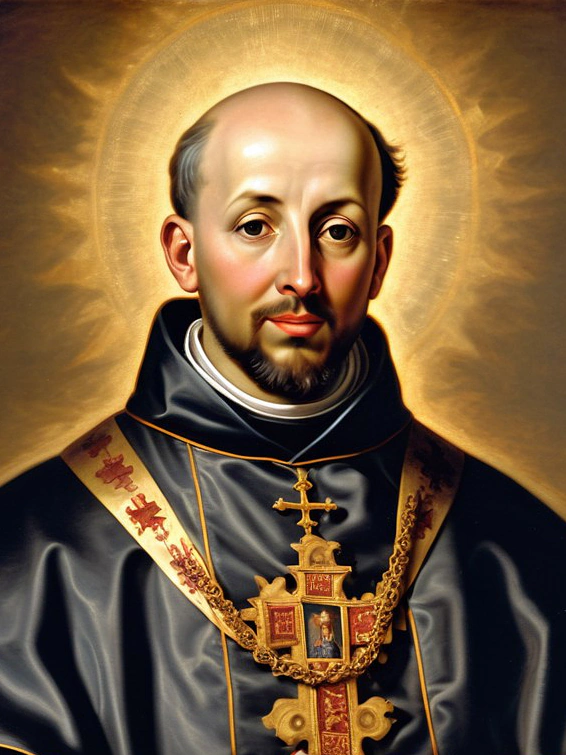
| 3 Quotes | |
| Born as | Iñigo López de Oñaz y Loyola |
| Known as | Saint Ignatius; Inigo Lopez de Loyola |
| Occup. | Clergyman |
| From | Spain |
| Born | December 24, 1491 Azpeitia, Gipuzkoa, Spain |
| Died | July 31, 1556 Rome, Papal States |
| Aged | 64 years |
| Cite | |
Citation Formats
APA Style (7th ed.)
Ignatius of loyola biography, facts and quotes. (2026, February 11). FixQuotes. https://fixquotes.com/authors/ignatius-of-loyola/
Chicago Style
"Ignatius of Loyola biography, facts and quotes." FixQuotes. February 11, 2026. https://fixquotes.com/authors/ignatius-of-loyola/.
MLA Style (9th ed.)
"Ignatius of Loyola biography, facts and quotes." FixQuotes, 11 Feb. 2026, https://fixquotes.com/authors/ignatius-of-loyola/. Accessed 12 Feb. 2026.
Early Life and Background
Ignatius of Loyola was born Inigo Lopez de Loyola on December 24, 1491, at the tower house of Loyola near Azpeitia in the Basque country of Spain, a younger son of a minor noble family whose identity was braided with royal service, local feuds, and the hard pieties of late medieval Catholicism. He came of age as Ferdinand and Isabella completed the Reconquista and Spain turned outward toward empire, a political atmosphere that prized honor, martial skill, and a courtly style of self-fashioning - precisely the virtues the young Inigo absorbed.As a page and later a soldier attached to the household of Juan Velazquez de Cuellar, he pursued the path of ambition: weapons, rhetoric, and reputation. The decisive rupture came in 1521 at the siege of Pamplona, when a cannonball shattered his leg and forced a long convalescence at Loyola. What began as enforced idleness became a psychological crisis: the chivalric fantasies that had organized his desires could no longer hold, and the question of what kind of greatness was worth a life started to press with unfamiliar urgency.
Education and Formative Influences
During recovery he read a Life of Christ and a collection of saints lives (often associated with Ludolph of Saxony and Jacopo da Varagine), and he learned to notice the aftertaste of thoughts - worldly daydreams left him dry, while imagined service of Christ left him quietly strengthened. From 1522 he lived as a penitent and pilgrim, keeping notes that would become the seed of the Spiritual Exercises; he spent months at Manresa in intense prayer and scruple, then traveled to Jerusalem in 1523 before being sent back. Realizing that zeal without learning could mislead, he undertook studies first at Barcelona, then Alcala and Salamanca, where suspicion of illuminism and unauthorized preaching brought interrogations, and finally at the University of Paris, where he gathered companions in a Europe convulsed by the Reformation.Career, Major Works, and Turning Points
On August 15, 1534, at Montmartre in Paris, Inigo - now Ignatius - and companions including Peter Faber and Francis Xavier vowed poverty, chastity, and pilgrimage, and when war blocked travel they offered themselves to the pope; in 1540 Paul III approved the Society of Jesus (Jesuits). Ignatius, elected first superior general, governed from Rome, shaping a mobile clergy for catechesis, preaching, and education, and issuing the Constitutions and the final form of the Spiritual Exercises, a compact manual for discernment and reform of life. Under his direction Jesuits founded colleges across Europe, advised princes, staffed missions from Brazil to Japan, and became a central instrument of Catholic renewal at and beyond the Council of Trent, while Ignatius himself, often ill, ran the order through thousands of letters until his death in Rome on July 31, 1556.Philosophy, Style, and Themes
Ignatius inner life was forged in the furnace of redirected ambition: the courtier-soldier did not lose intensity, he changed its object. The Exercises train attention to movements of consolation and desolation and demand decisions tested in practice, not merely admired in theory; for Ignatius, holiness was not escape from the world but a disciplined availability to God in the world. His mature spirituality centers on ordered love - love that chooses, costs, and binds - and he could define the goal with disarming clarity: "Considering that the blessed life we so long for consists in an intimate and true love of God Our Creator and Lord, which binds and obliges us all to a sincere love". That sentence exposes his psychology: affection was never mere feeling, but an obligation willingly embraced, a moral gravity that countered his early restlessness.His style is famously spare, managerial, and intimate - the voice of a man who learned to command himself before commanding others. Even when organizing a global order, he frames speech as self-examination and service, not performance: "So with that will prompt and prepared to serve all those whom I perceive to be servants of my Lord, I will speak of three things with simplicity and love as if I were speaking to my own soul". The Jesuit ideal of being "contemplative in action" grows from this posture: a readiness that listens, discerns, then acts decisively. He also understood the age he lived in - an age of confessional fracture and overseas expansion - and he yoked mission to purpose without romanticism, as in the blunt prioritization of evangelization: "The principal end both of my father and of myself in the conquest of India... has been the propagation of the holy Catholic faith". Behind it lies his insistence that even empire, with all its violence and ambiguity, be judged by a higher end - an insistence that could inspire sacrifice and also invite later critique.
Legacy and Influence
Ignatius enduring influence is institutional and interior at once: the Society of Jesus became one of the most consequential religious orders in modern history, shaping education, science, diplomacy, and global missions, while the Spiritual Exercises remain a core text of Catholic spirituality and a widely used method of retreat and discernment far beyond Catholicism. Canonized in 1622, he stands as an emblem of the early modern Catholic Reformation - a strategist of souls whose own conversion transmuted the hunger for honor into a disciplined search for "the greater glory of God", leaving a legacy of rigorous self-scrutiny, adaptable service, and a spirituality built for the pressures of history.Our collection contains 3 quotes written by Ignatius, under the main topics: Faith - God.
Other people related to Ignatius: Saint Ignatius (Saint)
Source / external links