
Ilhan Omar Biography Quotes 10 Report mistakes
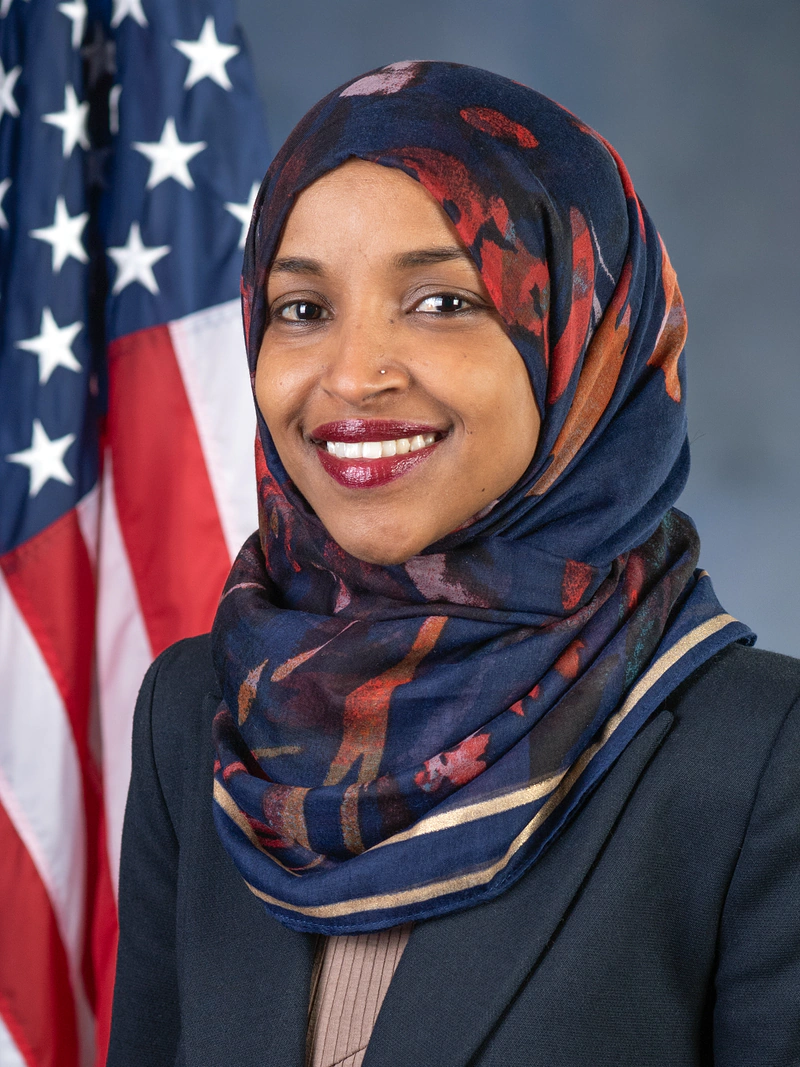
| 10 Quotes | |
| Occup. | Congressman |
| From | USA |
| Spouses | Ahmed Hirsi Tim Mynett |
| Born | October 4, 1982 Mogadishu, Somalia |
| Age | 43 years |
| Cite | |
Citation Formats
APA Style (7th ed.)
Ilhan omar biography, facts and quotes. (2026, February 11). FixQuotes. https://fixquotes.com/authors/ilhan-omar/
Chicago Style
"Ilhan Omar biography, facts and quotes." FixQuotes. February 11, 2026. https://fixquotes.com/authors/ilhan-omar/.
MLA Style (9th ed.)
"Ilhan Omar biography, facts and quotes." FixQuotes, 11 Feb. 2026, https://fixquotes.com/authors/ilhan-omar/. Accessed 6 Mar. 2026.
Early Life and Background
Ilhan Abdullahi Omar was born on October 4, 1982, in Mogadishu, Somalia, into a family shaped by the optimism and volatility of a postcolonial capital. Her father, Nur Said Omar, worked as a teacher and later in government; her mother, Fadhuma Abukar Omar, died when Ilhan was young, leaving an early imprint of grief and responsibility. The Somalia of her childhood was sliding toward civil war, and the collapse of the state in 1991 turned ordinary life into a sequence of abrupt departures and improvised safety.As a teenager, Omar and her family fled, first to Kenya, where they spent years in the Dadaab refugee complex. The camp experience formed a dual consciousness that would later define her politics: deep gratitude for refuge and a lasting impatience with bureaucratic cruelty. In 1995, the family resettled in the United States, landing in Arlington, Virginia, before moving to Minneapolis, Minnesota. She learned English quickly, translated for adults, and discovered how immigrant families often survive by turning children into navigators of institutions.
Education and Formative Influences
Omar attended Edison High School in Minneapolis and later studied at North Dakota State University, earning a B.A. in political science and international studies in 2011. Her formation was as practical as it was academic: community organizing, mosque life, and the everyday negotiations of identity in a post-9/11 America. The political atmosphere of the 2000s-especially the expansion of surveillance, the wars in Afghanistan and Iraq, and rising Islamophobia-hardened her interest in civil liberties and foreign policy, while Minnesota's civic culture offered a pathway into local politics.Career, Major Works, and Turning Points
Omar built early experience through campaign work and policy roles, including as a senior nutrition outreach coordinator at the Minnesota Department of Education. In 2016 she won election to the Minnesota House of Representatives, becoming the first Somali American legislator in the United States, and quickly aligned with a progressive agenda on wages, health care, and refugee resettlement. Her 2018 election to the U.S. House from Minnesota's 5th District made her, alongside Rashida Tlaib, among the first Muslim women in Congress; she entered national visibility amid the Trump-era battles over immigration, the travel ban, and political polarization. Omar became a prominent member of the so-called "Squad, " pressed for a more restrictive view of U.S. military intervention, and drew intense controversy for comments on Israel and lobbying that critics labeled antisemitic - prompting apologies, clarifications, and censure-like rebukes, while supporters argued she was scrutinized more harshly than peers. In 2021 she helped introduce the FIRE Act (Family Reunification Task Force) to address harms of family separation, and she has remained electorally resilient through multiple primary challenges, reflecting both devoted grassroots support and enduring backlash.Philosophy, Style, and Themes
Omar's political psychology is best read as an ethic of belonging forged in displacement: she speaks as someone who remembers what it feels like to be processed, doubted, and made conditional. That origin story is not merely rhetorical; it structures her instinct to treat citizenship as an expanding circle rather than a gate. “No one is more patriotic than those who are working to build a country where everyone belongs”. The line reframes patriotism as repair work, signaling a temperament that distrusts purity tests and instead measures loyalty by solidarity with the excluded.Her style blends movement language with legislative specificity: a preacher's cadence paired with an organizer's insistence on attendance and pressure. “We are going to build a movement where no one is left behind”. The promise is aspirational, but it also reveals a trait that has both empowered her and drawn criticism - a willingness to treat politics as moral emergency. When she says, “Justice is not optional; it's a necessity”. she is articulating an inner intolerance for compromise that looks, to admirers, like courage and, to opponents, like rigidity. Across debates on refugees, policing, poverty, and foreign policy, she returns to the idea that safety should not require the surrender of rights, and that empathy is a public duty rather than a private virtue.
Legacy and Influence
Omar's enduring impact lies less in any single bill than in the cultural and demographic doors her career helped widen: a former refugee, Black Muslim woman, and outspoken progressive who made Congress a stage for arguments once confined to activist circles. She normalized a new kind of representative biography in American politics and forced institutions - parties, media, and colleagues - to confront how identity, religion, and foreign policy taboos shape who is granted legitimacy. Her legacy will be debated through the lens of controversy as much as achievement, but her influence is unmistakable in the candidates she inspired, the vocabulary of belonging she popularized, and the expectation that American power should answer not only to strategy, but also to conscience.Our collection contains 10 quotes written by Ilhan, under the main topics: Justice - Freedom - Hope - Kindness - Resilience.
Other people related to Ilhan: Bernard Sanders (Politician)
Source / external links