
Immanuel Kant Biography Quotes 54 Report mistakes
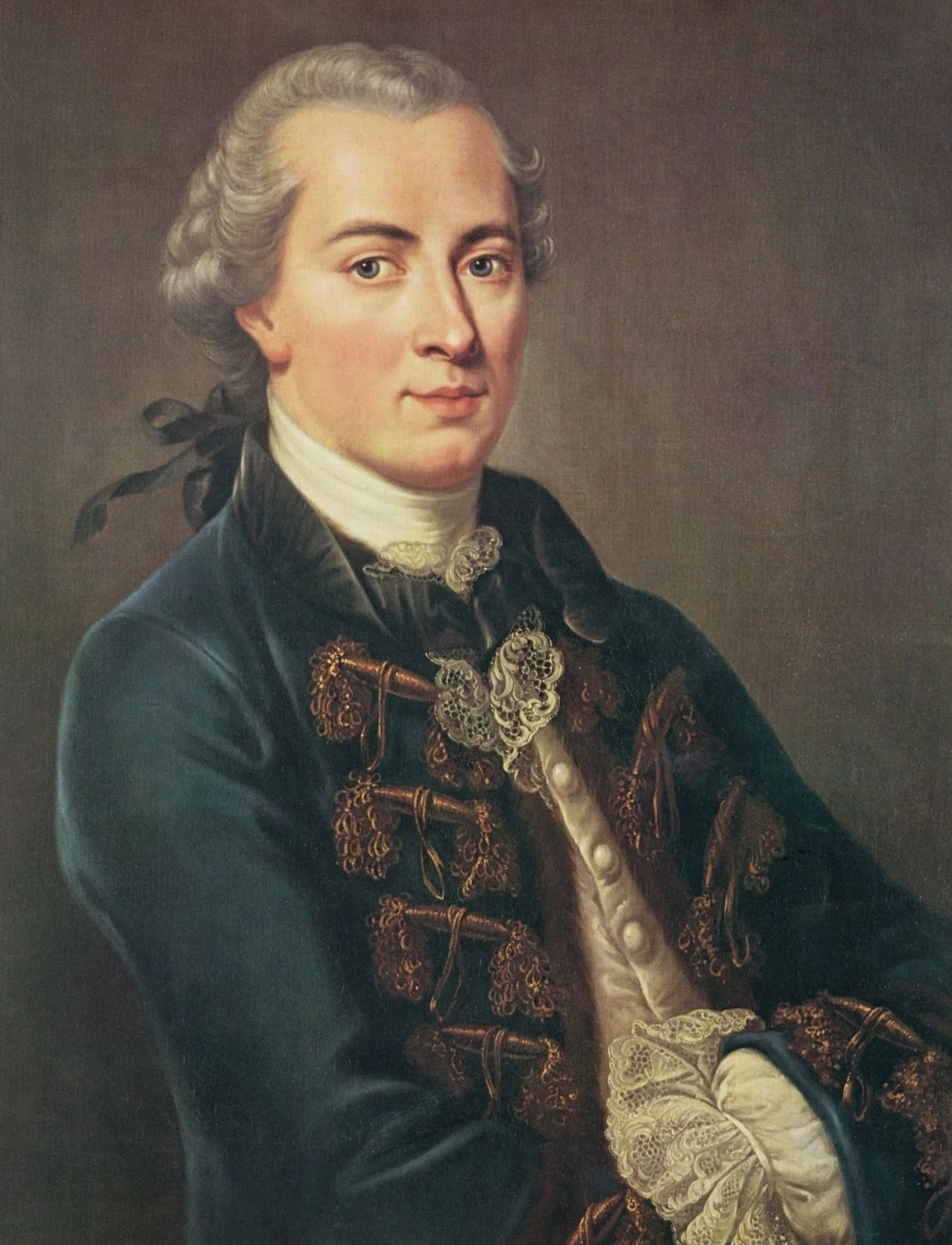
| 54 Quotes | |
| Occup. | Philosopher |
| From | Germany |
| Born | April 22, 1724 Königsberg, Prussia (Now Kaliningrad, Russia) |
| Died | February 12, 1804 Königsberg, Prussia |
| Aged | 79 years |
| Cite | |
Citation Formats
APA Style (7th ed.)
Immanuel kant biography, facts and quotes. (2026, February 9). FixQuotes. https://fixquotes.com/authors/immanuel-kant/
Chicago Style
"Immanuel Kant biography, facts and quotes." FixQuotes. February 9, 2026. https://fixquotes.com/authors/immanuel-kant/.
MLA Style (9th ed.)
"Immanuel Kant biography, facts and quotes." FixQuotes, 9 Feb. 2026, https://fixquotes.com/authors/immanuel-kant/. Accessed 27 Mar. 2026.
Early Life and Background
Immanuel Kant was born on 22 April 1724 in Konigsberg, East Prussia (in the Kingdom of Prussia), a port city where Baltic trade routes, Lutheran piety, and Enlightenment arguments mixed in daily life. His father, Johann Georg Kant, was a harness-maker; his mother, Anna Regina Reuter, impressed contemporaries as intelligent and morally serious. The family belonged to the Pietist milieu, a reform current within Lutheranism that emphasized conscience, discipline, and the inward examination of motives - an ethical atmosphere that would later reappear in Kant's austere vocabulary of duty.Kant rarely left his city and became, in effect, its resident universalist: a thinker whose mental geography far exceeded his physical one. The Seven Years' War and Prussia's militarized public life unfolded near him, yet his own routine became legendary for its regularity - a self-governed order that mirrored his philosophical ambition to find lawful structure beneath the apparent chaos of experience. The young Kant absorbed the tension between obedience and autonomy early: Pietism demanded submission to moral law, while the Enlightenment promised maturity through self-legislation.
Education and Formative Influences
He attended the Collegium Fridericianum, a strict Pietist school, then entered the University of Konigsberg in 1740. There he studied philosophy, mathematics, and the new physics, encountering the rationalist metaphysics of Leibniz and Wolff alongside the methodological prestige of Newton. After his father's death he supported himself as a private tutor in East Prussian households, reading widely and drafting early scientific essays; later, Hume's challenge to causality sharpened Kant's sense that traditional metaphysics could not simply proceed as if the mind were a transparent window onto reality.Career, Major Works, and Turning Points
Kant returned to Konigsberg as a Privatdozent and eventually became professor of logic and metaphysics (1770), teaching a famously wide range - anthropology, geography, ethics, and natural theology - to students who would carry his ideas into the German-speaking world. His 1770 Inaugural Dissertation already separated sensibility from understanding; then came a decade of relative silence as he rebuilt philosophy from its foundations. The breakthrough was Critique of Pure Reason (1781; revised 1787), followed by Prolegomena (1783), Groundwork of the Metaphysics of Morals (1785), Critique of Practical Reason (1788), and Critique of Judgment (1790). In the 1790s he published Religion within the Boundaries of Mere Reason (1793) and Perpetual Peace (1795), and faced state pressure under Frederick William II over religious teaching. Aging, increasingly frail, he continued working toward a final synthesis (the unfinished Opus postumum) until his death on 12 February 1804 in Konigsberg.Philosophy, Style, and Themes
Kant's inner drama was the struggle to reconcile scientific necessity with moral freedom without resorting to either dogmatic metaphysics or skeptical despair. He framed philosophy around the limits and tasks of reason: “All the interests of my reason, speculative as well as practical, combine in the three following questions: 1. What can I know? 2. What ought I to do? 3. What may I hope?” In the first Critique he argued that knowledge arises when the mind actively organizes sensory input through a priori forms (space and time) and categories (like causality), making experience possible while restricting knowledge to appearances rather than things-in-themselves. His prose can be severe and architectonic - definitions, distinctions, and carefully staged arguments - because the stakes were judicial: reason must submit its claims to critique like testimony in court.His ethics carries the same psychological rigor. Kant distinguishes legality from morality not by outward deed alone but by motive: “In law a man is guilty when he violates the rights of others. In ethics he is guilty if he only thinks of doing so”. This line shows his hard-won belief that the moral life is fundamentally inward - a discipline of intention under the Categorical Imperative, which demands that one act only on maxims one could will as universal law, and treat humanity always as an end. Yet he was no enemy of the empirical world; he insisted that thinking must answer to lived reality: “Experience without theory is blind, but theory without experience is mere intellectual play”. That balance shaped his anthropology lectures and his political writings, where the hope for peace and lawful republican order is tempered by an unsentimental view of human self-interest, "unsocial sociability", and the slow work of institutions.
Legacy and Influence
Kant redirected modern thought by making critique - the examination of the mind's powers and limits - the gateway to both science and morality. German Idealism (Fichte, Schelling, Hegel) rose in dialogue and revolt against him; later, Neo-Kantianism renewed his epistemology for modern science, while analytic philosophy drew on his account of conditions of possibility and normativity. In ethics and political theory, his conception of autonomy, dignity, and universal law remains central to debates on human rights, justice, and international order, even as critics contest his assumptions about culture and history. From a life outwardly narrow but intellectually planetary, Kant left an enduring model of philosophical self-governance: reason disciplined enough to know what it can claim, and conscience firm enough to demand what it must.Our collection contains 54 quotes written by Immanuel, under the main topics: Ethics & Morality - Truth - Wisdom - Music - Friendship.
Other people related to Immanuel: Peter Frederick Strawson (Philosopher), Johann G. Hamann (Philosopher)
Frequently Asked Questions
- Immanuel Kant contribution to philosophy: The “Copernican” turn in epistemology and deontological ethics grounded in autonomy.
- Immanuel Kant philosophy summary: We know phenomena, not things-in-themselves; act from duty by universalizable maxims.
- Immanuel Kant Religion: Moral religion within reason; God as a postulate of practical reason.
- Immanuel Kant books: Critique of Pure Reason; Groundwork; Critique of Practical Reason; Critique of Judgment.
- Immanuel Kant theory: Transcendental idealism; the mind structures experience; categorical imperative in ethics.
- Immanuel Kant pronunciation: ih-MAN-yoo-uhl KAHNT (/ɪˈmænjuəl kɑːnt/).
- Immanuel Kant philosophy: Critical philosophy: transcendental idealism and duty-based, autonomy-centered ethics.
- How old was Immanuel Kant? He became 79 years old
Immanuel Kant Famous Works
- 1790 Critique of Judgment (Book)
- 1788 Critique of Practical Reason (Book)
- 1785 Groundwork of the Metaphysics of Morals (Book)
- 1783 Prolegomena to Any Future Metaphysics (Book)
- 1781 Critique of Pure Reason (Book)
Source / external links