
Imran Khan Biography Quotes 31 Report mistakes
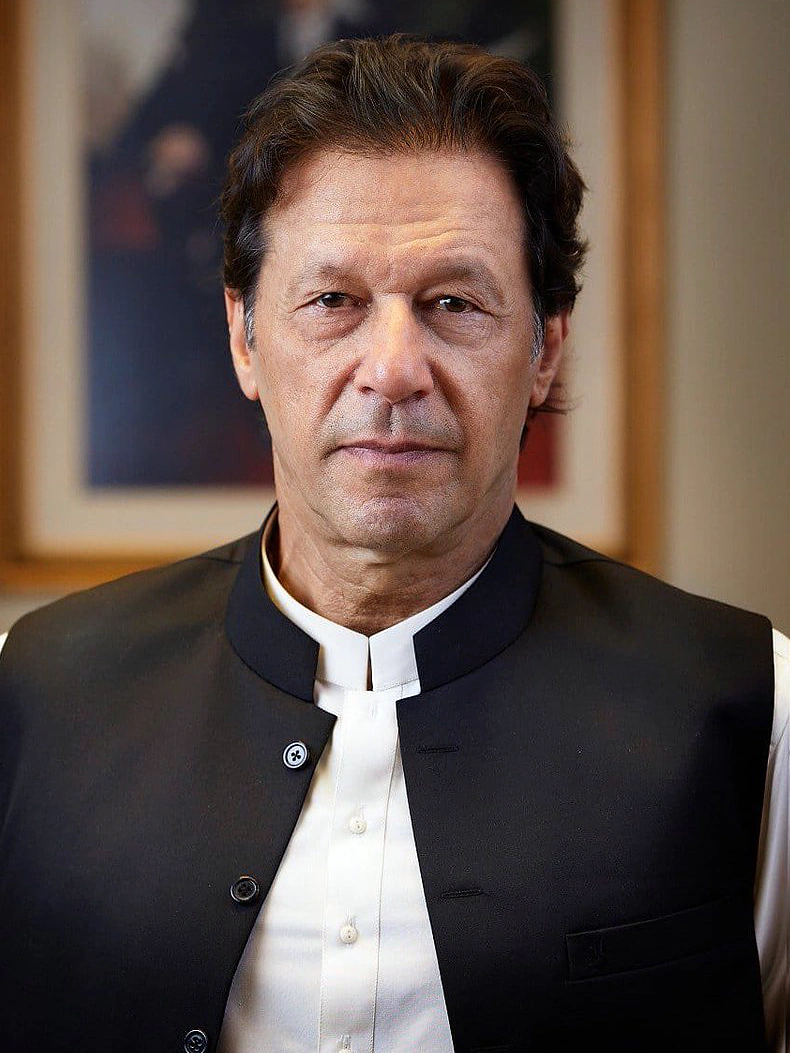
| 31 Quotes | |
| Occup. | Politician |
| From | Pakistan |
| Born | November 25, 1952 |
| Age | 73 years |
| Cite | |
Citation Formats
APA Style (7th ed.)
Imran khan biography, facts and quotes. (2026, February 11). FixQuotes. https://fixquotes.com/authors/imran-khan/
Chicago Style
"Imran Khan biography, facts and quotes." FixQuotes. February 11, 2026. https://fixquotes.com/authors/imran-khan/.
MLA Style (9th ed.)
"Imran Khan biography, facts and quotes." FixQuotes, 11 Feb. 2026, https://fixquotes.com/authors/imran-khan/. Accessed 24 Mar. 2026.
Early Life and Background
Imran Ahmad Khan Niazi was born on November 25, 1952, in Lahore, Punjab, into a well-connected Pashtun family of the Niazi tribe. His father, Ikramullah Khan Niazi, was a civil engineer; his mother, Shaukat Khanum, came from the Burki family. The Pakistan of his childhood was still defining itself after Partition - a state pulled between parliamentary aspiration and recurring military power, between an English-speaking elite and a vast, underrepresented majority. That divided social landscape shaped both his advantages and his later political vocabulary: national dignity, unequal law, and resentment of dynastic entitlement.As a boy he was athletic, competitive, and unusually sensitive to reputation - a trait that later became both fuel and vulnerability. Cricket offered him a stage where personal discipline could translate into collective meaning, and where a Pakistani could meet the world on equal terms. Even early on, friends and observers noted a streak of stubborn self-belief: he did not merely want to play well; he wanted to matter, to be tested, to win in a way that felt morally earned.
Education and Formative Influences
Khan attended Aitchison College in Lahore and later the Royal Grammar School Worcester in England, moving between Pakistani expectations and British institutions that rewarded individual confidence. He went on to Keble College, Oxford, graduating in 1975 (Philosophy, Politics and Economics). Oxford refined his public speaking and gave him a comparative view of state capacity, welfare, and rule of law - ideas that later reappeared in his calls for a more responsive Pakistani state. Just as importantly, living abroad sharpened his nationalism: he learned to perform Pakistan to outsiders, and then to re-import that performance as a domestic promise.Career, Major Works, and Turning Points
Khan debuted for Pakistan in 1971 and became one of the era's defining all-round leaders, captaining the national side through the 1980s and culminating in victory at the 1992 Cricket World Cup. That win turned him into a unifying symbol in a polarized country - charisma anchored in endurance, injury, and comeback. He translated fame into philanthropy after his mother died of cancer, building Shaukat Khanum Memorial Cancer Hospital and Research Centre in Lahore (opened 1994) and later Namal University in Mianwali. In 1996 he founded Pakistan Tehreek-e-Insaf (PTI), a long, uneven climb through electoral marginality, street mobilization, and anti-corruption rhetoric that broke through in 2013 as a major opposition force and in 2018 with his election as prime minister. His tenure (2018-2022) mixed welfare expansion (Ehsaas), a push to recover state authority, and sharp institutional conflict; he was removed by a vote of no confidence in April 2022 and then entered a prolonged confrontation with the military-backed political order, marked by mass rallies, arrests of party figures, and his own repeated legal jeopardy.Philosophy, Style, and Themes
Khan's inner life is best read as a continual conversion of personal will into national narrative. The cricketer who learned to impose calm under pressure became the politician who treats crisis as a call to moral mobilization. He repeatedly frames Pakistan as a house on fire and insists, “If your house is burning, wouldn't you try and put out the fire?” The line is not only metaphor - it reveals a psychology that equates dissent with emergency response, and leadership with a duty to act before consensus forms. His appeal, especially to younger voters, rests on this urgency: politics as rescue rather than management.At the center is a faith in merit and equal citizenship, expressed in his insistence on rule of law: “What I perceive, is above all justice, where everyone has the same law”. That demand is sharpened by his critique of dynastic parties - “In Pakistan politics is hereditary”. - which he presents as a cultural and institutional trap that rewards lineage over competence. Stylistically he speaks in direct, competitive sentences, drawing from sporting instruction and locker-room clarity, and he often casts governance as a test of character: discipline, self-control, and refusal to be bought. Yet the same moral clarity can harden into suspicion of rivals and institutions, making compromise appear like surrender and leaving his administrations vulnerable to coalition arithmetic and entrenched bureaucratic habits.
Legacy and Influence
Imran Khan's legacy is already larger than any single term in office. He normalized a language of anti-dynastic resentment and rule-of-law aspiration, drew a mass urban youth constituency into politics, and showed how celebrity, philanthropy, and populist organization could reshape Pakistan's electoral map. His opponents remember polarization and institutional brinkmanship; supporters remember a rare leader who spoke of dignity, welfare, and sovereignty in one breath. In a country where power often rotates among families and arbiters, his enduring influence may lie in changing what millions believe politics can demand - and what they will no longer accept.Our collection contains 31 quotes written by Imran, under the main topics: Motivational - Justice - Never Give Up - Leadership - Freedom.
Other people related to Imran: Sunil Gavaskar (Athlete)
Source / external links