
Indira Gandhi Biography Quotes 18 Report mistakes
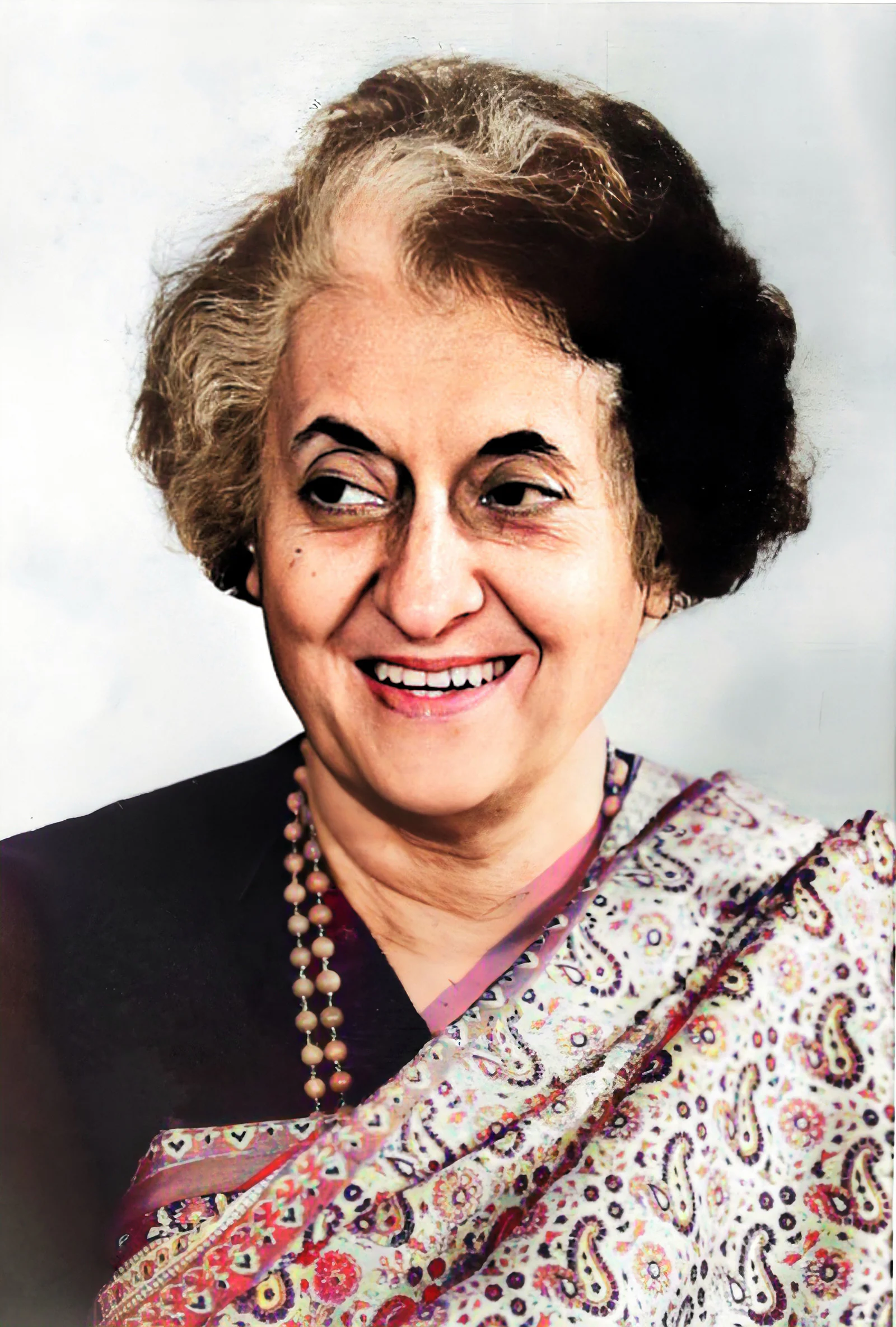
| 18 Quotes | |
| Born as | Indira Priyadarshini Gandhi |
| Occup. | Statesman |
| From | India |
| Born | November 19, 1917 Allahabad, United Provinces, British India |
| Died | October 31, 1984 New Delhi, India |
| Cause | Assassination |
| Aged | 66 years |
| Cite | |
Citation Formats
APA Style (7th ed.)
Indira gandhi biography, facts and quotes. (2026, February 11). FixQuotes. https://fixquotes.com/authors/indira-gandhi/
Chicago Style
"Indira Gandhi biography, facts and quotes." FixQuotes. February 11, 2026. https://fixquotes.com/authors/indira-gandhi/.
MLA Style (9th ed.)
"Indira Gandhi biography, facts and quotes." FixQuotes, 11 Feb. 2026, https://fixquotes.com/authors/indira-gandhi/. Accessed 24 Mar. 2026.
Early Life and Background
Indira Priyadarshini Gandhi was born on 1917-11-19 in Allahabad, in the politically charged household of Jawaharlal Nehru and Kamala Nehru, with the Nehru family home at Anand Bhavan serving as both refuge and headquarters for the Indian nationalist movement. Her childhood unfolded under the shadow of the Raj and the strain of repeated imprisonments and surveillance that shaped Congress leaders' families; the constant comings and goings of activists, debates over strategy, and the periodic absence of her father turned politics into the atmosphere she breathed rather than a career she chose.The intimate costs of nationalism marked her early inner life: her mother battled prolonged illness and died in 1936, and Indira grew up learning emotional self-command as a form of duty. As a girl she organized the Vanar Sena, a children's group that assisted the freedom struggle with messages and minor tasks, an early sign of her instinct to operationalize loyalty into action. In 1942 she married Feroze Gandhi (no relation to Mohandas K. Gandhi), and the couple were jailed during the Quit India movement - a formative experience that fused private commitment with public risk.
Education and Formative Influences
Educated in India and Switzerland and later at Somerville College, Oxford, Indira absorbed an internationalist awareness of war and empire even as she remained psychologically anchored to the Congress tradition of mass politics and state-building. Her years abroad were interrupted by family crises and by Europe's descent into conflict, deepening a pragmatic, unsentimental worldview; by the late 1930s and 1940s she was already acting as an aide and confidante within her father's circle, learning how personal networks, symbolism, and administrative detail converge in power.Career, Major Works, and Turning Points
After independence she became a central presence in Nehru's prime ministerial household, later serving as Congress president (1959) and, after Nehru's death and Lal Bahadur Shastri's brief tenure, rising to prime minister in 1966. Her rule moved from early vulnerability to concentrated authority: bank nationalization (1969), abolition of privy purses, and the 1971 election and Bangladesh war cemented her as the decisive face of the Indian state; she also navigated food insecurity and helped institutionalize the Green Revolution's gains. The defining rupture came after the Allahabad High Court invalidated her 1971 election on procedural grounds; she responded by declaring the Emergency (1975-1977), suspending civil liberties and enabling coercive programs and censorship, then unexpectedly called elections and lost in 1977. Returning to power in 1980, she faced escalating insurgency in Punjab; Operation Blue Star (June 1984) and the trauma of violence set the stage for her assassination on 1984-10-31 by two Sikh bodyguards, followed by catastrophic anti-Sikh pogroms in Delhi and elsewhere.Philosophy, Style, and Themes
Gandhi's political psychology fused moral language with a hard, administrative sense of the state. She insisted that sovereignty meant capacity, not mere rhetoric: “A nation' s strength ultimately consists in what it can do on its own, and not in what it can borrow from others”. This conviction animated her emphasis on self-reliance, strategic autonomy in the Cold War, and a developmental state that could mobilize capital and coercion alike - a stance that inspired national pride while also justifying the compression of plural voices when she deemed cohesion at stake.Her style was disciplined, secretive, and intensely personal - power gathered around her office and her intuition, producing both speed and brittleness. She understood politics as a contest between legitimate dissent and destabilization, which made her fluent in the language of rights and order but often impatient with procedural friction. The Emergency revealed the dark edge of her conviction that progress requires decisive intervention; yet she also framed questioning as the engine of modernity, declaring, “The power to question is the basis of all human progress”. In her final year she displayed a fatalistic clarity about political violence - “If I die a violent death, as some fear and a few are plotting, I know that the violence will be in the thought and the action of the assassins, not in my dying”. - a statement that reads as both warning and self-mythmaking, turning personal vulnerability into an argument for the state's primacy over sectarian rage.
Legacy and Influence
Indira Gandhi remains one of the 20th century's most consequential democratic leaders: architect of India's assertive nation-state, emblem of women wielding power in a patriarchal political culture, and a cautionary case of how popular mandate can slide into authoritarian governance. Her achievements in state capacity, foreign policy leverage, and crisis management sit alongside enduring controversies over civil liberties, institutional erosion, and Punjab's wounds. In Indian political memory she persists as a paradox - admired for resolve, feared for centralization, and studied as proof that the line between national consolidation and democratic contraction is often drawn inside a leader's own temperament.Our collection contains 18 quotes written by Indira, under the main topics: Motivational - Justice - Love - Mortality - Leadership.
Other people related to Indira: Oriana Fallaci (Journalist), Morarji Desai (Politician), Barbara Walters (Journalist), Vijaya Lakshmi Pandit (Diplomat), Sonia Gandhi (Politician)
Source / external links