
Ingmar Bergman Biography Quotes 4 Report mistakes
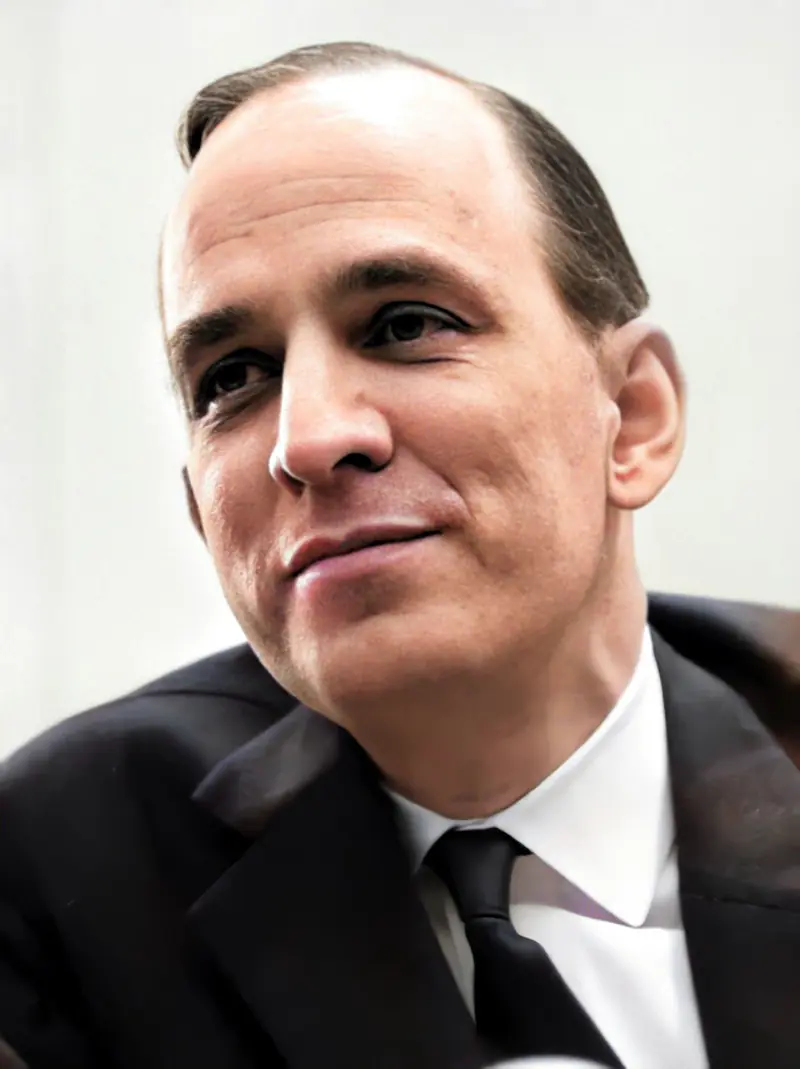
Attr: Joost Evers / Anefo, CC BY-SA 3.0
| 4 Quotes | |
| Born as | Ernst Ingmar Bergman |
| Occup. | Director |
| From | Sweden |
| Spouses | Käbi Laretei (1943–1945) Ellen Lundström (1945–1950) Gun Grut (1951–1959) Käbi Laretei (1959–1969) Ingrid von Rosen (1971–1995) |
| Born | July 14, 1918 Uppsala, Sweden |
| Died | June 30, 2007 Fårö, Sweden |
| Cause | Natural causes |
| Aged | 88 years |
Ernst Ingmar Bergman was born on July 14, 1918, in Uppsala, Sweden, into a strict Lutheran household. His father, Erik Bergman, was a prominent pastor and later chaplain to the Swedish royal court; his mother, Karin, brought a contrasting warmth and worldliness that he would often remember in his later writings. Childhood experiences of discipline, guilt, ritual, and grace all left deep impressions that would recur throughout his films and stage work. As a boy he became fascinated by magic lanterns, puppetry, and the mechanics of illusion, discovering early the power of light, shadow, and storytelling. He studied at Stockholm University, gravitating toward student theater rather than formal academics, and soon began working in professional theaters while taking small jobs in the film industry.
Apprenticeship and First Features
Bergman joined Svensk Filmindustri as a script reader and quickly advanced, writing the screenplay for Alf Sjoberg's Torment (Hets, 1944), which brought him attention. He directed his first feature, Crisis (Kris, 1946), and followed with a steady stream of films that honed his voice: Port of Call, Thirst, To Joy, and Summer Interlude. He balanced filmmaking with an increasingly intense commitment to theater, where his command of actors and text deepened. By the early 1950s, he had formed lasting collaborations with cinematographer Gunnar Fischer and actors including Harriet Andersson, Bibi Andersson, Gunnar Bjornstrand, and Ingrid Thulin. Summer with Monika and Smiles of a Summer Night signaled a new confidence, blending sensuality, irony, and pathos.
International Breakthrough
In 1957 Bergman released two films that established him as a leading figure in world cinema. The Seventh Seal, with Max von Sydow and Gunnar Bjornstrand, juxtaposed medieval plague imagery with philosophical inquiry as a knight played chess with Death. That same year Wild Strawberries offered a meditative road journey through memory and regret. Festival juries and critics took notice, and the films were widely screened outside Sweden, introducing audiences to his stark imagery and moral urgency.
Themes, Style, and Collaborators
Bergman's cinema explored faith and doubt, the fragility of human connection, and the masks people wear. The so-called "faith trilogy", Through a Glass Darkly (1961), Winter Light (1963), and The Silence (1963), distilled these concerns with bracing directness. The Virgin Spring (1960) won the Academy Award for Best Foreign Language Film, while Persona (1966), starring Liv Ullmann and Bibi Andersson, pushed form to the edge with its fractured identities and self-reflexive design. A crucial shift in visual tone came with cinematographer Sven Nykvist, whose supple naturalism and sculpted light shaped films from The Silence through Cries and Whispers, Scenes from a Marriage, and Fanny and Alexander. Nykvist's work with Bergman earned international awards and became inseparable from the director's mature style. Other key collaborators included Erland Josephson, Ingrid Thulin, and, in later years, the partnership, both personal and creative, with Liv Ullmann.
Theater Director and Institutional Leadership
Alongside film, Bergman was one of Europe's most distinguished stage directors. He led the Malmo City Theatre in the 1950s and later held leadership roles at the Royal Dramatic Theatre (Dramaten) in Stockholm. His productions of Shakespeare, Ibsen, Chekhov, and especially August Strindberg were celebrated for psychological precision and architectural clarity, often built around a trusted ensemble that included Erland Josephson and Bibi Andersson. This theatrical rigor influenced his screen direction: careful blocking, long takes, and a focus on faces as landscapes of emotion.
Exile, Television, and Return
In 1976, amid highly publicized allegations of tax irregularities (later dropped), Bergman suffered a breakdown and left Sweden, spending several years in Germany. He continued to direct theater at the Residenztheater in Munich and turned to television as a fertile space for intimate storytelling. Scenes from a Marriage (1973), starring Liv Ullmann and Erland Josephson, had already shown how television could amplify chamber-drama intensity, and he continued with projects like The Magic Flute (1975), a loving, lucid staging of Mozart's opera, and later From the Life of the Marionettes (1980), made during his time abroad. He returned to Sweden by the early 1980s, resuming work in both film and theater.
Later Masterworks and Recognition
Fanny and Alexander (1982) served as a grand summation: a sprawling, semi-autobiographical tale of family, theater, and the uncanny, lit with a sensuous glow by Sven Nykvist. Released as both a television miniseries and a theatrical film, it won multiple Academy Awards and reaffirmed Bergman's stature. He subsequently announced a retreat from cinema but remained prolific in television and theater. After the Rehearsal (1984) distilled a lifetime in rehearsal rooms into an austere, haunting conversation. He wrote screenplays for others to direct, including The Best Intentions (1992), drawn from his parents' courtship, realized by Bille August; Sunday's Children (1992), directed by his son Daniel Bergman; and Private Confessions (1996), directed by Liv Ullmann. Autumn Sonata (1978) had brought Ingrid Bergman together with Liv Ullmann for a piercing mother-daughter confrontation, and in 2003 he returned to the couple from Scenes from a Marriage in Saraband, a severe and moving coda.
Personal Life
Bergman's personal and professional lives frequently overlapped. He formed deep bonds with actors and crew, cultivating an ensemble that returned project after project. His partnership with Liv Ullmann yielded a daughter, the author Linn Ullmann, and a body of work that chronicled intimacy with unmatched candor. Earlier, Harriet Andersson and Bibi Andersson were central to both his films and his private life, and Max von Sydow, Gunnar Bjornstrand, Ingrid Thulin, and Erland Josephson became artistic touchstones. In later years, he lived much of the time on the island of Faro in the Baltic, where he wrote, filmed documentaries (including the Faro Document projects), and hosted colleagues. The island's stark light and wind-carved landscapes mirrored his aesthetic.
Legacy and Influence
Bergman's influence crosses generations and borders. His fearless engagement with existential questions, his attention to the inner life of women and men, and his mastery of the close-up shaped the grammar of serious cinema. Directors such as Woody Allen, Andrei Tarkovsky, and Martin Scorsese have acknowledged his example; theater artists and cinematographers continue to study his rehearsals, staging, and visual logic. Archives, foundations, and an annual gathering on Faro preserve and study his work, while retrospectives and restorations keep his films in circulation for new audiences.
Final Years and Death
Even as he reduced his public activity, Bergman maintained an intense private discipline, writing and rehearsing in small rooms, thinking through lighting levels, and revisiting the moral puzzles that had occupied him since youth. He died at home on the island of Faro on July 30, 2007, at the age of 89. His passing, coinciding with that of Michelangelo Antonioni the same day, marked the end of an era in European cinema. The body of work he left, on stage, screen, and page, continues to challenge, unsettle, and console, a testament to the lifelong collaboration between a director and the actors, cinematographers, and audiences who helped bring his visions to life.
Our collection contains 4 quotes who is written by Ingmar, under the main topics: Witty One-Liners - Faith - Movie.
Other people realated to Ingmar: Ingrid Bergman (Actress), Michelangelo Antonioni (Director), Roger Corman (Producer), Vincent Canby (Critic), Elliott Gould (Actor)
Source / external links