
Iris Chang Biography Quotes 30 Report mistakes
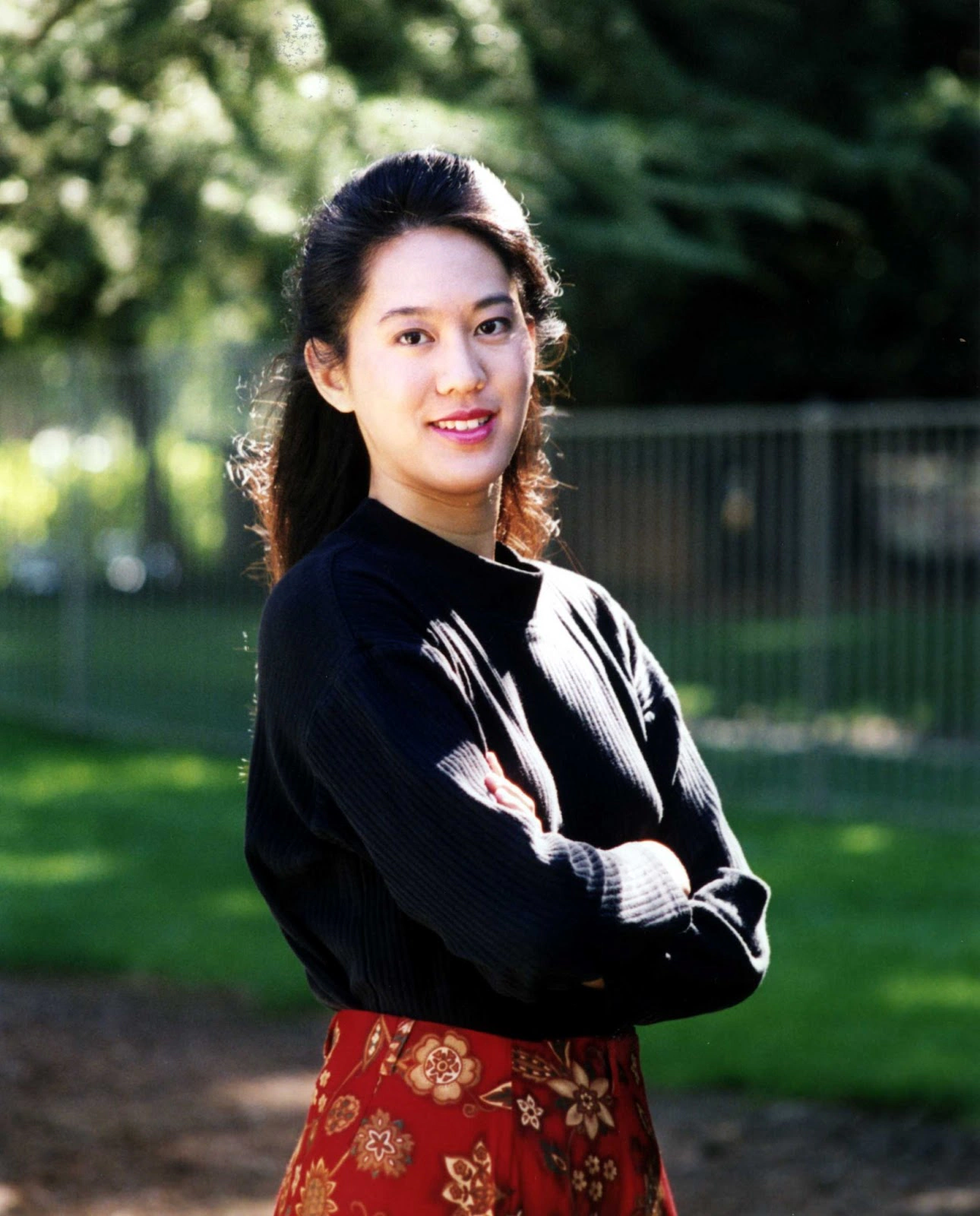
| 30 Quotes | |
| Born as | Iris Shun-Ru Chang |
| Occup. | Historian |
| From | USA |
| Born | March 28, 1968 Princeton, New Jersey, United States |
| Died | November 9, 2004 Los Gatos, California, United States |
| Cause | Suicide |
| Aged | 36 years |
| Cite | |
Citation Formats
APA Style (7th ed.)
Iris chang biography, facts and quotes. (2026, February 11). FixQuotes. https://fixquotes.com/authors/iris-chang/
Chicago Style
"Iris Chang biography, facts and quotes." FixQuotes. February 11, 2026. https://fixquotes.com/authors/iris-chang/.
MLA Style (9th ed.)
"Iris Chang biography, facts and quotes." FixQuotes, 11 Feb. 2026, https://fixquotes.com/authors/iris-chang/. Accessed 6 Mar. 2026.
Early Life and Background
Iris Shun-Ru Chang was born on March 28, 1968, in Princeton, New Jersey, to Chinese immigrant parents who had come to the United States for graduate study in engineering and science. Raised in a household that treated books and achievement as a kind of moral duty, she grew up with the double consciousness of many second-generation families: intensely American in aspiration, yet marked by the silences, pride, and inherited grief that accompany diaspora memory.Her family later settled in the Midwest, and Chang came of age amid the late Cold War and a renewed American argument over multicultural identity. From an early age she was alert to the gap between what classrooms named as "history" and what her community carried as lived inheritance. That tension - between public narrative and private testimony - became the engine of her inner life: a conviction that omission was not neutral, and that the cost of forgetting was paid in the present.
Education and Formative Influences
Chang attended the University of Illinois at Urbana-Champaign, where she studied journalism and developed the reportorial habit of chasing primary voices as well as documents. She later earned a master's degree in writing from Johns Hopkins University. The combination mattered: she learned to treat history as something you could narrate with pace, scene, and character while still building the argument on archives, interviews, and the stubborn labor of verification.Career, Major Works, and Turning Points
After working in journalism - including time at the Associated Press and as a reporter in the Chicago area - Chang turned to book-length narrative history. Her first major work, "Thread of the Silkworm" (1995), traced the life of Chinese American scientist Qian Xuesen and the paranoia of the Red Scare that helped drive him back to the People's Republic of China. She became nationally known with "The Rape of Nanking" (1997), an account of the 1937 massacre and mass sexual violence committed by the Imperial Japanese Army after the capture of Nanjing, a book that forced an American mainstream audience to confront atrocity, denial, and trauma politics in East Asia. She followed with "The Chinese in America" (2003), a sweeping history of immigration, exclusion, and belonging. The attention her work drew - including praise, bitter ideological dispute, and personal harassment - coincided with mounting psychological strain; in 2004, after a period of depression and paranoia, she died by suicide on November 9, 2004, in Los Gatos, California.Philosophy, Style, and Themes
Chang wrote with the moral velocity of a journalist and the archival ambition of a historian, but the deeper signature was psychological: she could not look away. She described a temperament that reacted viscerally to infringements on freedom - “For some reason, I seem to be bothered whenever I see acts of injustice and assaults on people's civil liberties”. That sensitivity gave her prose its urgency and also helps explain the cost the work exacted. Chang repeatedly chose subjects where institutions - states, armies, courts, newspapers - decided who would be heard and who could be erased, and she treated that decision as a central political act.Her books argue that atrocity is not only a statistic but an experience, insisting, “We have to keep in mind that it's not just about the numbers of people who died; it's also the manner which many of these victims met their deaths”. In "The Rape of Nanking", she assembled survivor testimony, wartime diaries, and postwar records to show how terror is engineered - and how denial becomes a second violence. Underneath was a bleak but clarifying anthropology: “Almost all people have this potential for evil, which would be unleashed only under certain dangerous social circumstances”. Yet she was never purely fatalistic; her later work on Chinese American history framed exclusion laws and resistance as part of the long scaffolding of US civil rights, tying personal stories to constitutional stakes.
Legacy and Influence
Chang's influence endures in how she widened the American historical imagination: she helped move the Nanjing Massacre into popular consciousness and made Asian American history feel inseparable from the national story rather than an elective sidebar. Her narrative method - intensely readable, morally explicit, rooted in testimony - shaped a generation of writers who treat public history as both scholarship and witness. Just as importantly, her life has become a cautionary parable about the emotional hazards of immersion in atrocity and the pressures placed on public intellectuals who challenge national myths; the urgency that made her work unforgettable also reminds readers that the historian's inner life is part of the historical record.Our collection contains 30 quotes written by Iris, under the main topics: Ethics & Morality - Writing - Freedom - Learning - Equality.
Source / external links