
Iris Murdoch Biography Quotes 32 Report mistakes
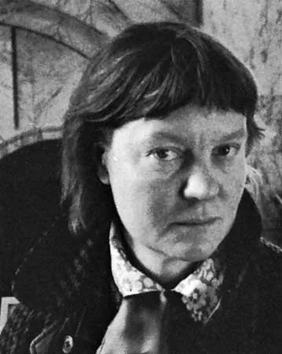
Attr: Cecil Beaton
| 32 Quotes | |
| Born as | Jean Iris Murdoch |
| Known as | Dame Iris Murdoch |
| Occup. | Author |
| From | Ireland |
| Born | July 15, 1919 Dublin, Ireland |
| Died | February 8, 1999 Oxford, England |
| Cause | Alzheimer's disease |
| Aged | 79 years |
| Cite | |
Citation Formats
APA Style (7th ed.)
Iris murdoch biography, facts and quotes. (2026, February 11). FixQuotes. https://fixquotes.com/authors/iris-murdoch/
Chicago Style
"Iris Murdoch biography, facts and quotes." FixQuotes. February 11, 2026. https://fixquotes.com/authors/iris-murdoch/.
MLA Style (9th ed.)
"Iris Murdoch biography, facts and quotes." FixQuotes, 11 Feb. 2026, https://fixquotes.com/authors/iris-murdoch/. Accessed 5 Mar. 2026.
Early Life and Background
Jean Iris Murdoch was born on 1919-07-15 in Dublin, Ireland, into the afterglow of revolution and the early uncertainties of the Irish Free State. Her father, Wills John Hughes Murdoch, a former British Army cavalry officer, worked as a civil servant; her mother, Irene Alice Richardson, had trained as a singer. That household mixture - disciplined public service and artistic aspiration - formed an early template for Murdoch's later preoccupation with the tension between duty and imagination, between moral aspiration and the unruly private life.
Raised largely in London from early childhood, she grew up culturally English while remaining marked by Irish origins that she neither sentimentalized nor forgot. The interwar years and the approach of World War II sharpened her sense that personal choices were never merely personal: political ideologies, sexual ethics, and private loyalties all competed to define what a "good" life could mean. This background produced a writer unusually attuned to the ways ordinary social scenes can conceal metaphysical stakes.
Education and Formative Influences
Murdoch studied Classics at Somerville College, Oxford, graduating in 1942, then pursued philosophy at Cambridge, where she attended Ludwig Wittgenstein's lectures. The rigor of classical ethics, the linguistic austerity of analytic philosophy, and wartime Britain's moral pressures combined to give her a lifelong suspicion of easy moral talk. After wartime work with the British Treasury and later the United Nations Relief and Rehabilitation Administration in occupied Europe, she returned to Oxford and became a fellow and tutor in philosophy at St Anne's College, where teaching and intellectual friendship became laboratories for the questions that her novels would dramatize.
Career, Major Works, and Turning Points
Murdoch published philosophy and criticism, but her public reputation was made by fiction: the debut novel Under the Net (1954) announced a comic-metaphysical talent, followed by an extraordinarily prolific sequence that included The Bell (1958), A Severed Head (1961), The Unicorn (1963), The Italian Girl (1964), The Nice and the Good (1968), The Black Prince (1973), and The Sea, the Sea (1978), which won the Booker Prize. She also wrote influential philosophical works such as Sartre: Romantic Rationalist (1953) and The Sovereignty of Good (1970), insisting against mid-century fashion that moral life could not be reduced to choice, language games, or social utility. In her later years, novels such as The Book and the Brotherhood (1987) and The Green Knight (1993) continued to test the boundary between realism and the uncanny, before Alzheimer's disease gradually ended her working life; she died on 1999-02-08 in Oxford.
Philosophy, Style, and Themes
Murdoch's inner life was organized around attention: the arduous effort to see others without the distortions of ego, fantasy, and self-protective myth. She distrusted moral melodrama, preferring the slow, nearly imperceptible reshaping of consciousness by habit, art, and love. “Happiness is a matter of one's most ordinary and everyday mode of consciousness being busy and lively and unconcerned with self”. This is not cheerful uplift but an exact psychological claim: the self becomes less tyrannical when it is absorbed by reality, whether in work, friendship, craft, or contemplation. Her novels stage that struggle through quarrels over property, sex, religion, and reputation - external plots that expose the internal drama of self-deception.
She also treated love and erotic obsession as moral laboratories, places where people discover how little they know about freedom. “Love is the difficult realization that something other than oneself is real”. The sentence is a key to her fiction: characters begin in enchantment, using others as mirrors for their own story, and are forced - sometimes through comic humiliation, sometimes through cruelty - toward the hard recognition of otherness. Murdoch's philosophical temperament favored patience over system, a stance captured in her own remark, “In philosophy if you aren't moving at a snail's pace you aren't moving at all”. The pace is ethical as well as intellectual: moral vision, like serious thought, advances by tiny corrections, not grand declarations.
Legacy and Influence
Murdoch endures as a rare double authority: a major novelist who mattered to philosophers, and a philosopher who could write drama into metaphysics without reducing either side. Her work widened the postwar English novel by reintroducing moral seriousness, the claims of the spiritual, and the unruly autonomy of other people into an era tempted by cynicism or mere technique. For later writers, her example remains liberating - proof that comedy can carry theology, that realism can admit the mysterious, and that the most intimate entanglements can be the stage for rigorous moral inquiry.
Our collection contains 32 quotes written by Iris, under the main topics: Witty One-Liners - Ethics & Morality - Wisdom - Truth - Art.
Other people related to Iris: Brigid Brophy (Novelist)
Iris Murdoch Famous Works
- 1992 Metaphysics as a Guide to Morals (Non-fiction)
- 1989 The Message to the Planet (Novel)
- 1985 The Good Apprentice (Novel)
- 1983 The Philosopher's Pupil (Novel)
- 1980 Nuns and Soldiers (Novel)
- 1978 The Sea, The Sea (Novel)
- 1975 A Word Child (Novel)
- 1974 The Sacred and Profane Love Machine (Novel)
- 1973 The Black Prince (Novel)
- 1970 A Fairly Honourable Defeat (Novel)
- 1970 The Sovereignty of Good (Non-fiction)
- 1969 Bruno's Dream (Novel)
- 1968 The Nice and the Good (Novel)
- 1966 The Time of the Angels (Novel)
- 1965 The Red and the Green (Novel)
- 1962 An Unofficial Rose (Novel)
- 1961 A Severed Head (Novel)
- 1958 The Bell (Novel)
- 1956 The Flight from the Enchanter (Novel)
- 1954 Under the Net (Novel)
- 1953 Sartre: Romantic Rationalist (Non-fiction)