
Isaac Butt Biography Quotes 1 Report mistakes
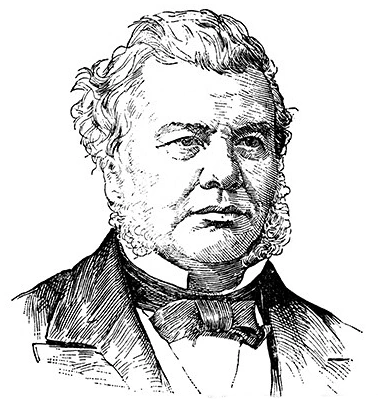
| 1 Quotes | |
| Occup. | Politician |
| From | Ireland |
| Born | September 6, 1813 Glenfin, County Donegal, lster, Ireland |
| Died | May 5, 1879 |
| Aged | 65 years |
| Cite | |
Citation Formats
APA Style (7th ed.)
Isaac butt biography, facts and quotes. (2026, February 11). FixQuotes. https://fixquotes.com/authors/isaac-butt/
Chicago Style
"Isaac Butt biography, facts and quotes." FixQuotes. February 11, 2026. https://fixquotes.com/authors/isaac-butt/.
MLA Style (9th ed.)
"Isaac Butt biography, facts and quotes." FixQuotes, 11 Feb. 2026, https://fixquotes.com/authors/isaac-butt/. Accessed 27 Mar. 2026.
Early Life and Background
Isaac Butt was born on 1813-09-06 in Glenfin, County Donegal, into the Protestant Ascendancy world that largely governed Ireland yet was increasingly anxious about its legitimacy. His father, a Church of Ireland rector, provided a home shaped by scripture, classical learning, and the habits of argument; the surrounding countryside provided the counterpoint - a tenant society living close to the edge, where law and property were felt as daily forces rather than abstractions.This double vision mattered. Butt grew up seeing Ireland not as a simple opposition of rulers and ruled, but as an island of overlapping loyalties: denominational, regional, and imperial. The Act of Union (1801) framed his lifetime, and by the time he reached adulthood the agitation of Daniel O'Connell had made mass politics unavoidable. Butt's early instinct was conservative and unionist, yet he was also drawn to reconciliation schemes that might let Irish grievances be heard without rupturing the state.
Education and Formative Influences
He entered Trinity College Dublin in the late 1820s, quickly distinguishing himself in classics and logic and winning debate-room reputations that foreshadowed the courtroom and parliament. Trinity trained him in the rationalist, legalistic language of the British constitution, but Dublin exposed him to the social volatility beneath it - Catholic emancipation, the aftershocks of agrarian unrest, and the emerging press culture that turned oratory into national theatre. His formative influences were thus not only books and tutors, but the spectacle of politics as persuasion, and the sense that in Ireland, rhetoric could become a substitute for power.Career, Major Works, and Turning Points
Called to the Irish bar, Butt became one of the best-known advocates of his day, admired for rapid analysis and commanding speech, and he entered the public sphere as a staunch opponent of O'Connell's Repeal movement. The turning point came with the failures of mid-century governance - especially the Great Famine and its political aftermath - which persuaded him that mere administration from Westminster could not meet Irish realities. He served as professor of political economy at Trinity (a post that sharpened his sense of institutions and incentives), wrote on Irish questions, and in 1852 entered Westminster as MP for Harwich before later representing Irish constituencies. In the late 1860s and early 1870s he recast himself as the architect of Irish Home Rule, founding the Home Government Association (1870) and helping form the Home Rule League (1873). He brought constitutional nationalism into parliamentary form, but his leadership was later challenged by younger, more disciplined figures, notably Charles Stewart Parnell, whose style of party management and obstruction exposed Butt's limitations in an age of hardening mass politics.Philosophy, Style, and Themes
Butt's core political philosophy was federalist rather than separatist: he sought an Irish legislature for domestic affairs while retaining the crown and imperial connection. He believed Ireland's crisis was structural - a mismatch between local needs and centralized rule - and that remedy required law, not romantic insurrection. This made him suspicious of violence yet sympathetic to the emotions that fueled it; he defended Fenian prisoners and argued that repression without reform merely deepened the national wound. His temperament leaned toward conciliation, and he often tried to build bridges between Protestant and Catholic opinion, landlord and tenant, Dublin and the provinces.Psychologically, Butt combined public combativeness with a private austerity. His most revealing note is the desire to disappear at the end: “Put no inscription over the grave, except the date of my birth and my death; and, wherever I am buried, let the funeral be perfectly private, with as few persons attending, and as little show and expense as possible”. The sentence reads like a conscious refusal of political theatre, a recoil from the commemorative culture that turned leaders into symbols and symbols into weapons. It also suggests a man who feared being misread by posterity - that his life would be reduced to slogans, whether "loyalist" or "nationalist", when his real project was a constitutional compromise difficult to dramatize. In an era when Irish politics rewarded spectacle, Butt's style was expansive, eloquent, and moralizing, yet his inner ideal was restraint: persuasion over coercion, institution-building over martyrdom, and quiet duty over personal cult.
Legacy and Influence
Butt died on 1879-05-05, having laid the parliamentary groundwork for Irish self-government even as he watched the movement he founded pass to more combative hands. His enduring influence lies in the architecture of Home Rule: organizing national sentiment into associations, elections, and a legislative program that could be argued within constitutional language. Later generations, including Parnellites and then Irish Parliamentary Party leaders, operated on terrain Butt helped map, even when they rejected his conciliatory temperament. In modern Irish political memory he stands as the transitional figure - a Protestant constitutionalist who tried to translate Ireland's grievances into a federal settlement, and whose quiet personal wish for anonymity underscores the paradox of a man who made mass politics his instrument but never quite embraced its appetite for icons.Our collection contains 1 quotes written by Isaac, under the main topics: Mortality.
Source / external links