
Isaac Disraeli Biography Quotes 12 Report mistakes
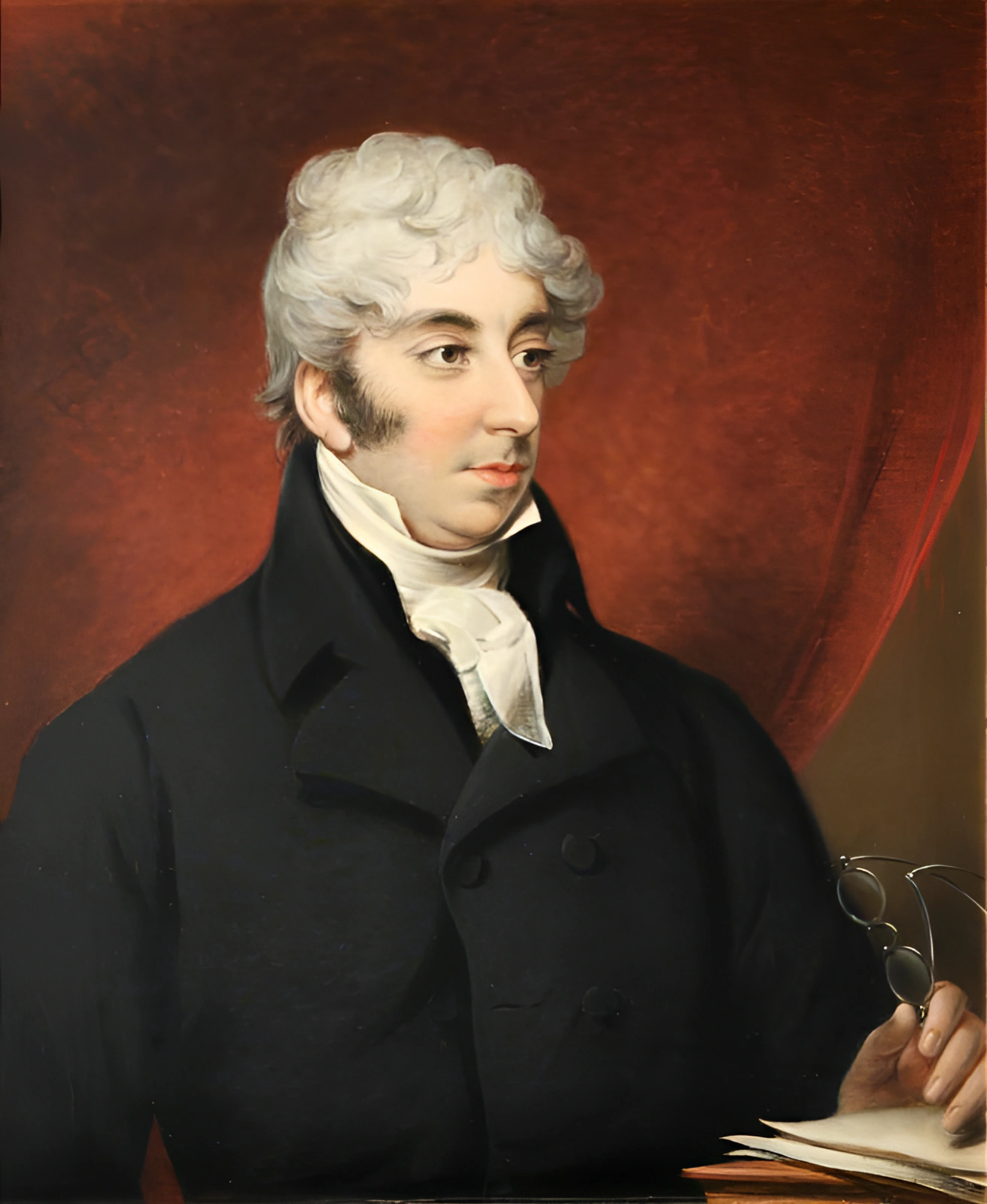
Attr: National Trust
| 12 Quotes | |
| Born as | Isaac D'Israeli |
| Occup. | Writer |
| From | England |
| Spouse | Maria Basevi |
| Born | December 11, 1766 London, England |
| Died | January 19, 1848 London, England |
| Aged | 81 years |
| Cite | |
Citation Formats
APA Style (7th ed.)
Isaac disraeli biography, facts and quotes. (2026, February 11). FixQuotes. https://fixquotes.com/authors/isaac-disraeli/
Chicago Style
"Isaac Disraeli biography, facts and quotes." FixQuotes. February 11, 2026. https://fixquotes.com/authors/isaac-disraeli/.
MLA Style (9th ed.)
"Isaac Disraeli biography, facts and quotes." FixQuotes, 11 Feb. 2026, https://fixquotes.com/authors/isaac-disraeli/. Accessed 27 Mar. 2026.
Early Life and Background
Isaac D'Israeli was born on 11 December 1766 into London Sephardi Jewish society, the son of Benjamin D'Israeli, an Italian-born merchant who had settled among the English Sephardim and moved with ease in the commercial world of the City. The household stood at a junction typical of late Georgian England: outwardly secure in trade, inwardly alert to the pressures on religious minorities, and increasingly exposed to the prestige of English letters. Isaac inherited that double consciousness - at once provincial in the sense of belonging to a tight community, and cosmopolitan in the sense of imagining life as a republic of books.Family tensions helped shape his private character. He was by temperament bookish, ironic, and somewhat retiring; his ambitions were literary rather than mercantile, and he resisted the discipline of counting-house life. In 1817, a dispute with the Bevis Marks synagogue over fees and governance led him to withdraw; his children were baptized into the Church of England soon after, a decision whose practical consequences would echo through British politics in the career of his son, Benjamin Disraeli. Isaac remained culturally Jewish in memory and learning, but increasingly defined himself as an English man of letters, committed to the archive and the essay rather than the pulpit or the shop.
Education and Formative Influences
He never followed a conventional university path. Instead, he educated himself through omnivorous reading, early association with London publishing circles, and travel on the Continent that broadened his sense of intellectual genealogy. French and Italian literature, Enlightenment historiography, and the English periodical tradition all fed his method: to treat literary history as a storehouse of human motives. His friendships and acquaintances in the world of print - editors, booksellers, and salon-minded conversationalists - encouraged a hybrid form halfway between scholarship and essay, where anecdote could become evidence and style could carry argument.Career, Major Works, and Turning Points
D'Israeli built his reputation as a writer who turned the backstage life of books into a subject in itself. His long-running project, "Curiosities of Literature" (begun in the 1790s and expanded across editions), made him a household guide to literary oddities, quarrels, suppressed texts, and the accidents of authorship. He followed it with works that extended the same sensibility into adjacent terrains: "The Calamities of Authors" (1812) anatomized the economic and psychological hazards of literary vocation; "Quarrels of Authors" (1814) interpreted rivalry as a literary engine; "Amenities of Literature" (1841) offered a mellow late synthesis; and his historical studies, notably "The Genius of Judaism" (1833), attempted to reconcile Jewish historical continuity with the intellectual tastes of a Protestant reading public. Blindness in later life narrowed his physical world but not his mental one; aided by family, he continued dictating, refining a persona of patient, slightly skeptical erudition.Philosophy, Style, and Themes
At the core of D'Israeli's work lies a conviction that culture is memory made portable. He treated quotation not as decoration but as preservation, a way to rescue fragile insight from time and chance: “The wisdom of the wise, and the experience of ages, may be preserved by quotation”. Psychologically, this reveals both reverence and self-defense. The compiler's craft allowed him to master an overwhelming literary past without claiming prophetic originality; he could be authoritative while remaining personally elusive, letting the dead speak through him and turning reading into a form of stewardship.His essays repeatedly circle the social economy of letters: who gets to write, who gets remembered, and what substitute honors can be won in print when other doors are closed. “Literature is an avenue to glory, ever open for those ingenious men who are deprived of honours or of wealth”. Coming from a minority background and a family rooted in commerce, the line reads as autobiography masked as maxim - an argument that a life outside the old establishments could still enter posterity through disciplined taste and persistent curiosity. That taste was demanding, even moralized: “It is a wretched taste to be gratified with mediocrity when the excellent lies before us”. The remark captures his inner austerity - a man wary of intellectual laziness, suspicious of fashion, and drawn to the exemplary even when he wrote about the bizarre.
Legacy and Influence
D'Israeli's enduring influence is twofold: he helped popularize a distinctly modern form of literary history - part criticism, part archive, part psychological portrait - and he modeled the professional identity of the essayist as curator of cultural memory. Victorian readers mined him for anecdotes; later scholars have treated him as a precursor to the study of authorship as a social condition, attentive to censorship, patronage, and the economics of print. His quieter legacy runs through his son: the baptized child of a lapsed synagogue member became prime minister, and the family story turned D'Israeli into a hinge figure between Jewish diasporic learning and the English canon. His books still speak to readers who sense that literature is not merely art but a lived record of ambition, failure, endurance, and the hunger to be remembered.Our collection contains 12 quotes written by Isaac, under the main topics: Witty One-Liners - Ethics & Morality - Wisdom - Writing - Reason & Logic.
Isaac Disraeli Famous Works
- 1841 The Amenities of Literature (Book)
- 1818 The Literary Character, or the History of Men of Genius (Book)
- 1814 The Calamities and Quarrels of Authors (Book)
- 1795 An Essay on the Manners and Genius of the Literary Character (Book)
- 1793 A Dissertation on Anecdotes (Book)
- 1791 Curiosities of Literature (Book)
Source / external links