
Isaac Mizrahi Biography Quotes 32 Report mistakes
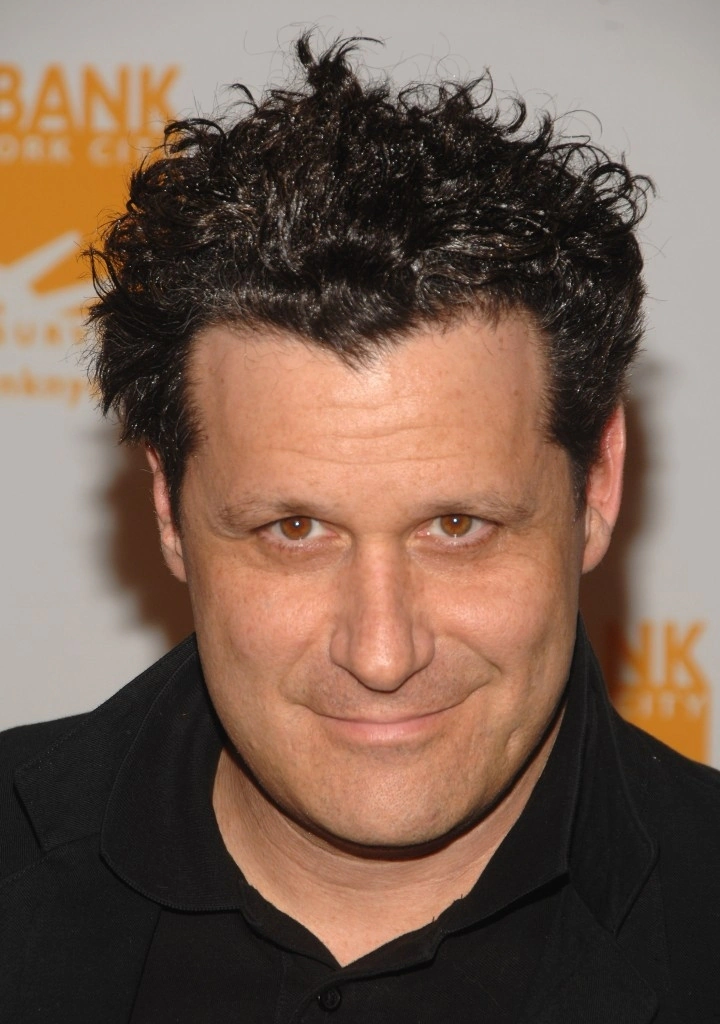
| 32 Quotes | |
| Occup. | Designer |
| From | USA |
| Born | October 14, 1961 Brooklyn, New York |
| Age | 64 years |
| Cite | |
Citation Formats
APA Style (7th ed.)
Isaac mizrahi biography, facts and quotes. (2026, March 5). FixQuotes. https://fixquotes.com/authors/isaac-mizrahi/
Chicago Style
"Isaac Mizrahi biography, facts and quotes." FixQuotes. March 5, 2026. https://fixquotes.com/authors/isaac-mizrahi/.
MLA Style (9th ed.)
"Isaac Mizrahi biography, facts and quotes." FixQuotes, 5 Mar. 2026, https://fixquotes.com/authors/isaac-mizrahi/. Accessed 5 Mar. 2026.
Early Life and Background
Isaac Mizrahi was born on October 14, 1961, in Brooklyn, New York, into a Syrian Jewish family whose rhythms mixed immigrant pragmatism with the glamour of American display. He grew up in a tight, tradition-minded household where appearances carried meaning - not as vanity, but as a kind of social language. That instinct for clothing as communication formed early: even as a child he was drawn to the theater of women dressing, the way fabric could signal confidence, caution, or desire.Brooklyn in the late 1960s and 1970s offered both constraint and stimulus: conservative communal expectations on one side, New York Citys promiscuous creativity on the other. Mizrahi learned to read codes - of class, gender, propriety, aspiration - and later turned that literacy into design. He also absorbed the pressure of being different inside a culture that prized conformity, an inner tension that would become a lifelong engine: the need to please, the need to perform, and the need to make something unmistakably his.
Education and Formative Influences
After early training in art and fashion, Mizrahi studied at Parsons School of Design in New York, entering a lineage of American designers who treat the city as both workshop and muse. Parsons sharpened his draughtsmanship and discipline, but just as important were the surrounding institutions - downtown performance, uptown museums, the garment districts industrial reality - that taught him fashion was not only drawing but timing, production, and audience. He gravitated toward dance and theatrical structure as models for movement and line, and he began to understand that elegance is not an abstract ideal but something tested on bodies in motion.Career, Major Works, and Turning Points
Mizrahi began professionally in the late 1970s and early 1980s, working in the industry before launching his own label and emerging as a major American designer by the late 1980s. In the 1990s his brand became synonymous with high-energy color, playful sophistication, and a New York sensibility that could be both witty and exacting; his runway shows became cultural events as much as retail propositions. A pivotal broadening came with his move into mass-market design through partnerships that brought his eye to a wider public, testing how luxury attitudes could translate to accessible price points without losing spirit. Parallel to fashion, he built a second career as a performer, commentator, and television personality - a rare designer whose public voice was as recognizable as his silhouettes - while continuing to publish his tastes through costumes, collaborations, and ongoing creative work.Philosophy, Style, and Themes
At the core of Mizrahis work is a belief that fashion is a performing art with a practical mandate: it must delight, but it must also function on real bodies under real conditions. His design language favors saturated color, graphic contrast, and the kind of proportion that reads instantly across a room - clothes meant to be lived in, not merely photographed. He is a craftsman of immediacy, impatient with dilution and bureaucracy, guided by an almost choreographic sense of line and momentum. That attraction to dance is explicit in his pantheon: “You know who a role model for me is? George Ballanchine”. Like Balanchine, Mizrahi prizes clarity and speed, the idea that the best structure is the one that makes freedom visible.Psychologically, he often frames creation as compulsion rather than strategy, a cycle of disenchantment and relapse that reveals how deeply he depends on making to regulate mood. “Just when I think I hate fashion, I hate clothes, I'm seized by this crazy thing that I have to do. I have this little studio now where I just draw. I can be in the room for three days and not even look up”. The sentence sketches an inner life defined by intensity and retreat: the studio as sanctuary, drawing as trance, work as a force that overrides ambivalence. Yet that inwardness does not produce preciousness about the wearer; instead it produces empathy and a technical respect for anatomy, comfort, and dignity. “You're not working with models, you're working with real women who have, like, anatomy. Models do not have anatomy”. In his world, clothes are not ideals imposed on bodies - they are negotiations with bodies.
Legacy and Influence
Isaac Mizrahi endures as a distinctly American figure: designer, entertainer, and cultural interpreter whose wit never fully conceals seriousness about craft. He helped normalize the designer as public personality without surrendering to pure celebrity, and he demonstrated that high style could travel into broader retail contexts while keeping a point of view. Younger designers cite his example of mixing rigor with humor, and his emphasis on real-woman fit and movement remains a living argument against fashion as abstraction. In the long view, his influence lies in the way he made fashion feel like New York itself - brash, intelligent, emotional, and always in motion.Our collection contains 32 quotes written by Isaac, under the main topics: Witty One-Liners - Motivational - Funny - Truth - Art.
Source / external links