
Isaac Rosenberg Biography Quotes 11 Report mistakes
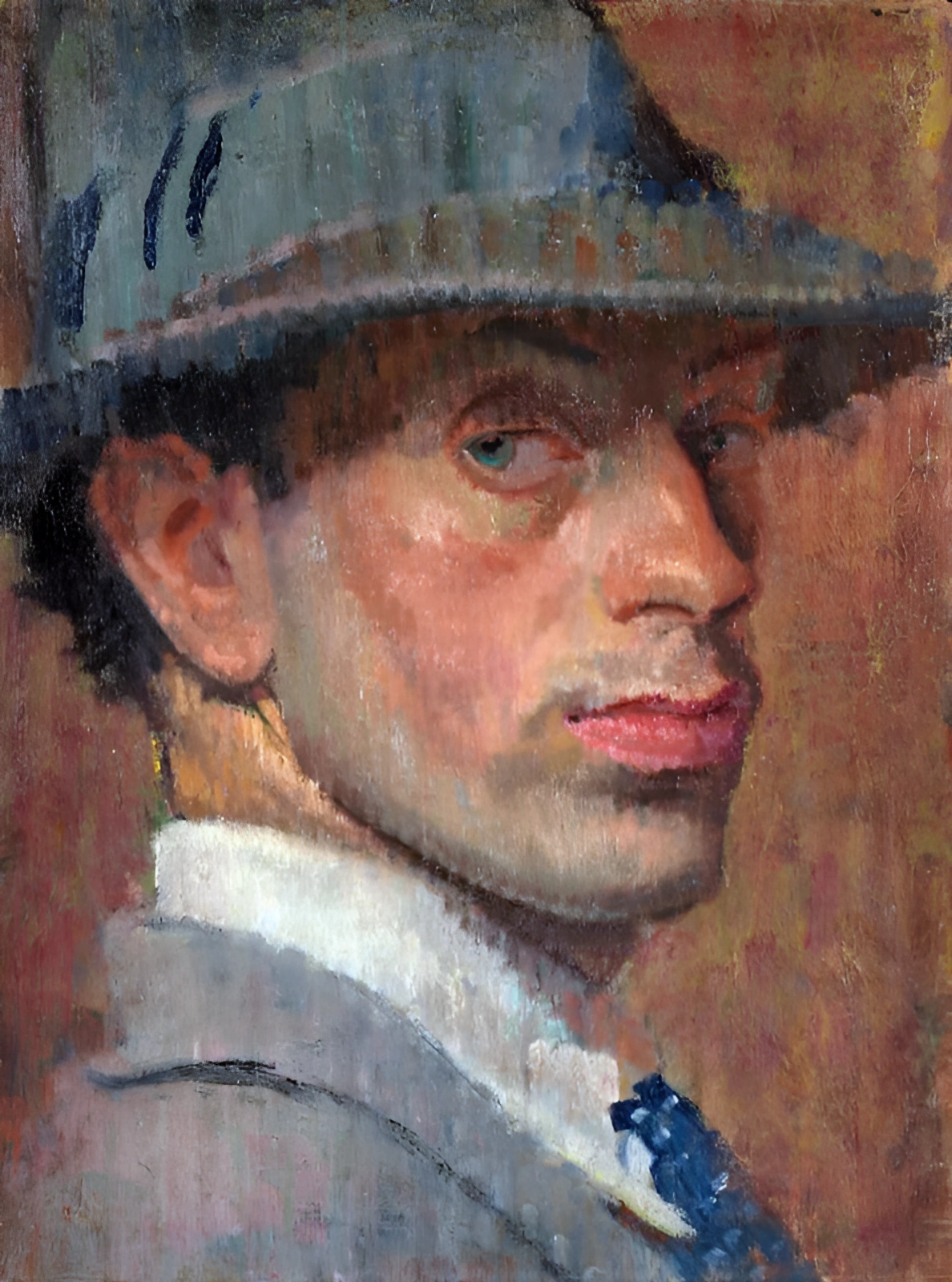
| 11 Quotes | |
| Occup. | Poet |
| From | England |
| Born | November 25, 1890 Bristol, England |
| Died | April 1, 1918 Arras, France |
| Cause | Killed in action |
| Aged | 27 years |
| Cite | |
Citation Formats
APA Style (7th ed.)
Isaac rosenberg biography, facts and quotes. (2026, February 11). FixQuotes. https://fixquotes.com/authors/isaac-rosenberg/
Chicago Style
"Isaac Rosenberg biography, facts and quotes." FixQuotes. February 11, 2026. https://fixquotes.com/authors/isaac-rosenberg/.
MLA Style (9th ed.)
"Isaac Rosenberg biography, facts and quotes." FixQuotes, 11 Feb. 2026, https://fixquotes.com/authors/isaac-rosenberg/. Accessed 26 Mar. 2026.
Early Life and Background
Isaac Rosenberg was born on 25 November 1890 in Bristol, England, to Barnett and Annie Rosenberg, Jewish immigrants from the Lithuanian borderlands of the Russian Empire. The family soon settled in London, in the pressured ecology of the East End, where overcrowding, casual labor, and anti-Jewish prejudice shaped daily life. Rosenberg grew up alert to the way class and ethnicity narrowed a life before it began, and his later poems would retain that double vision: a city boy trained by hardship to see beauty, and a Jew in Christian England trained to notice exclusion.Money was tight and schooling intermittent, but his gifts were unmistakable early on - drawing, then verse - and he learned the discipline of making art under constraint. He experienced poverty not as a romantic spur but as a practical siege: long hours, poor health, and the sense that time itself was rationed. That pressure intensified his inwardness; the world around him could be indifferent, so he built an interior workshop where language and image might outlast circumstance.
Education and Formative Influences
Rosenberg left school young and was apprenticed as an engraver in London, a trade that trained his eye for line, contrast, and compressed detail - qualities that later surfaced in his exact, sculpted diction. Encouraged by patrons who recognized his talent, he attended evening classes at Birkbeck College and studied at the Slade School of Fine Art (from 1911), absorbing a painterly attention to form while reading voraciously: the Bible, Shakespeare, Shelley, Keats, and the moderns. In 1914 he traveled to South Africa, seeking health and relief from economic pressure, but returned to England as war tightened the labor market and the future.Career, Major Works, and Turning Points
Rosenberg published his first book of poems, "Night and Day" (1912), and continued to write while still imagining himself primarily as a visual artist; the split between painter and poet gave his work a rare density of image. The decisive turn came with World War I. He enlisted in 1915, not out of ideology but necessity, and served first with the King's Own Royal Lancaster Regiment and later the 11th Battalion, King's Royal Rifle Corps. In the trenches he wrote the poems that fixed his reputation - "Break of Day in the Trenches", "Returning, We Hear the Larks", and "Dead Man's Dump" - refusing both recruiting rhetoric and easy pity. On 1 April 1918, near Arras, he was killed on patrol at the age of 27, one of the war's most devastating losses to English letters.Philosophy, Style, and Themes
Rosenberg's letters reveal a mind acutely aware of limitation - economic, social, and aesthetic - and determined to convert it into precision rather than complaint. He admitted, “I can't look at things in the simple, large way that great poets do”. That is less self-pity than a statement of method: his greatness lies in the opposite of the panoramic. He writes by pressure and proximity, close enough to the object that it becomes strange again - the rat as trench-ambassador, the poppy as a private flare, the corpse-hauler's cart as industrial nightmare. In a culture that expected heroic generalities, he trusted the angled shard, the unsettling particular.His trench poetry is often called anti-war, but it is more exacting than slogan, because it studies how a mind stays awake inside mass death. “Nothing can justify war”. Yet even that verdict coexists with a disciplined curiosity about perception under extremity: “I will not leave a corner of my consciousness covered up, but saturate myself with the strange and extraordinary new conditions of this life, and it will all refine itself into poetry later on”. The sentence is a psychological self-instruction: do not numb, do not retreat, metabolize. His poems repeatedly stage the contest between moral revulsion and artistic attention, refusing to let either cancel the other.
Legacy and Influence
Rosenberg's posthumous standing grew through the work of editors and champions who recognized that his war poems expanded what English poetry could bear: not only grief and protest, but the fierce intelligence of observation under coercion. Alongside Wilfred Owen and Siegfried Sassoon, he became central to the literature of World War I, though his perspective - working-class, Jewish, and aesthetically modern - remains distinct. His influence persists in later poets who prize image as argument and who distrust consoling narratives, finding in Rosenberg a model of how to look unflinchingly, ethically, and artistically at a shattered century.Our collection contains 11 quotes written by Isaac, under the main topics: Learning - Life - Poetry - War - Peace.
Isaac Rosenberg Famous Works
- 1922 Poems (Collection)
- 1918 Daughters of War (Poem)
- 1917 Marching (Poem)
- 1917 Louse Hunting (Poem)
- 1917 The Immortals (Poem)
- 1917 Returning, We Hear the Larks (Poem)
- 1917 Dead Man's Dump (Poem)
- 1917 A Worm (Poem)
- 1916 Break of Day in the Trenches (Poem)
- 1915 Youth (Poetry)
- 1914 On Receiving News of the War (Poem)
- 1912 Night and Day (Poetry)
Source / external links