
Isabella Bird Biography Quotes 1 Report mistakes
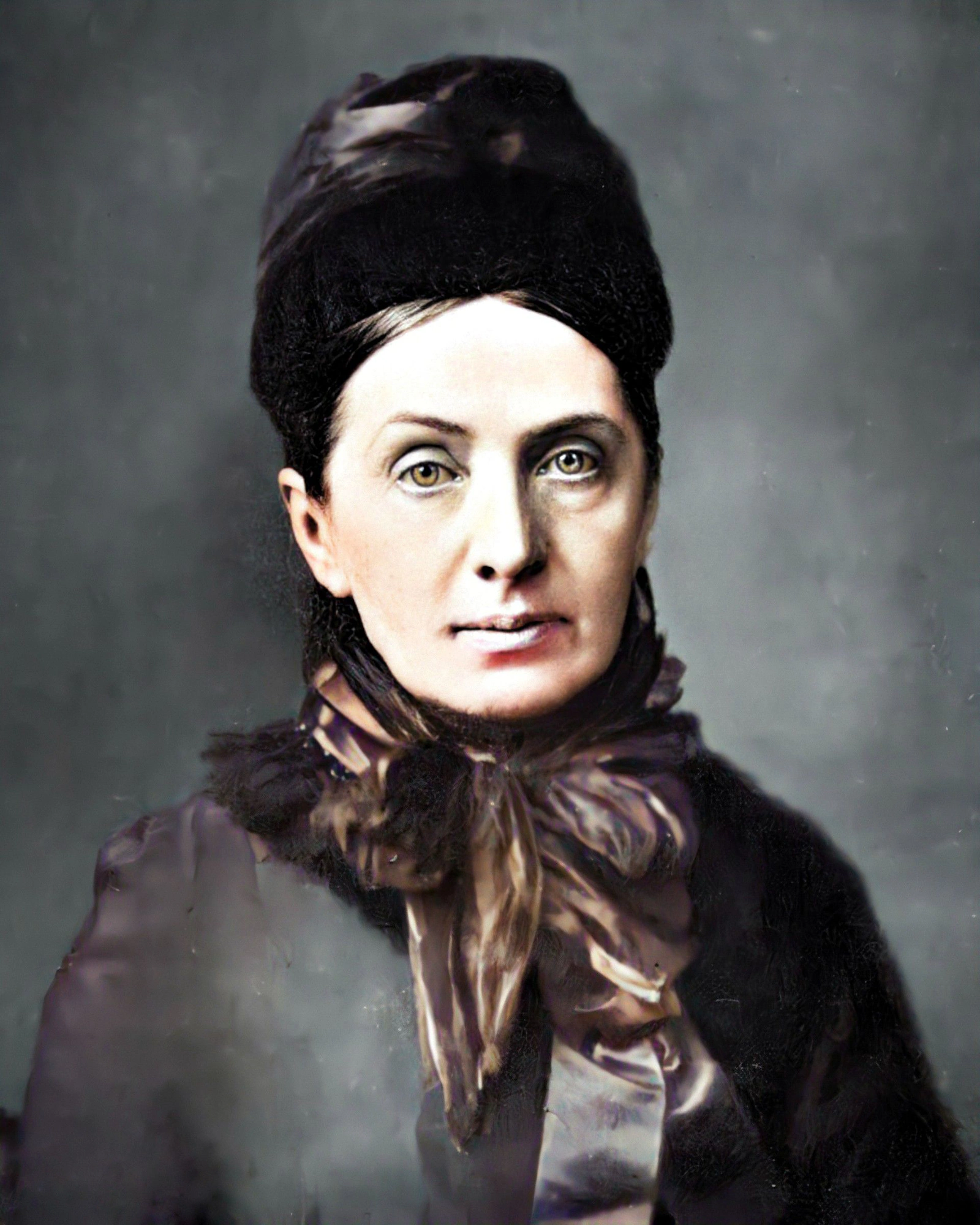
| 1 Quotes | |
| Born as | Isabella Lucy Bird |
| Occup. | Writer |
| From | England |
| Born | October 15, 1831 Boroughbridge, North Yorkshire, England |
| Died | October 7, 1904 Edinburgh, Scotland |
| Cause | Heart Failure |
| Aged | 72 years |
| Cite | |
Citation Formats
APA Style (7th ed.)
Isabella bird biography, facts and quotes. (2026, February 11). FixQuotes. https://fixquotes.com/authors/isabella-bird/
Chicago Style
"Isabella Bird biography, facts and quotes." FixQuotes. February 11, 2026. https://fixquotes.com/authors/isabella-bird/.
MLA Style (9th ed.)
"Isabella Bird biography, facts and quotes." FixQuotes, 11 Feb. 2026, https://fixquotes.com/authors/isabella-bird/. Accessed 26 Mar. 2026.
Early Life and Background
Isabella Lucy Bird was born on 15 October 1831 in Boroughbridge, Yorkshire, into an evangelical Anglican household where conscience and curiosity were daily disciplines. Her father, the Rev. Edward Bird, was a clergyman whose itinerant postings and pastoral rounds exposed her early to the practical textures of provincial England and the moral language of duty, charity, and self-scrutiny. This domestic world prized improvement and restraint, yet it also trained her to observe people closely, to narrate character, and to treat experience as something that could be examined, sifted, and rendered into meaning.From childhood she was frequently ill, suffering chronic spinal and nervous complaints that confined her for stretches and, paradoxically, schooled her in endurance. Victorian medicine offered limited relief, and travel was repeatedly prescribed as therapy - a recommendation that became her escape hatch from the narrowing expectations placed on unmarried middle-class women. That tension between frailty and fierce will became her lifelong rhythm: periods of pain and enforced stillness, followed by sudden, determined movement across oceans and frontiers.
Education and Formative Influences
Bird did not receive a formal university education; her formation came through voracious reading, family correspondence, and the rigorous self-education of a gifted letter-writer. In an era when women were encouraged to be pious, domestic, and deferential, she learned instead to turn private letters into public narrative. The travel book market was booming, missionary reports circulated widely, and imperial expansion fed British appetite for distant scenes - conditions that allowed her to convert personal convalescence trips into serious authorship, while the evangelical habit of moral accounting sharpened her eye for social detail and ethical argument.Career, Major Works, and Turning Points
Her first major journey, to North America in the 1850s, initiated a pattern: letters home that later became books. She broke through with The Englishwoman in America (1856), then widened her range in Six Months in the Sandwich Islands (1875), A Lady's Life in the Rocky Mountains (1879), and Unbeaten Tracks in Japan (1880), works that fused vivid scene-setting with an unusually candid first-person presence. In the mid-1870s she rode through Colorado, met the charismatic Jim Nugent ("Rocky Mountain Jim"), and tested the limits of Victorian femininity on horseback and in mining camps. After the death of her beloved sister Henrietta in 1880, her travel intensified and her purpose hardened; she married the physician John Bishop in 1881, was widowed in 1886, and then redirected her restlessness into more explicitly medical and missionary commitments. Her later expeditions ranged through the Middle East, Persia, Kurdistan, Tibet-adjacent regions, and China, culminating in Korea and its Neighbours (1898) and The Yangtze Valley and Beyond (1899). In 1892 she became the first woman elected a Fellow of the Royal Geographical Society, recognition that her "ladylike" narratives had become, in practice, geographic and ethnographic documents.Philosophy, Style, and Themes
Bird wrote from inside the Victorian contradictions: an evangelical conscience paired with a hunger for the unregulated. Her style is brisk, scene-driven, and tactile - weather, food, terrain, and clothing are never decorative but diagnostic, ways of reading a society. She often presents herself as physically vulnerable, yet her prose performs a different self: alert, amused, difficult to intimidate. The tension is psychological as much as social. Illness gave her a sanctioned reason to travel, but travel also gave her an arena where competence could replace convalescence. She cultivated authority by doing the work - riding bad roads, learning enough local custom to ask the right questions, and reporting with a near-journalistic emphasis on what she actually saw.The deeper theme is moral attention: the desire to look steadily at human arrangements without dissolving into either sentimentality or contempt. Even her more sensational observations are used to expose how value is assigned - to bodies, animals, commodities, and beliefs. When she records, “Everybody seized upon a bit of the beast. The Sultan claimed the liver, which, when dried and powdered, is worth twice its weight in gold as medicine”. , she is not simply offering exotic spectacle; she is anatomizing appetite, hierarchy, and the economics of faith in remedies. Such moments reveal her inner method: she approaches the unfamiliar as a system with incentives and stories, then measures it against her own ethics, sometimes judging sharply, sometimes revising her assumptions mid-page. The result is a voice that is both empathetic and imperial, morally earnest yet thrilled by difference, and always intent on turning travel into a disciplined form of knowing.
Legacy and Influence
Bird helped redefine what a woman travel writer could be: not a tourist with a sketchbook, but a field observer whose stamina, logistical skill, and descriptive exactitude earned institutional respect. Her books shaped late-Victorian popular geography and offered many British readers their first sustained portraits of places such as Meiji-era Japan, the American West in transition, and Korea under external pressure. Modern readers also meet her as a document of her time - a writer who could champion individual dignity while carrying the assumptions of empire - and as an early model of women claiming public authority through narrative craft. She died in Edinburgh on 7 October 1904, still planning another journey, leaving behind an enduring template for travel writing as psychological autobiography, social reportage, and moral inquiry at once.Our collection contains 1 quotes written by Isabella, under the main topics: Travel.
Isabella Bird Famous Works
- 1899 The Yangtze Valley and Beyond (Book)
- 1898 Korea and Her Neighbours (Book)
- 1894 Among the Tibetans (Book)
- 1891 Journeys in Persia and Kurdistan (Book)
- 1883 The Golden Chersonese and the Way Thither (Book)
- 1881 Unbeaten Tracks in Japan (Book)
- 1879 A Lady's Life in the Rocky Mountains (Book)
- 1875 The Hawaiian Archipelago (Book)
- 1856 The Englishwoman in America (Book)
Source / external links