
Isabelle Eberhardt Biography Quotes 3 Report mistakes
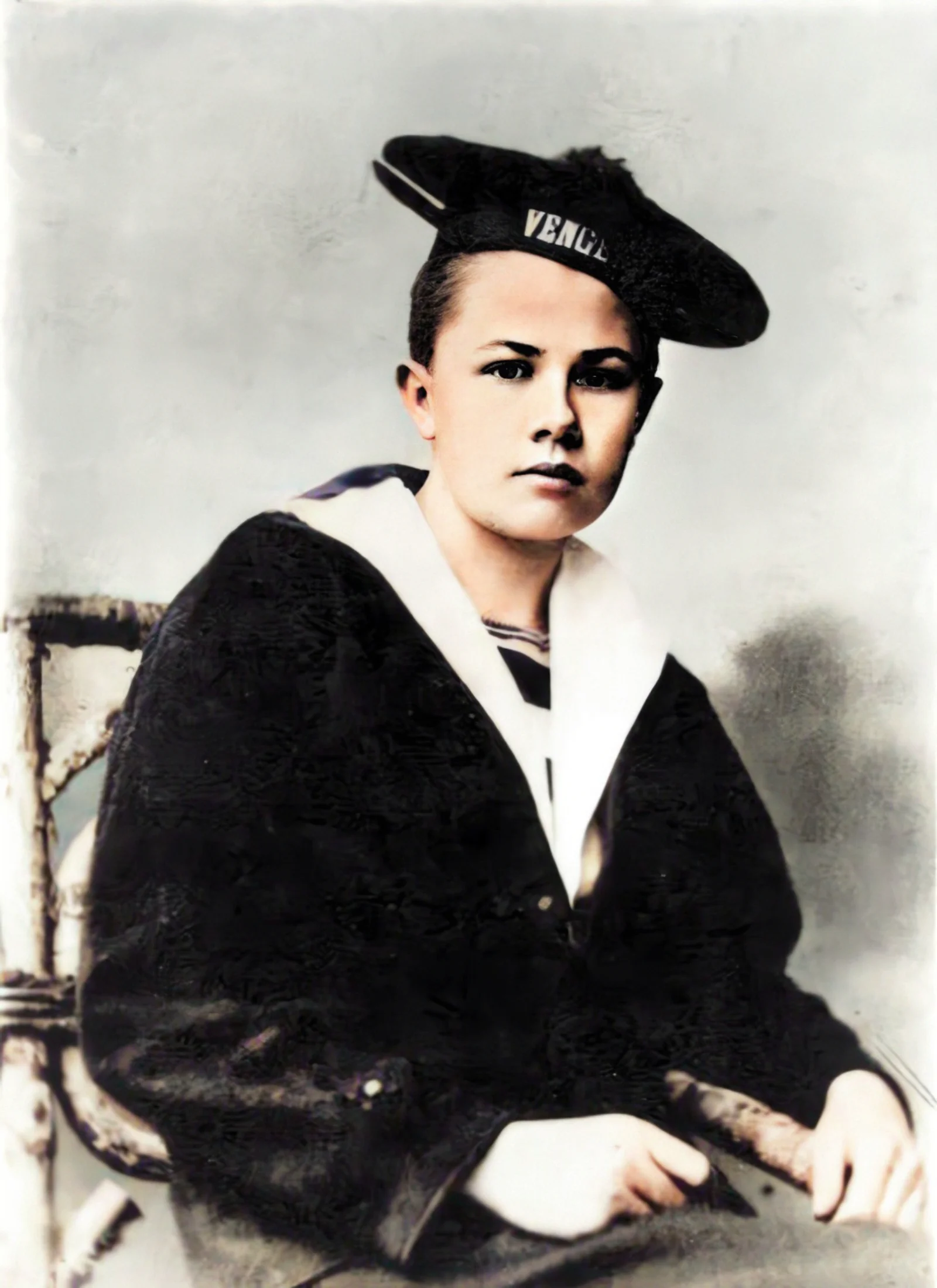
Attr: Louis David, Public domain
| 3 Quotes | |
| Born as | Isabelle Wilhelmine Marie Eberhardt |
| Occup. | Explorer |
| From | England |
| Spouse | Slimane Ehnni (1901) |
| Born | February 17, 1877 Geneva, Switzerland |
| Died | October 21, 1904 Aïn Séfra, Algeria |
| Aged | 27 years |
| Cite | |
Citation Formats
APA Style (7th ed.)
Isabelle eberhardt biography, facts and quotes. (2026, February 2). FixQuotes. https://fixquotes.com/authors/isabelle-eberhardt/
Chicago Style
"Isabelle Eberhardt biography, facts and quotes." FixQuotes. February 2, 2026. https://fixquotes.com/authors/isabelle-eberhardt/.
MLA Style (9th ed.)
"Isabelle Eberhardt biography, facts and quotes." FixQuotes, 2 Feb. 2026, https://fixquotes.com/authors/isabelle-eberhardt/. Accessed 25 Mar. 2026.
Early Life and Background
Isabelle Wilhelmine Marie Eberhardt was born on 1877-02-17 in Geneva, Switzerland, into a household that already sat uneasily within European respectability. Her mother, Nathalie Moerder, was a Russian aristocrat estranged from convention; her father-figure was the family tutor, Alexander Trofimovsky, a former Orthodox priest and radical freethinker who shaped the childrens education. Though later press accounts sometimes styled her "English", her origins were decisively continental, marked by exile, languages, and the aftertaste of a fallen class.The atmosphere of her childhood was one of inward intensity rather than bourgeois security. Geneva offered libraries, newspapers, and the cosmopolitan friction of fin-de-siecle Europe, while the familys precarious finances and unconventional domestic arrangements trained her early in self-reliance and secrecy. She grew up reading widely, writing constantly, and cultivating a capacity for disguise - social, linguistic, and eventually physical - that would become the core instrument of her adult life.
Education and Formative Influences
Educated largely at home, Eberhardt absorbed French and Russian and taught herself Arabic with unusual seriousness for a European teenager, drawing on grammars, Qur anic texts, and whatever North African materials she could obtain. Trofimovsky encouraged skepticism toward church and state and a romantic identification with the oppressed; she, in turn, developed a longing for the Islamic world that was not touristic but existential, imagining North Africa as a space where class and gender could be renegotiated. By the mid-1890s she was already publishing and keeping notebooks in which travel was less a hobby than a moral vocation.Career, Major Works, and Turning Points
In 1897 she reached Algeria, then a French colony riven by land seizures, military rule, and the tensions of settler society; in 1899 she settled in Biskra and began living in mens clothing under the name Si Mahmoud, moving through cafes, desert encampments, and Sufi circles with a freedom denied to European women. She converted to Islam and affiliated with the Qadiriyya, gaining protection as well as suspicion; after an apparent assassination attempt in 1901, colonial authorities treated her as a political irritant and expelled her, only for her to return. In 1902 she married the Algerian soldier Slimene Ehnni, and in her final years she wrote reportage and fiction for metropolitan newspapers while traveling the South Oranais and the Saharan fringes. Her notebooks, later published posthumously in works such as "Dans l ombre chaude de l Islam", "Notes de route", and "Ecrits sur le sable", record a mind balancing rapture, exhaustion, and acute colonial observation. She died on 1904-10-21 in Ain Sefra when a sudden flood swept through her lodging, an abrupt end that sealed her legend.Philosophy, Style, and Themes
Eberhardts inner life was powered by motion: flight from bourgeois Europe, pursuit of mystical absorption, and a stubborn refusal of fixed identity. Her writing returns to the ethics of wandering, not as picturesque tourism but as a discipline that purges ambition and exposes the self to contingency. “A nomad I will remain for life, in love with distant and uncharted places”. In her case, the statement is less slogan than diagnosis - a temperament that found stability claustrophobic and treated distance as a form of truth-telling.Her style, shaped by French fin-de-siecle prose and the immediacy of field notes, toggles between lyrical desert descriptions and sharp political detail: garrisons, administrators, famines, and the social humiliations of colonized life. Yet she distrusted grand programs; happiness, she insisted, came obliquely, as if direct pursuit were another colonial grasping. “One must never look for happiness: one meets it by the way”. That credo reveals a psychology trained on impermanence, as well as a wary humility before forces larger than will. Even her fascination with death reads as a demand for meaning rather than melodrama: “I am not afraid of death, but would not want to die in some obscure or pointless way”. The irony is that her end was both random and symbolically exact - a life spent courting the elements concluded by them.
Legacy and Influence
Eberhardt endures as a rare witness from inside the contradictions of colonial North Africa: neither imperial celebrant nor simple romantic, but a writer whose empathy was earned through risk, language, and proximity. Her posthumous publications - assembled from scattered journals and manuscripts - made her a touchstone for travel literature, feminist and queer readings of gender performance, and studies of European converts to Islam. She remains influential less for a single masterpiece than for a total stance: the insistence that to understand a place one must surrender comfort, let identity blur, and accept that the most decisive discoveries arrive while one is simply on the way.Our collection contains 3 quotes written by Isabelle, under the main topics: Mortality - Happiness - Wanderlust.
Isabelle Eberhardt Famous Works
- 2014 Prisoner of Dunes (Book)
- 2003 In the Shadow of Islam (Book)
- 1987 The Passionate Nomad: The Journals of Isabelle Eberhardt (Book)
- 1975 The Oblivion Seekers (Book)
Source / external links