
Issey Miyake Biography Quotes 17 Report mistakes
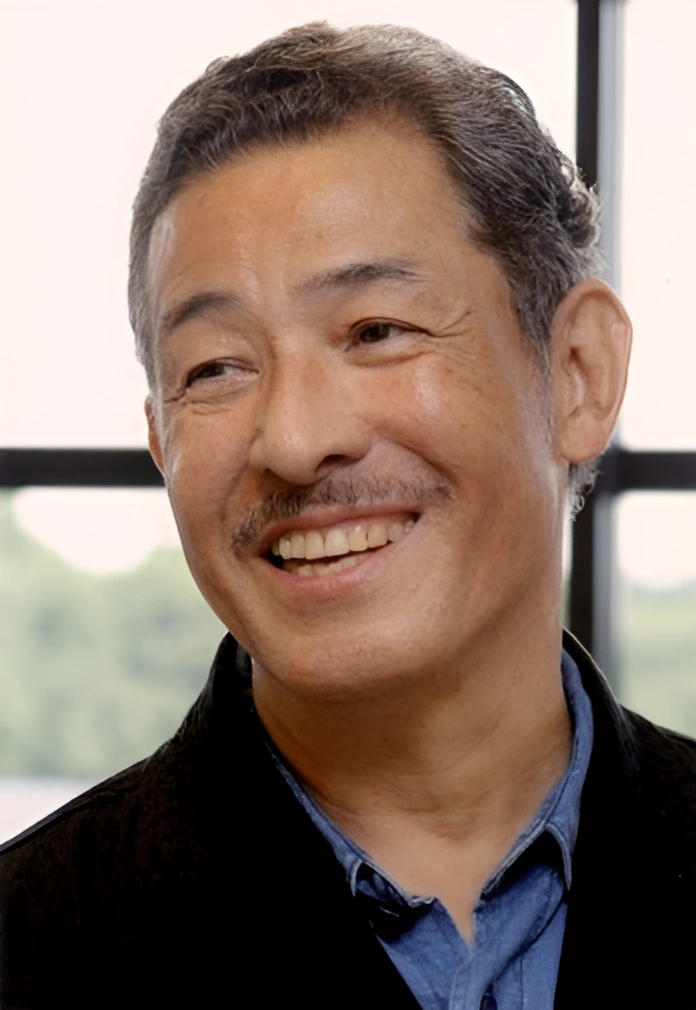
| 17 Quotes | |
| Occup. | Designer |
| From | Japan |
| Born | April 22, 1935 Hiroshima, Japan |
| Age | 90 years |
| Cite | |
Citation Formats
APA Style (7th ed.)
Issey miyake biography, facts and quotes. (2026, February 11). FixQuotes. https://fixquotes.com/authors/issey-miyake/
Chicago Style
"Issey Miyake biography, facts and quotes." FixQuotes. February 11, 2026. https://fixquotes.com/authors/issey-miyake/.
MLA Style (9th ed.)
"Issey Miyake biography, facts and quotes." FixQuotes, 11 Feb. 2026, https://fixquotes.com/authors/issey-miyake/. Accessed 24 Mar. 2026.
Early Life and Background
Issey Miyake was born on April 22, 1938, in Hiroshima, Japan. His earliest memory was not of fashion but of rupture: as a child he survived the atomic bombing and grew up amid the long, quiet labor of rebuilding a city and a psyche. That origin story mattered not as melodrama but as a lifelong sensitivity to materials, bodies, and the daily mechanics of living - what endures, what breaks, what can be remade.Postwar Japan offered few stable certainties beyond work, discipline, and the promise of modernity. Miyake came of age during the nation's rapid economic ascent, when new consumer desires collided with older craft traditions. He absorbed both impulses: the respect for hand skill and the urge to invent, to industrialize, to export a new image of Japan that was neither folkloric nor imitative of Europe.
Education and Formative Influences
Miyake studied graphic design at Tama Art University in Tokyo, graduating in the early 1960s, a period when Japanese design fields were loosening their borders and the 1964 Tokyo Olympics advertised a streamlined, international Japan. He moved to Paris in 1965, training in couture ateliers (notably Guy Laroche and later Givenchy) before relocating to New York in 1969, where the city's dance, street life, and emerging conceptual art sharpened his conviction that clothing was an applied art: inseparable from motion, work, weather, and the democratic crush of bodies.Career, Major Works, and Turning Points
In 1970 he founded the Miyake Design Studio in Tokyo and began showing in Paris, establishing himself as a designer who treated fabric as engineering and garments as systems. Over the next decades he produced signatures that became landmarks of late-20th-century dress: sculptural but wearable collections; collaborations with dancers and photographers; and, in the 1990s, the breakthrough pleating technologies that led to Pleats Please (launched 1993), a line built for washability, portability, and kinetic ease. A second turning point arrived with A-POC (A Piece of Cloth, 1998), a textile concept that used industrial knitting to generate garments from continuous tubes - compressing production, reducing waste, and shifting authorship toward the user. By the time he handed the main line to Naoki Takizawa (1999) and later to Dai Fujiwara (2007), Miyake had already recast "Japanese fashion" from a label into a method: research-driven, body-centered, and technically audacious.Philosophy, Style, and Themes
Miyake's guiding principle was disarmingly plain: clothing should serve life as it is actually lived. “Design is not for philosophy it's for life”. The line reads like a rejection of theory, yet it reveals his psychology: an impatience with prestige for its own sake, and a survivor's ethic that measures beauty against usefulness. His runway forms could be radical, but the radicalism was never about discomfort or elitism; it was about giving the wearer freedom - to move, pack, wash, travel, dance, age.That practicality did not narrow his imagination; it concentrated it. He chased the future through process - forgotten machinery, industrial methods, and handmade irregularities - because he believed innovation is a form of care. “Even when I work with computers, with high technology, I always try to put in the touch of the hand”. His signature pleats, often described as a look, were more accurately a philosophy of motion: garments that bounce back, remember, and forgive. And his later emphasis on reuse anticipated a wider environmental conscience, not as marketing but as a design problem: “The purpose - where I start - is the idea of use. It is not recycling, it's reuse”. In Miyake's world, the body was not an object to be displayed but a partner to be protected and energized - clothing as a tool for living well.
Legacy and Influence
Miyake, who died in 2022, left an influence that runs deeper than any single silhouette: he normalized the idea that advanced textiles, industrial production, and human comfort can coexist with poetry. Designers across continents borrowed his pleats, his modularity, and his belief that research is a creative act; artists and architects absorbed his logic of transformation; and everyday wearers adopted his clothes as durable companions rather than seasonal trophies. In an era that often treated fashion as spectacle, Miyake insisted on clothing's quiet ethics - the dignity of the moving body, the intelligence of the hand, and the possibility that modern design can be generous.Our collection contains 17 quotes written by Issey, under the main topics: Witty One-Liners - Wisdom - Art - Life - Science.
Other people related to Issey: Grace Jones (Model)
Source / external links