
Italo Calvino Biography Quotes 10 Report mistakes
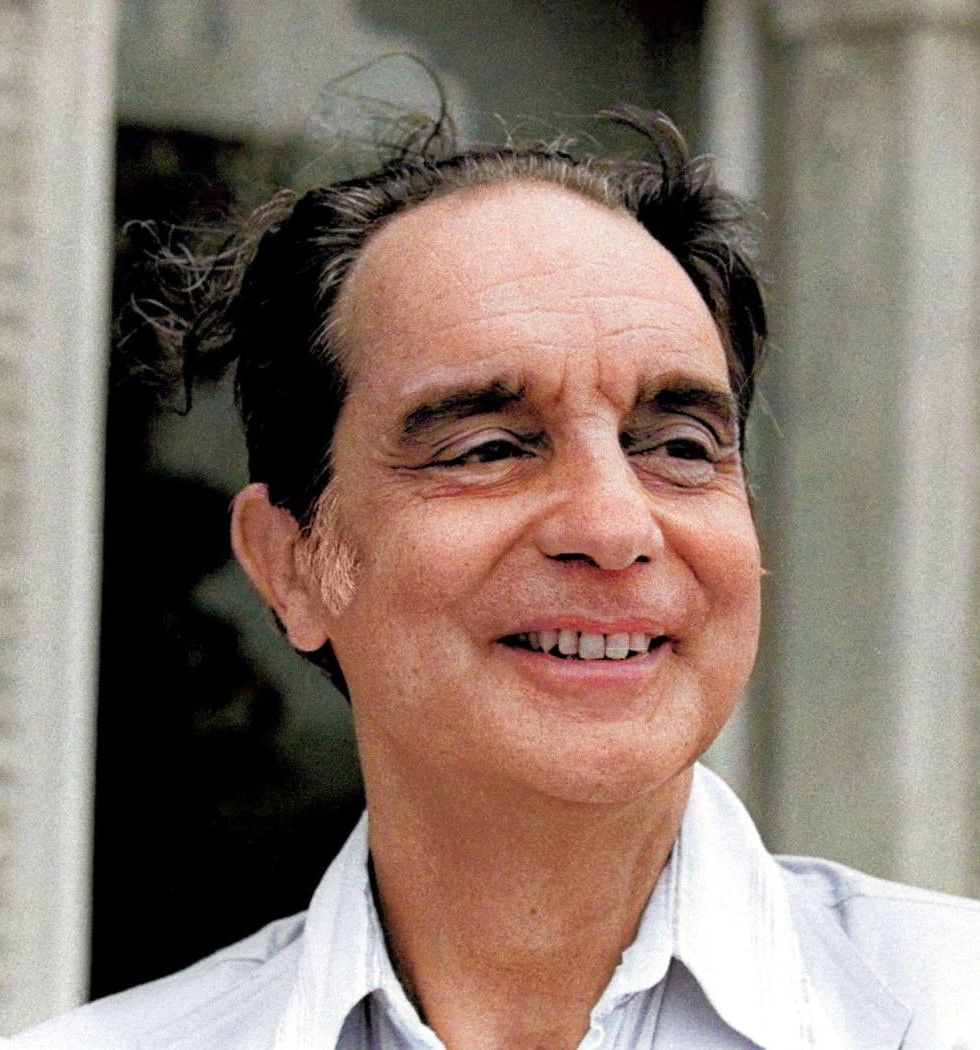
| 10 Quotes | |
| Occup. | Journalist |
| From | Italy |
| Born | October 15, 1923 Santiago de Las Vegas, La Habana, Cuba |
| Died | September 19, 1985 Siena, Italy |
| Cause | Brain Hemorrhage |
| Aged | 61 years |
| Cite | |
Citation Formats
APA Style (7th ed.)
Italo calvino biography, facts and quotes. (2026, February 11). FixQuotes. https://fixquotes.com/authors/italo-calvino/
Chicago Style
"Italo Calvino biography, facts and quotes." FixQuotes. February 11, 2026. https://fixquotes.com/authors/italo-calvino/.
MLA Style (9th ed.)
"Italo Calvino biography, facts and quotes." FixQuotes, 11 Feb. 2026, https://fixquotes.com/authors/italo-calvino/. Accessed 26 Mar. 2026.
Early Life and Background
Italo Calvino was born on 15 October 1923 in Santiago de las Vegas, near Havana, Cuba, to Italian parents whose lives were organized around science and mobility. His father, Mario Calvino, was an agronomist; his mother, Eva Mameli, a botanist. In 1925 the family returned to Italy and settled in Sanremo, Liguria, a borderland of sea, gardens, and uneasy politics that would later reappear, transfigured, in his sense of landscapes as systems. Raised in a secular, rational household, Calvino absorbed a discipline of observation and classification, but also a quiet tension between the measurable world and the imagination that refuses measurement.
He came of age under Fascism, amid the public rituals and private evasions that marked Italian middle-class life. During World War II he was drafted, went into hiding, and in 1943-45 joined the Resistance in the Ligurian mountains, fighting with partisan groups linked to the Italian Communist movement. Those years gave him a lifelong suspicion of heroic rhetoric and a sharper interest in how people actually choose, fear, improvise, and survive - the moral grain of history rather than its slogans.
Education and Formative Influences
After the war Calvino studied at the University of Turin, initially in agriculture, then switching to literature, graduating in 1947 with a thesis on Joseph Conrad. In Turin he entered a dense postwar milieu: the editor and intellectual Cesare Pavese, the critic Gianfranco Contini, and the publisher Giulio Einaudi formed a school of rigor that prized clarity, civic responsibility, and stylistic exactness. Journalism and editorial work became his apprenticeship in compression and fact, even as his reading moved restlessly from folktales and Enlightenment prose to modernist experiment and the emerging tools of structuralism.
Career, Major Works, and Turning Points
Calvino began at Einaudi as an editor and journalist, publishing his first novel, "Il sentiero dei nidi di ragno" (1947), a Resistance story seen through a boy's eyes that already refused monumentality. He then pivoted away from neorealism into fable and philosophical allegory: "Il visconte dimezzato" (1952), "Il barone rampante" (1957), and "Il cavaliere inesistente" (1959), later gathered as "I nostri antenati". His work broadened with the folktale collection "Fiabe italiane" (1956), the cosmic-comic tales of "Le cosmicomiche" (1965), and the formal games of "Le citta invisibili" (1972) and "Se una notte d'inverno un viaggiatore" (1979). He left the Communist Party in 1957 after the shocks of Hungary and the moral fatigue of doctrinaire politics, lived in Paris in the 1960s (in contact with Oulipo and contemporary theory), and returned to Italy in 1980. He died in Siena on 19 September 1985, shortly after preparing the lectures later published as "Lezioni americane" ("Six Memos for the Next Millennium").
Philosophy, Style, and Themes
Calvino's inner life shows a writer both drawn to the world and distrustful of it: the partisan turned editor who sought ethical lucidity without preaching, and play without frivolity. He guarded privacy while turning confession into method; his essays repeatedly circle the idea that identity is a structure built from language and memory rather than a stable essence. He tested reality by inventing constraints - grids, catalogues, combinatory plots - as if the only honest way to speak of experience was to show the gears that produce it. This is why his journalism matters: it trained him to listen for the social noise beneath a sentence, then recompose it into a form that can be examined.
In Calvino, pleasure is never merely sensual; it is a test of calibration, the mind's insistence that precision is a moral act. “In love, as in gluttony, pleasure is a matter of the utmost precision”. That precision extends to narrative itself, where the writer's authority is displaced by the reader's perception: “It is not the voice that commands the story: it is the ear”. His cities, forests, and cosmic voids are not escapes from history but instruments for reading it, haunted by the residues of modern life: “The more enlightened our houses are, the more their walls ooze ghosts”. The result is a style of luminous surfaces with dark pressure beneath - sentences that seem weightless yet carry the burden of ideology, violence, and desire, transformed into parable.
Legacy and Influence
Calvino endures as one of the defining European prose stylists of the postwar era: a bridge between neorealist witness and postmodern architecture, between folktale clarity and theoretical sophistication. His essays on classics, exactitude, and imagination became a writer's toolkit across languages; his narratives modeled how to be experimental without abandoning readability, and how to be skeptical without losing wonder. For journalists, novelists, and critics alike, he remains a proof that formal invention can sharpen, not blur, moral attention - that a story can be a laboratory where history, private fear, and public language are examined under clean, unforgiving light.
Our collection contains 10 quotes written by Italo, under the main topics: Love - Writing - Deep - Book - Privacy & Cybersecurity.
Other people related to Italo: Jorge Luis Borges (Poet), William Weaver (Author), Natalia Ginzburg (Writer), Harry Mathews (Author)
Italo Calvino Famous Works
- 1979 If on a winter's night a traveler (Novel)
- 1972 Invisible Cities (Novel)
- 1965 Cosmicomics (Short Stories)
- 1957 The Baron in the Trees (Novel)
- 1947 The Path to the Nest of Spiders (Novel)
Source / external links