
Ivan Illich Biography Quotes 10 Report mistakes
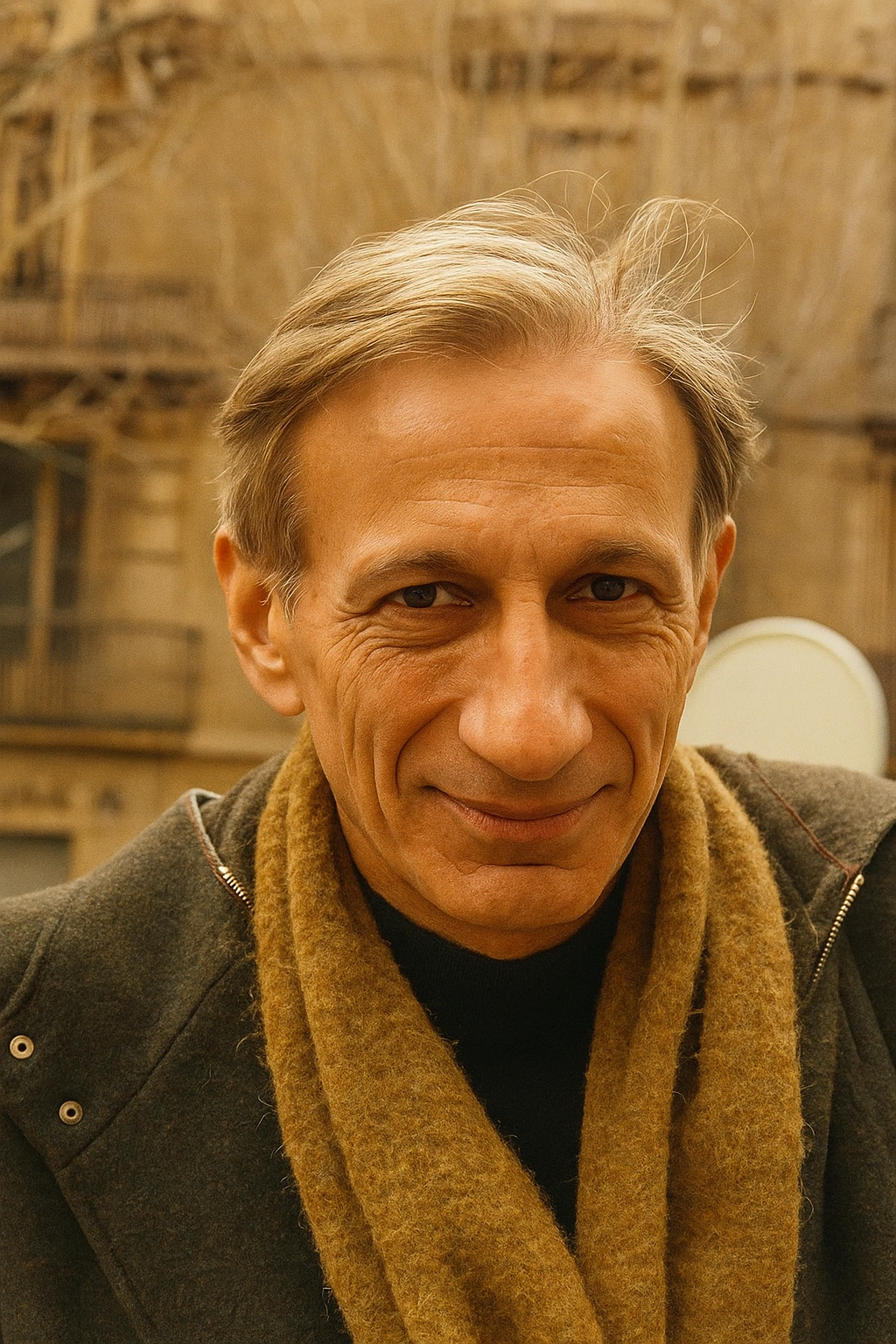
| 10 Quotes | |
| Born as | Ivan Dominic Illich |
| Occup. | Sociologist |
| From | USA |
| Born | September 4, 1926 Vienna, Austria |
| Died | December 2, 2002 Bremen, Germany |
| Aged | 76 years |
| Cite | |
Citation Formats
APA Style (7th ed.)
Ivan illich biography, facts and quotes. (2026, February 11). FixQuotes. https://fixquotes.com/authors/ivan-illich/
Chicago Style
"Ivan Illich biography, facts and quotes." FixQuotes. February 11, 2026. https://fixquotes.com/authors/ivan-illich/.
MLA Style (9th ed.)
"Ivan Illich biography, facts and quotes." FixQuotes, 11 Feb. 2026, https://fixquotes.com/authors/ivan-illich/. Accessed 26 Mar. 2026.
Early Life and Background
Ivan Dominic Illich was born on 1926-09-04 in Vienna, Austria, into a cosmopolitan, multilingual household shaped by the dissolving order of interwar Europe. His father, Dalmatian-Croatian with Catholic roots, worked in technical and commercial fields; his mother came from a Sephardic Jewish family that had moved through the Adriatic world. Illich grew up amid languages, liturgy, and the tacit knowledge of borderlands - a sensibility that later made him suspicious of any institution claiming a single, universal solution.The Nazi annexation of Austria and the racial classifications of the period forced the family into displacement; Illich and his mother left for Italy during the war years. The experience of living under bureaucratic scrutiny - where paperwork could determine safety, status, or expulsion - became an early lesson in how systems can eclipse persons. That formative collision between lived reality and institutional categories would later animate his attacks on modern professional monopolies, from schools to hospitals, especially as he later worked across the Americas and critiqued the moral self-confidence of U.S. development.
Education and Formative Influences
After the war Illich studied in Rome, earning a doctorate in history at the Pontifical Gregorian University (1951), and also trained in theology at the Collegium Romanum while absorbing Thomist thought, patristics, and the political theology of a Church confronting modern mass society. He also studied natural sciences and philosophy, and his intellectual formation was as much philological and historical as doctrinal: he learned to read institutions as cultural artifacts, contingent creations that could be unmade. Ordained a Catholic priest, he carried a sacramental imagination into social critique - an insistence that human limits, dependence, and mortality are not technical defects to be engineered away.Career, Major Works, and Turning Points
Illich moved to New York and served as a parish priest in Washington Heights, working closely with Puerto Rican migrants and learning how well-intended agencies could humiliate those they claimed to help. By 1956 he was vice-rector of the Catholic University of Ponce in Puerto Rico, where he challenged both ecclesial paternalism and U.S.-style development schemes. In 1961 he founded the Center for Intercultural Documentation (CIDOC) in Cuernavaca, Mexico, a magnet for clergy, activists, and scholars preparing for Latin American work; there he sharpened his critique of missionary and aid mentalities and clashed with Vatican authorities. His major books followed in quick succession: Deschooling Society (1971), Tools for Conviviality (1973), Energy and Equity (1974), and Medical Nemesis (1975). Later work turned more historical and genealogical - Gender (1982), ABC: The Alphabetization of the Popular Mind (with Barry Sanders, 1988), In the Mirror of the Past (1992) - and his final decades were marked by teaching in Germany and the United States and by living with painful cancer while refusing aggressive medicalization.Philosophy, Style, and Themes
Illich was a moral diagnostician of institutions that, after crossing a certain threshold, reverse their stated purpose: schools produce dependence on schooling, medicine produces iatrogenic illness, transport produces immobility, welfare produces managed clients. His sociology was inseparable from a historian-of-ideas method, tracing how modern certainties were built. He argued that the public school had taken on a quasi-religious function of social legitimation - “The public school has become the established church of secular society”. The line is not mere provocation; it exposes his psychological fixation on idolatry, on the way bureaucracies demand faith, sacrifice, and submission while offering salvation in credentials. For Illich, the tragedy is not only wasted money but the shrinking of imagination: people stop recognizing their own capacities to learn, heal, or organize life without professional gatekeepers.His prose blended polemic, parable, and a deliberately abrasive clarity, aiming to break the spell of expert language. In health care he attacked the self-perpetuating logic of professional dominance: “Modern medicine is a negation of health. It isn't organized to serve human health, but only itself, as an institution. It makes more people sick than it heals”. Yet his target was not doctors as individuals so much as the culture that outsources suffering, birth, and death to technical management. Underneath is a spirituality of limits and surprise, a refusal to turn the human condition into a solvable administrative problem: “At the moment of death I hope to be surprised”. That sentence, written against the modern fantasy of controlled endings, reveals his inner life - a man resisting both despair and the false consolation of planning, defending a space for grace where systems want prediction.
Legacy and Influence
Illich died on 2002-12-02 in Bremen, Germany, leaving a body of work that continues to haunt debates on education, public health, technology, and development. He became a foundational voice for de-institutionalization, appropriate technology, and critiques of professional power, influencing thinkers from Paulo Freire (in productive tension) to contemporary degrowth and disability-rights writers who question compulsory norms of productivity and treatment. His enduring impact lies less in policy blueprints than in a durable intellectual reflex: to ask where a helpful tool becomes a compulsory system, where care becomes control, and where the promise of progress quietly trains people to distrust their own competence.Our collection contains 10 quotes written by Ivan, under the main topics: Mortality - Leadership - Learning - Hope - War.
Frequently Asked Questions
- Ivan Illich biography: Austrian-born priest and social critic (b. Sept 4, 1926, Vienna); worked in the U.S. and Latin America; founded CIDOC in Mexico; died Dec 2, 2002.
- Ivan Illich Theory: Critique of industrial institutions; concepts of convivial tools, counterproductivity, radical monopoly, and social iatrogenesis.
- Ivan Illich Deschooling Society: His 1971 book arguing to dismantle institutional schooling and build open ‘learning webs’ for voluntary, lifelong learning.
- Ivan Illich death: Died December 2, 2002, in Bremen, Germany, from cancer.
- Ivan Illich views on education: Critiqued compulsory schooling; advocated deschooling, peer-based learning webs, and self-directed, community-centered education.
- Ivan Illich: books: Deschooling Society; Tools for Conviviality; Medical Nemesis (Limits to Medicine); Energy and Equity; Shadow Work; Celebration of Awareness.
- How old was Ivan Illich? He became 76 years old
Source / external links