
Ivan Lendl Biography Quotes 14 Report mistakes
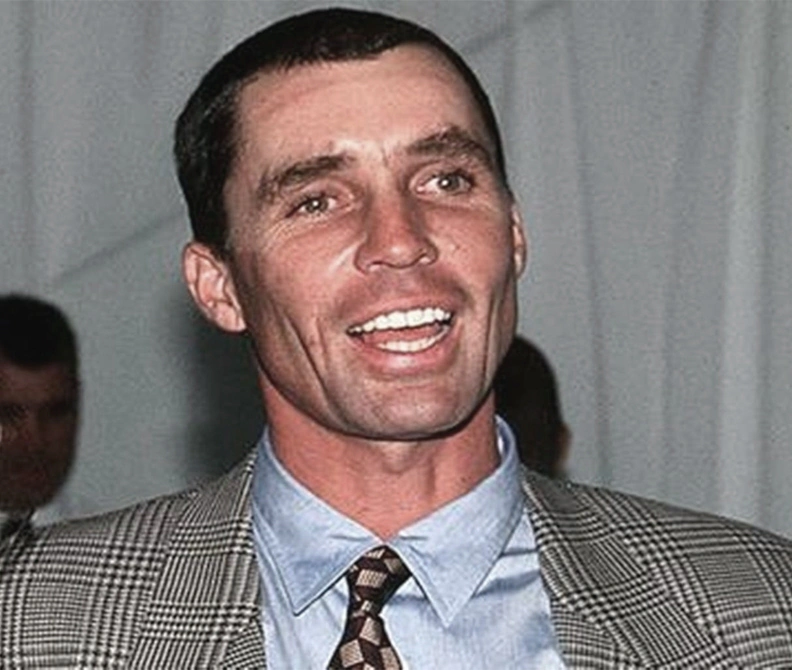
| 14 Quotes | |
| Occup. | Athlete |
| From | Czech Republic |
| Born | March 7, 1960 |
| Age | 65 years |
| Cite | |
Citation Formats
APA Style (7th ed.)
Ivan lendl biography, facts and quotes. (2026, February 11). FixQuotes. https://fixquotes.com/authors/ivan-lendl/
Chicago Style
"Ivan Lendl biography, facts and quotes." FixQuotes. February 11, 2026. https://fixquotes.com/authors/ivan-lendl/.
MLA Style (9th ed.)
"Ivan Lendl biography, facts and quotes." FixQuotes, 11 Feb. 2026, https://fixquotes.com/authors/ivan-lendl/. Accessed 5 Mar. 2026.
Early Life and Background
Ivan Lendl was born on March 7, 1960, in Ostrava, Czechoslovakia, into a household where sport was treated less as diversion than as a discipline. His parents were accomplished players - his mother, Olga, was a leading Czech player, and his father, Jiri, competed as well - and the family moved in the orbit of clubs, coaches, and the pragmatic routines of training. In a country where travel and professional ambition were filtered through the state, tennis still offered an unusual portal: individual responsibility, measurable improvement, and the hope of stepping beyond local boundaries.That early environment shaped his inner posture: quiet, controlled, and intensely future-oriented. Lendl learned to tolerate repetition and to distrust the comfort of early praise. Ostrava was not glamorous, and neither was his game at the start - but he absorbed the idea that ambition is built by hours, not moods. Long before he became a symbol of cold efficiency to Western crowds, he was a teenager in a constrained system, rehearsing freedom through skill.
Education and Formative Influences
Lendl grew up in the structured Czech sports-and-school pipeline, training at national centers while keeping to formal education and the expectations of a state-run athletic bureaucracy. The key influence was not a single mentor so much as a cultural logic: results were earned, not narrated. As he began traveling more in the late 1970s, he studied the emerging power game - especially the baseline aggression of Bjorn Borg and the ruthless competitiveness of Jimmy Connors - and concluded that the future belonged to players who could hit heavy, repeatable patterns under pressure, then improve those patterns like an engineer.Career, Major Works, and Turning Points
Turning professional in 1978, Lendl surged through the early 1980s as a relentless baseliner whose fitness and shot tolerance wore opponents down, yet he was haunted by high-profile losses in Grand Slam finals - especially to Connors (1982, 1983 US Open) and John McEnroe (1984 French Open). The pivot came in 1984 when, after being booed and doubted, he beat McEnroe to win his first major at the French Open, then rapidly became the sport's central force: world No. 1 for 270 weeks, winner of eight Grand Slam singles titles (including three French Opens, three US Opens, and two Australian Opens), and champion of season-ending championships. His "major works" were not books but campaigns - the deliberate remaking of his body, the cultivation of a heavy forehand and biting backhand, and later the painful but strategic decision to skip the French Open to chase Wimbledon, a prize that ultimately eluded him even after final appearances in 1986 and 1987. After retiring in 1994, he built a second career in golf and, later, coaching - most notably guiding Andy Murray to a US Open title (2012), Wimbledon titles (2013, 2016), and Olympic gold (2016).Philosophy, Style, and Themes
Lendl's tennis was an argument: that the baseline could be a place of command rather than defense, that conditioning could be weaponized, and that repetition could be a form of courage. He trained with a professionalism that prefigured the modern era - meticulous scheduling, nutrition, and an unsentimental focus on what wins points. His aggression was not flashy; it was cumulative. Against artistry, he offered inevitability. That temperament made him polarizing, but it also made him historically important, a bridge between the crafty improvisers of earlier decades and the athletic, system-driven champions who followed.Psychologically, his core trait was a refusal to romanticize talent. “I think talent is dangerous to have if you take it for granted”. The sentence reads like a warning to his younger self - that gifts invite complacency, and complacency invites failure. He paired it with a craftsman's ethic: “If I don't practice the way I should, then I won't play the way that I know I can”. In that worldview, the self is not expressed - it is constructed. Even his later reflections on sacrifices show a disciplined emotional accounting: “I'm certainly not sorry that there were some things I missed”. Lendl did not deny loss; he re-framed it as the cost of becoming the kind of person who could hold his nerve when matches turned into endurance tests of belief.
Legacy and Influence
Lendl's influence is both technical and cultural. Technically, he helped normalize the power baseline template - heavy topspin, relentless depth, and conditioning as strategy - that would later be refined by players from Andre Agassi to Novak Djokovic. Culturally, he professionalized ambition: the idea that a player could engineer greatness through planning, travel, and training, even while carrying the outsider's burden of accents, politics, and crowd hostility in the Cold War West. As a coach he transmitted the same clarity to Murray, offering not charisma but calibration, and his career remains a case study in how willpower, system-building, and acceptance of trade-offs can turn "nearly" into dominance, even when one dream - Wimbledon - stays out of reach.Our collection contains 14 quotes written by Ivan, under the main topics: Motivational - Sports - Work Ethic - Success - Training & Practice.
Other people related to Ivan: Stefan Edberg (Athlete), Boris Becker (Athlete)
Source / external links