
Ivan Turgenev Biography Quotes 20 Report mistakes
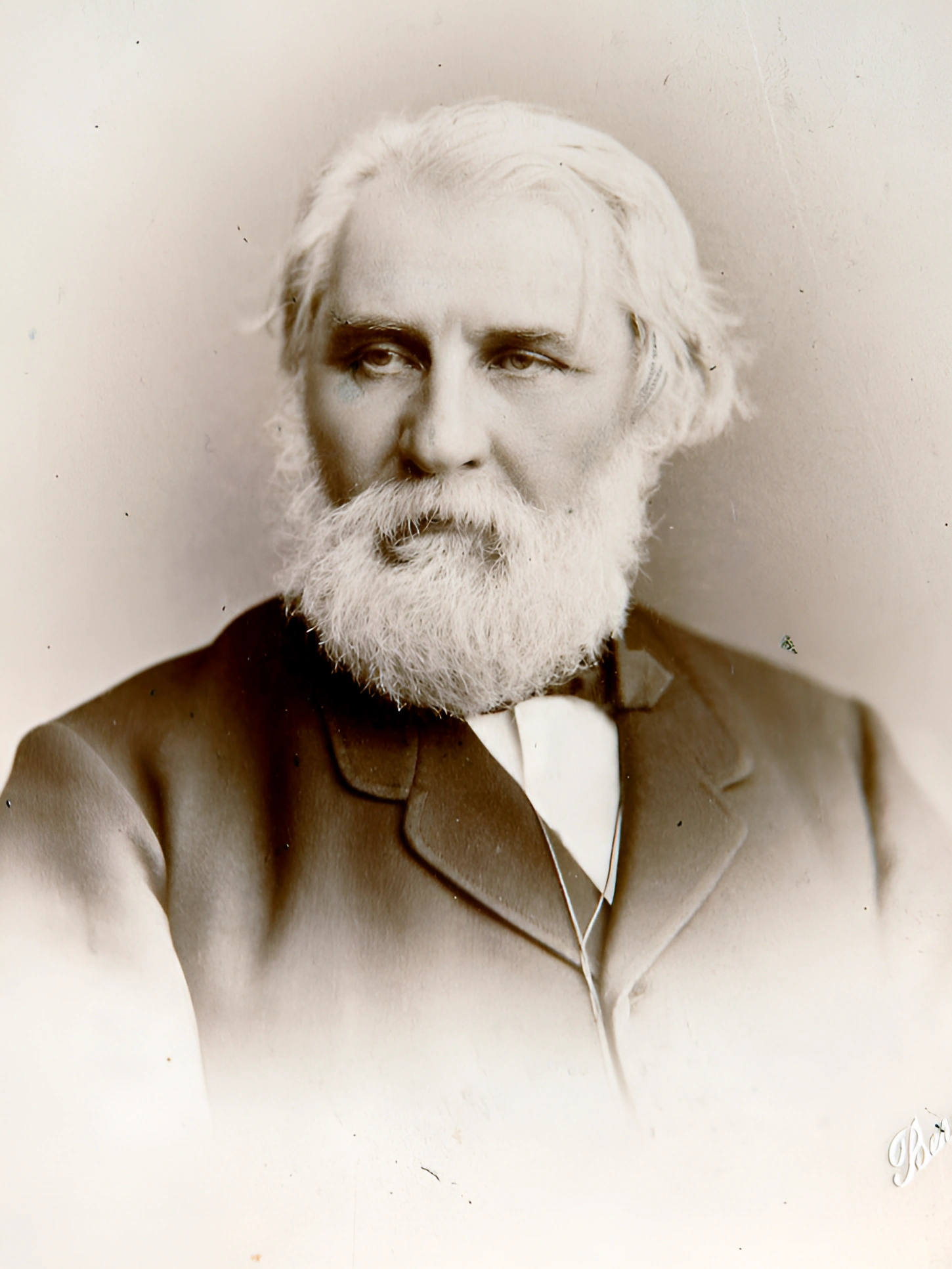
Attr: meisterdrucke.ie
| 20 Quotes | |
| Occup. | Novelist |
| From | Russia |
| Born | October 28, 1818 Oryol, Russian Empire |
| Died | September 3, 1883 Bougival, France |
| Aged | 64 years |
| Cite | |
Citation Formats
APA Style (7th ed.)
Ivan turgenev biography, facts and quotes. (2026, February 11). FixQuotes. https://fixquotes.com/authors/ivan-turgenev/
Chicago Style
"Ivan Turgenev biography, facts and quotes." FixQuotes. February 11, 2026. https://fixquotes.com/authors/ivan-turgenev/.
MLA Style (9th ed.)
"Ivan Turgenev biography, facts and quotes." FixQuotes, 11 Feb. 2026, https://fixquotes.com/authors/ivan-turgenev/. Accessed 5 Mar. 2026.
Early Life and Background
Ivan Sergeyevich Turgenev was born on 1818-10-28 in Oryol Province, Russia, into a landed gentry world already cracking under the weight of serfdom. His father, Sergei Turgenev, was a cavalry officer with a restless, spendthrift charm; his mother, Varvara Petrovna Lutovinova, controlled the family estates with iron will and owned hundreds of serfs. The emotional climate of his childhood - tenderness withheld, obedience extracted, fear normalized - gave him an early education in power, humiliation, and the quiet strategies by which the weak survive.After his father died in 1834, the household became even more matriarchal and coercive. Turgenev absorbed the daily theater of command and submission on the estate, and it left him with a lifelong allergy to cruelty and ideological certainty. The young noble who could have become merely a refined sportsman instead developed a dual sight: intimacy with Russia's rural life and a moral estrangement from the system that sustained it. This tension - love for the land, disgust at bondage - would become the psychological engine of his fiction.
Education and Formative Influences
Turgenev studied first in Moscow and then at St Petersburg University, moving through classics, philosophy, and the new prestige of European letters; in 1838 he went to the University of Berlin, where German Idealism and the disciplined civic culture of Prussia sharpened his sense of what Russia lacked. The young writer was also formed by literary modernity: Pushkin's musical realism, Gogol's social grotesque, and the early criticism of Vissarion Belinsky, whom Turgenev met in the 1840s and whose insistence that literature carry moral responsibility pushed him from lyric verse toward prose that could diagnose a society.Career, Major Works, and Turning Points
After tentative poetry and bureaucratic service, Turgenev broke through with A Sportsman's Sketches (1852), a cycle of hunting narratives whose humane portraits of serfs helped prepare educated opinion for emancipation; the same year, after he published an obituary of Gogol, he was arrested and exiled to his estate - a formative collision with the state. He followed with major novels mapping Russia's generation wars and reforms: Rudin (1856), A Nest of the Gentry (1859), On the Eve (1860), and Fathers and Sons (1862), whose "nihilist" Bazarov became an epochal figure and drew fire from both radicals and conservatives for its unsparing balance. Much of his later life was split between Russia and Western Europe, emotionally tethered to the singer Pauline Viardot and her circle; later works such as Smoke (1867) and Virgin Soil (1877) returned to the themes of ideology, exile, and the tragic lag between private feeling and public change. He died on 1883-09-03 in Bougival near Paris, widely honored, privately exhausted by illness and the long argument with his century.Philosophy, Style, and Themes
Turgenev's art is often described as "gentle", but its gentleness is a method of inquiry: he exposes how decent people become instruments of indecent systems, and how ideas, once idolized, turn predatory. He distrusted metaphysical solutions and listened instead to the pressure of circumstance on character - a pressure he rendered through scene, gesture, landscape, and the half-said. “Circumstances define us; they force us onto one road or another, and then they punish us for it”. That sentence is not only social analysis; it is autobiography, a portrait of a man born into privilege yet unable to make peace with the moral cost of that birth, always pulled between duty to Russia and the freer air of Europe.His psychological realism rests on a discipline of concealment, not confession. “A poet must be a psychologist, but a secret one: he should know and feel the roots of phenomena but present only the phenomena themselves in full bloom or as they fade away”. In practice this means he lets a generation reveal itself in a pause at a window, a love affair that fails for reasons nobody can name, a political certainty that wilts under ordinary life. The recurring image is aspiration trapped in material mud - “We sit in the mud... and reach for the stars”. - which captures his deep pity for human longing and his skepticism toward programs that promise purity. Nature in his work is not a moral teacher but a vast, indifferent continuity; love is the most intense experience available, yet it rarely rescues anyone from history's grind.
Legacy and Influence
Turgenev became Russia's great mediator: between the gentry and the intelligentsia, between Slavophile warmth and Western European form, between lyrical feeling and sociological clarity. His poised, transparent prose shaped the modern novel's language of understatement and influenced writers far beyond Russia, from Henry James to Joseph Conrad, while his portraits of generational conflict and ideological temptation remain templates for political fiction. In Russia he is remembered as the witness who refused simplification - a novelist who could love his country without flattering it, and who translated private conscience into public art at the very moment Russia was learning, painfully, what freedom might cost.Our collection contains 20 quotes written by Ivan, under the main topics: Witty One-Liners - Motivational - Ethics & Morality - Wisdom - Mortality.
Other people related to Ivan: Ivan Goncharov (Novelist), V. S. Pritchett (Writer)
Ivan Turgenev Famous Works
- 1877 Virgin Soil (Novel)
- 1867 Smoke (Novel)
- 1862 Fathers and Sons (Novel)
- 1860 First Love (Novella)
- 1860 On the Eve (Novel)
- 1859 A Nest of Gentlefolk (Home of the Gentry) (Novel)
- 1858 Asya (Novella)
- 1856 Rudin (Novel)
- 1855 A Month in the Country (Play)
- 1854 Mumu (Short Story)
- 1852 Bezhin Meadow (Short Story)
- 1852 Sketches from a Hunter's Album (A Sportsman's Sketches) (Collection)
- 1850 The Diary of a Superfluous Man (Novella)