
J. Martin Kohe Biography Quotes 4 Report mistakes
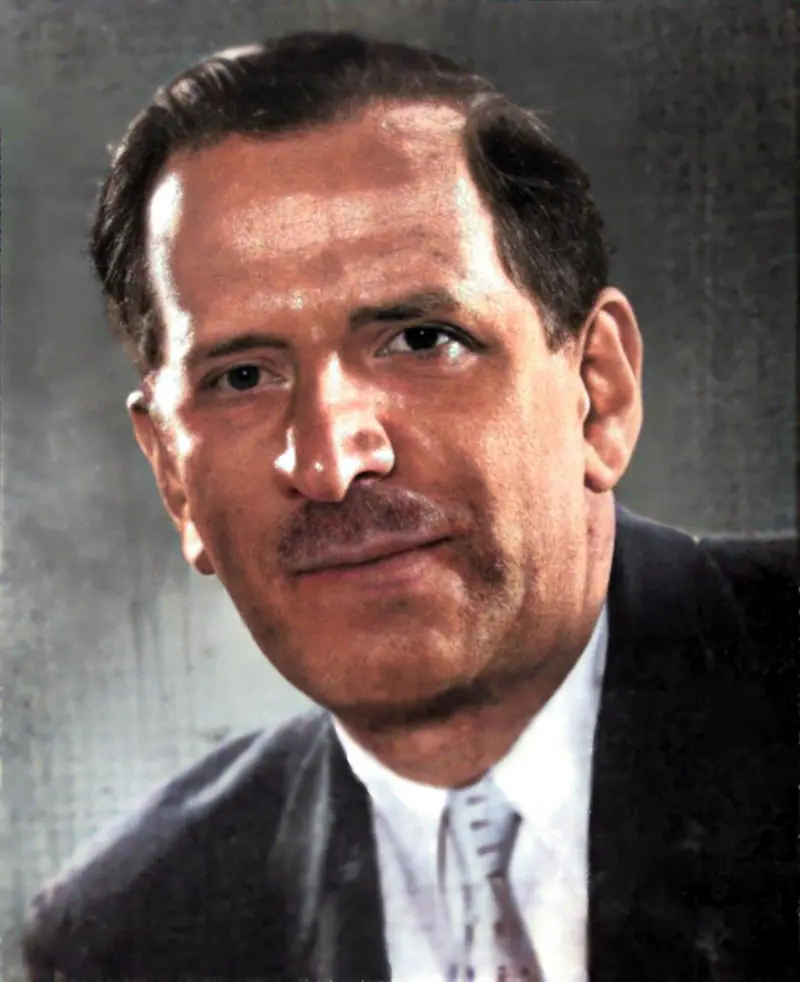
| 4 Quotes | |
| Occup. | Psychologist |
| From | USA |
| Born | May 25, 1908 Brooklyn, New York |
| Died | June 3, 1994 |
| Aged | 86 years |
J. Martin Kohe was born on May 25, 1908, in the United States, into a country moving from Progressive Era optimism into the shocks of World War I and, soon after, the economic whiplash that would culminate in the Great Depression. Those early decades mattered for any American psychologist: public life was increasingly organized around institutions - schools, factories, churches, courts - that wanted practical answers about learning, discipline, morale, and human difference.
Kohe came of age as psychology in the US was splitting into competing temperaments. One camp reduced the mind to measurable behavior; another tried to preserve interiority, meaning, and moral agency without abandoning scientific discipline. The era also exposed him to mass persuasion and mass anxiety - radio, advertising, political messaging, and later wartime propaganda - forcing psychologically minded Americans to reckon with how ordinary choices could be shaped, narrowed, or distorted by culture and crisis. That tension between individual agency and social pressure would become central to the way Kohe was remembered.
Education and Formative Influences
Kohe belonged to a generation trained when behaviorism still set the tone in many departments, yet clinical and counseling traditions were expanding fast in hospitals, veterans services, and universities. His formative influences were less about a single school than about the practical demands of mid-century American life: mental health as a public responsibility, testing and guidance in education, and the postwar belief that democratic stability depended on emotionally resilient citizens capable of self-direction. Those currents pushed him toward a psychology that treated decision-making not as a footnote to drives or conditioning, but as the hinge where character met circumstance.
Career, Major Works, and Turning Points
Working through the mid-century decades and into the late twentieth century, Kohe became known primarily as a psychologist-educator and a popularizer of ethical, choice-centered counsel rather than as a laboratory founder. His professional identity fit the US environment in which psychologists were increasingly asked to serve schools, communities, and organizations - translating psychological insight into usable language about habits, responsibility, and interpersonal decency. The turning point in his public profile came as counseling and humanistic approaches gained cultural traction after World War II and again in the 1960s-1970s, when Americans sought psychological frameworks that affirmed dignity while acknowledging stress, conflict, and difference.
Philosophy, Style, and Themes
Kohe wrote and spoke in a direct, civic-minded register aimed at ordinary readers and clients - a style that assumed self-improvement was not a private luxury but a social duty. His recurring theme was agency under constraint: people cannot choose every condition, but they can choose their next act, their tone, and their interpretation. That emphasis was not naive optimism so much as a therapeutic wager that attention and intention can interrupt reflex. "The greatest power that a person possesses is the power to choose". In Kohe's psychological imagination, choice was the muscle that made other virtues possible.
What made him distinctive in an American context saturated with self-help was his insistence that agency had an ethical direction: it mattered not only that you choose, but how your choice affects others. "Yes, we are all different. Different customs, different foods, different mannerisms, different languages, but not so different that we cannot get along with one another. If we will disagree without being disagreeable". This is psychology as democratic practice - emotional regulation in the service of pluralism. Even his more motivational lines carried a warning about daily self-deception: "You possess a potent force that you either use, or misuse, hundreds of times every day". The "force" is attention and decision, squandered through habit, resentment, or passivity, and redeemed through small acts of deliberate conduct.
Legacy and Influence
Kohe died on June 3, 1994, after witnessing psychology's expansion from a young discipline into a sprawling profession embedded in American institutions. His legacy rests less on a single canonical text than on an enduring, teachable premise: that personal responsibility is psychologically real, socially consequential, and trainable. In an age that alternated between determinism (of environment, biology, or culture) and overconfident self-making, Kohe represented a middle path - a counseling-oriented psychology that defended choice without denying hardship, and that linked inner life to civic life through the everyday discipline of how one decides to live among others.
Our collection contains 4 quotes who is written by Martin Kohe, under the main topics: Free Will & Fate - Optimism - Self-Discipline - Respect.
Source / external links