
J. William Fulbright Biography Quotes 30 Report mistakes
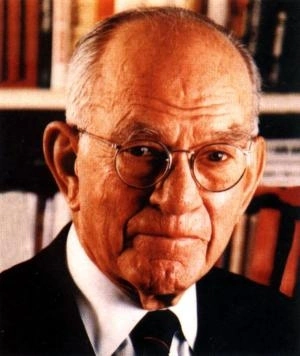
| 30 Quotes | |
| Occup. | Politician |
| From | USA |
| Born | April 9, 1905 |
| Died | February 9, 1995 |
| Aged | 89 years |
| Cite | |
Citation Formats
APA Style (7th ed.)
J. william fulbright biography, facts and quotes. (2026, February 11). FixQuotes. https://fixquotes.com/authors/j-william-fulbright/
Chicago Style
"J. William Fulbright biography, facts and quotes." FixQuotes. February 11, 2026. https://fixquotes.com/authors/j-william-fulbright/.
MLA Style (9th ed.)
"J. William Fulbright biography, facts and quotes." FixQuotes, 11 Feb. 2026, https://fixquotes.com/authors/j-william-fulbright/. Accessed 12 Feb. 2026.
Early Life and Background
James William Fulbright was born on April 9, 1905, in Sumner, Missouri, and came of age in a border-state world where civic ambition and regional memory still shaped politics. His family soon settled in Fayetteville, Arkansas, a university town that offered both proximity to power and the habits of public debate. He grew up watching how institutions - courts, schools, newspapers, legislatures - mediated raw local interests, an early lesson in the difference between force and legitimacy.Fulbright's inner life was marked by a tension that would define his career: pride in the American experiment and suspicion of national self-righteousness. Arkansas in the early twentieth century was segregated, economically uneven, and politically clubby; a young man with talent could rise quickly, but only by understanding how ideals were translated, compromised, or betrayed in practice. That dual awareness - moral aspiration and institutional realism - became the kernel of his later critique of empire and war.
Education and Formative Influences
He studied at the University of Arkansas, graduating in 1925, then won a Rhodes Scholarship to Oxford University (Pembroke College), where he absorbed European political history and the internationalist hope that law and exchange could tame conflict after World War I. Returning to the United States, he earned a law degree from George Washington University in 1934 and entered academic life, eventually teaching and then becoming president of the University of Arkansas (1939-1941), an unusually young administrator whose experience managing budgets, faculty politics, and public expectations sharpened his sense that governance was as much about institutions as ideals.Career, Major Works, and Turning Points
Fulbright entered national politics during World War II, serving briefly in the U.S. House (1943-1945) and then as U.S. senator from Arkansas (1945-1974). In the Senate he helped create the Fulbright Program in 1946, channeling surplus war funds into educational exchange - a bet that mutual comprehension could be a strategic asset. He chaired the Senate Foreign Relations Committee for long stretches (notably 1959-1969) and became one of the most visible congressional voices warning against Cold War overreach. The turning point of his public identity came with the Vietnam era: he convened widely watched hearings and wrote major critiques, including The Arrogance of Power (1966) and The Crippled Giant (1972), arguing that a republic could lose itself by confusing military capacity with wisdom. His career ended with defeat in the 1974 Democratic primary, partly a backlash against his antiwar stance and his earlier accommodation to segregation, leaving a record at once towering and morally complicated.Philosophy, Style, and Themes
Fulbright's governing idea was that stability comes less from coercion than from predictable rules and the slow accumulation of trust. He treated international affairs as a legal and cultural ecosystem, not merely a chessboard, insisting that "Law is the essential foundation of stability and order both within societies and in international relations". Psychologically, this reflected a deep preference for restraint: he distrusted intoxication - the rush of wartime unity, the seductions of moral crusade - because it made leaders confuse appetite with necessity. His speeches and books favored lucid, prosecutorial prose, building cases rather than rallying crowds, and his committee hearings were designed to force the executive branch into accountability through evidence and contradiction.The signature Fulbright theme was that national security is not only matériel but perception, language, and the capacity to learn. The Fulbright Program embodied his belief that "In the long course of history, having people who understand your thought is much greater security than another submarine". Vietnam then became the trauma that confirmed his darkest suspicion about power: that secrecy and propaganda corrode democratic judgment, leading him to confess, "The biggest lesson I learned from Vietnam is not to trust our own government statements. I had no idea until then that you could not rely on them". These lines reveal a mind that moved from establishment confidence to chastened vigilance - not cynicism for its own sake, but a fear that a republic, once habituated to untruth, would trade citizenship for obedience.
Legacy and Influence
Fulbright's most enduring monument is not a statue but a global network: the Fulbright scholarships, which have sent hundreds of thousands of students, scholars, and professionals across borders in the name of mutual understanding. In American political history he remains a model of senatorial independence and congressional oversight, cited whenever lawmakers challenge executive war powers and intelligence claims. Yet his legacy is also contested, shadowed by his segregation-era record even as his later internationalism widened the moral horizons of U.S. public life. He left behind a lasting warning that the United States could win battles and still lose the habits that make freedom credible - and a practical alternative: invest in knowledge, language, and lawful order as instruments of national strength.Our collection contains 30 quotes written by William Fulbright, under the main topics: Witty One-Liners - Ethics & Morality - Wisdom - Truth - Justice.
Other people related to William Fulbright: William J. Clinton (President), Dean Rusk (Diplomat), Fred W. Friendly (Producer), Wilbur Mills (Politician), Stuart Symington (Businessman)
Source / external links