
Jack Henry Abbott Biography Quotes 18 Report mistakes
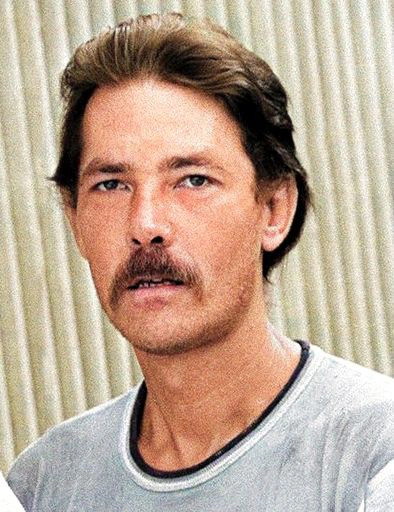
Attr: David Handschuh/AP
| 18 Quotes | |
| Occup. | Criminal |
| From | USA |
| Born | January 21, 1944 Oscoda, Michigan, USA |
| Died | February 10, 2002 Wende Correctional Facility, Alden, New York, USA |
| Aged | 58 years |
| Cite | |
Citation Formats
APA Style (7th ed.)
Jack henry abbott biography, facts and quotes. (2026, February 19). FixQuotes. https://fixquotes.com/authors/jack-henry-abbott/
Chicago Style
"Jack Henry Abbott biography, facts and quotes." FixQuotes. February 19, 2026. https://fixquotes.com/authors/jack-henry-abbott/.
MLA Style (9th ed.)
"Jack Henry Abbott biography, facts and quotes." FixQuotes, 19 Feb. 2026, https://fixquotes.com/authors/jack-henry-abbott/. Accessed 5 Mar. 2026.
Early Life and Background
Jack Henry Abbott was born on January 21, 1944, in the United States, into a life that quickly formed around instability rather than rooted community. He grew up amid poverty, fractured family care, and the mid-century American institutional habit of treating troubled boys as problems to be contained. The early record that survives points less to a coherent childhood than to a chain of placements, arrests, and lockups, where identity is learned as a defensive posture and tenderness becomes a liability.By his teens, Abbott had entered the carceral world that would define his adulthood. In the 1950s and early 1960s, juvenile facilities and county jails were often violent, racially stratified, and built to break will more than to rehabilitate. Abbott learned the language of dominance and humiliation early, and the feedback loop was brutal: the more he was confined, the less he could live a life that made confinement unnecessary.
Education and Formative Influences
Abbott lacked stable formal schooling, but he became self-educated in prison, where reading and writing could serve as both refuge and weapon. In the era of Attica, prison-law libraries, and rising public debate about incarceration, he absorbed political rhetoric, existential literature, and the craft of the letter as a way to pierce the wall between inmate and society. His formative influence was not a mentor so much as the pressure of confinement itself, which pushed him toward introspection and toward an intensely stylized, urgent prose meant to prove personhood under a system designed to erase it.Career, Major Works, and Turning Points
Abbott became publicly known through his prison correspondence, most famously the letters that were edited into the 1981 book In the Belly of the Beast, published with the support of writer Norman Mailer and embraced by many as a raw indictment of American imprisonment. The book helped win Abbott parole after roughly two decades behind bars, but the turning point curdled into tragedy: weeks after his release in 1981, Abbott fatally stabbed a young waiter, Richard Adan, in New York City. The killing shattered the narrative of redemption that had gathered around him, intensified scrutiny of celebrity advocacy and parole decision-making, and returned Abbott to prison, where he spent most of the remainder of his life until his death on February 10, 2002.Philosophy, Style, and Themes
Abbott wrote as a man trying to keep a self intact under relentless supervision, and his work is saturated with the psychology of prolonged captivity: hypervigilance, grievance, sudden tenderness, and a near-mystical sense that time does not cleanse injury but preserves it. His insistence that “Nothing is over and done with. Nothing. Not even your malice”. captures a mind that experiences memory as a living force, where shame and threat recur with the immediacy of the present. That posture is not merely rhetorical; it is a survival strategy forged in an environment where yesterday's slight can become today's stabbing, and where trust is routinely punished.At the same time, Abbott framed imprisonment as social death, a condition that makes moral agency feel both demanded and impossible. “As long as I am nothing but a ghost of the civil dead, I can do nothing”. The sentence is a plea and an accusation: he wants responsibility taken seriously, yet he argues that the system has hollowed out the citizen who could practice it. His style mirrors the predicament - compressed, declarative, alternating between analytical distance and spasms of anger - and his best passages read like field notes from inside a closed world. When he writes, “That is how prison is tearing me up inside. It hurts every day. Every day takes me further from my life”. , he exposes the slow-motion nature of carceral damage: not a single catastrophic moment but a daily abrasion that reshapes personality, narrows choice, and can make reintegration feel like another kind of threat.
Legacy and Influence
Abbott remains a cautionary and contested figure: a gifted prison writer whose language forced many readers to confront the interior costs of mass confinement, and a violent offender whose actions after release brought anguish to a victim's family and discredited easy narratives of literary salvation. In the longer history of American letters, In the Belly of the Beast endures as a volatile artifact of late-20th-century prison testimony - influential in debates about incarceration, parole, and the ethics of advocacy - while Abbott's life stands as a grim reminder that insight and eloquence do not automatically translate into safety, stability, or repair.Our collection contains 18 quotes written by Jack, under the main topics: Justice - Dark Humor - Mortality - Freedom - Deep.
Jack Henry Abbott Famous Works
- 1987 My Return (Book)
- 1981 In the Belly of the Beast (Book)
Source / external links