
Jack Kevorkian Biography Quotes 34 Report mistakes
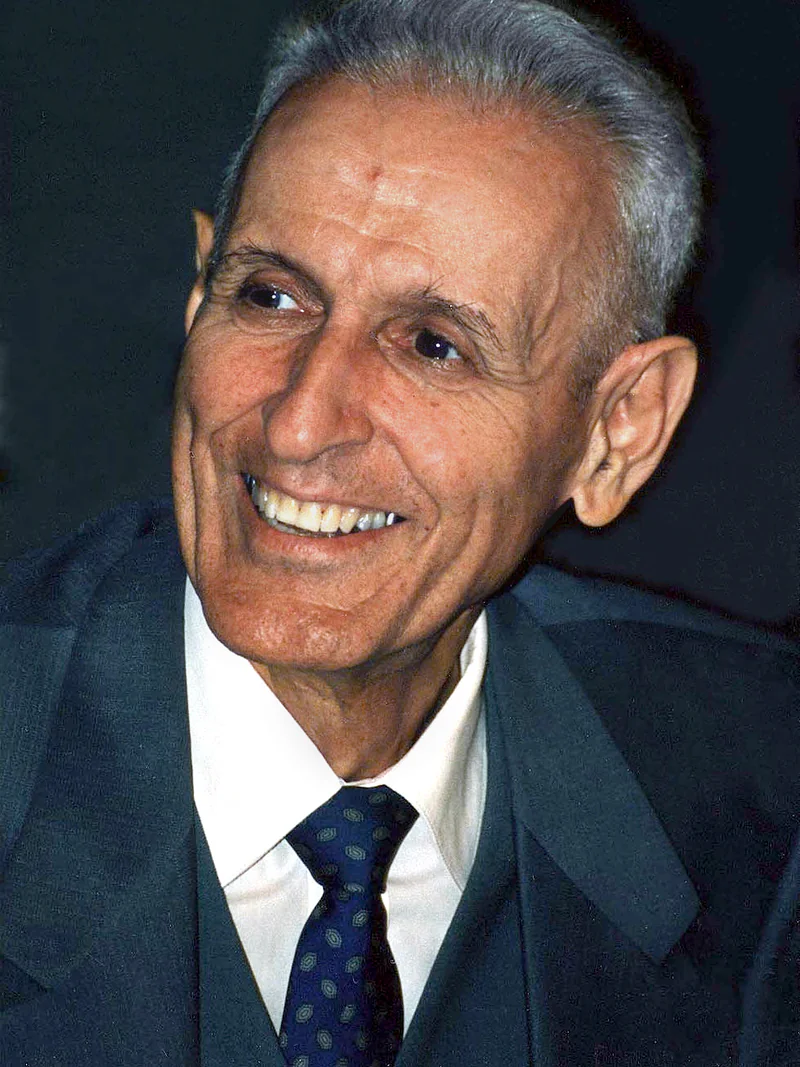
| 34 Quotes | |
| Occup. | Activist |
| From | USA |
| Born | May 28, 1928 Pontiac, Michigan, United States |
| Died | June 3, 2011 Royal Oak, Michigan, United States |
| Aged | 83 years |
| Cite | |
Citation Formats
APA Style (7th ed.)
Jack kevorkian biography, facts and quotes. (2026, February 11). FixQuotes. https://fixquotes.com/authors/jack-kevorkian/
Chicago Style
"Jack Kevorkian biography, facts and quotes." FixQuotes. February 11, 2026. https://fixquotes.com/authors/jack-kevorkian/.
MLA Style (9th ed.)
"Jack Kevorkian biography, facts and quotes." FixQuotes, 11 Feb. 2026, https://fixquotes.com/authors/jack-kevorkian/. Accessed 5 Mar. 2026.
Early Life and Background
Jacob "Jack" Kevorkian was born May 28, 1928, in Pontiac, Michigan, to Armenian immigrant parents who had fled the aftershocks of genocide and displacement. The family carried an ethic of endurance and a suspicion of state power that would later echo in his confrontations with prosecutors and medical boards. He grew up during the Depression and came of age as the United States emerged from World War II into a mid-century culture that both revered doctors and feared death, preferring it hidden in hospitals rather than argued in public.From an early age he displayed a hard, analytic temperament and a taste for the taboo. He was fascinated by the boundary between life and death, and by the way institutions - churches, courts, professional guilds - asserted authority over private suffering. That fascination never remained abstract: it sharpened into a lifelong impulse to look directly at what others avoided, and to force public language onto experiences usually treated as family secrets.
Education and Formative Influences
Kevorkian studied medicine at the University of Michigan, earning his MD in 1952, then trained in pathology, a specialty that kept him close to the body as evidence and to death as a clinical fact. In the 1950s and 1960s he worked in hospitals in Michigan and wrote and spoke about controversial end-of-life and research questions, including proposals around using organs from condemned prisoners and studying dying patients to improve care for the living - ideas that drew condemnation, and also revealed his central drive: to treat death as a domain for reasoned ethics rather than euphemism.Career, Major Works, and Turning Points
By the late 1980s Kevorkian turned from provocation to direct action, building devices that allowed patients to self-administer lethal drugs and publicly challenging Michigan and American medicine to acknowledge what he saw as an existing, unspoken practice of hastening death. In 1990 he assisted in the death of Janet Adkins, a woman with early-onset Alzheimer's disease, igniting a national firestorm and a succession of trials. Over the decade he became a fixture in the culture wars, prosecuted repeatedly, stripped of medical licensure, yet continuing to assist dozens of people who sought an end to terminal or chronic suffering. The decisive turning point came in 1998 when he videotaped the euthanasia of Thomas Youk, a man with ALS, and provided the tape to "60 Minutes". The broadcast forced the question out of rumor and into living rooms; it also supplied evidence. In 1999 he was convicted of second-degree murder and served about eight years in prison, emerging in 2007 older, physically diminished, but still publicly committed until his death on June 3, 2011, in Royal Oak, Michigan.Philosophy, Style, and Themes
Kevorkian framed his work not as romance with death but as a stark extension of medical duty, and he insisted on the difference between aiding a choice and selling despair. “I don't persuade to suicide”. That sentence, repeated across interviews, was both defense and self-portrait: he saw himself as a technician of last resort, drawn to patients who had already reached an inward conclusion, and determined to keep the initiative with them. His rhetoric was blunt, sometimes abrasive, and deliberately anti-sentimental, as if softness might be mistaken for manipulation. Yet beneath the provocation was a consistent psychological posture: he needed the act to feel rule-bound, even if the rule came from conscience rather than statute.His core value was autonomy, elevated to a near-sacred civic principle, and he treated the American promise of liberty as incomplete unless it included the right to exit unbearable suffering. “If you don't have liberty and self-determination, you've got nothing, that's what this is what this country is built on. And this is the ultimate self-determination, when you determine how and when you're going to die when you're suffering”. In this worldview, the state and the medical establishment were not protectors but competing sovereigns trying to control the most intimate decision. He also narrated his campaign with an almost confessional self-interest that undercut claims of martyrdom: “I want some colleague to be free to come help me when I say the time has come. That's what I'm fighting for, me. Now that sounds selfish. And if it helps somebody else, so be it”. The remark reveals a man haunted by the prospect of his own dependency, turning fear of helplessness into an ethic and then into a public crusade.
Legacy and Influence
Kevorkian's legacy is inseparable from controversy: to opponents he became "Dr. Death", a symbol of moral trespass; to supporters he was a catalyst who forced a modern democracy to debate suffering, consent, and the limits of medicine. His prosecutions helped define legal boundaries between assisted suicide and euthanasia, while his media savvy made end-of-life autonomy a permanent topic in American politics and bioethics. In the years after his conviction, the movement he inflamed matured into legislative campaigns and court fights that achieved varying degrees of physician-assisted dying in several jurisdictions, often with safeguards far more formal than his improvised practice. Even where laws did not change, he changed the cultural vocabulary: he made it harder to pretend that technologically prolonged dying automatically equals care, and he ensured that the argument over who owns the last decision - patient, doctor, or state - would not go back into the shadows.Our collection contains 34 quotes written by Jack, under the main topics: Ethics & Morality - Justice - Mortality - Freedom - Doctor.
Other people related to Jack: Barry Levinson (Director)