
Jack Kirby Biography Quotes 8 Report mistakes
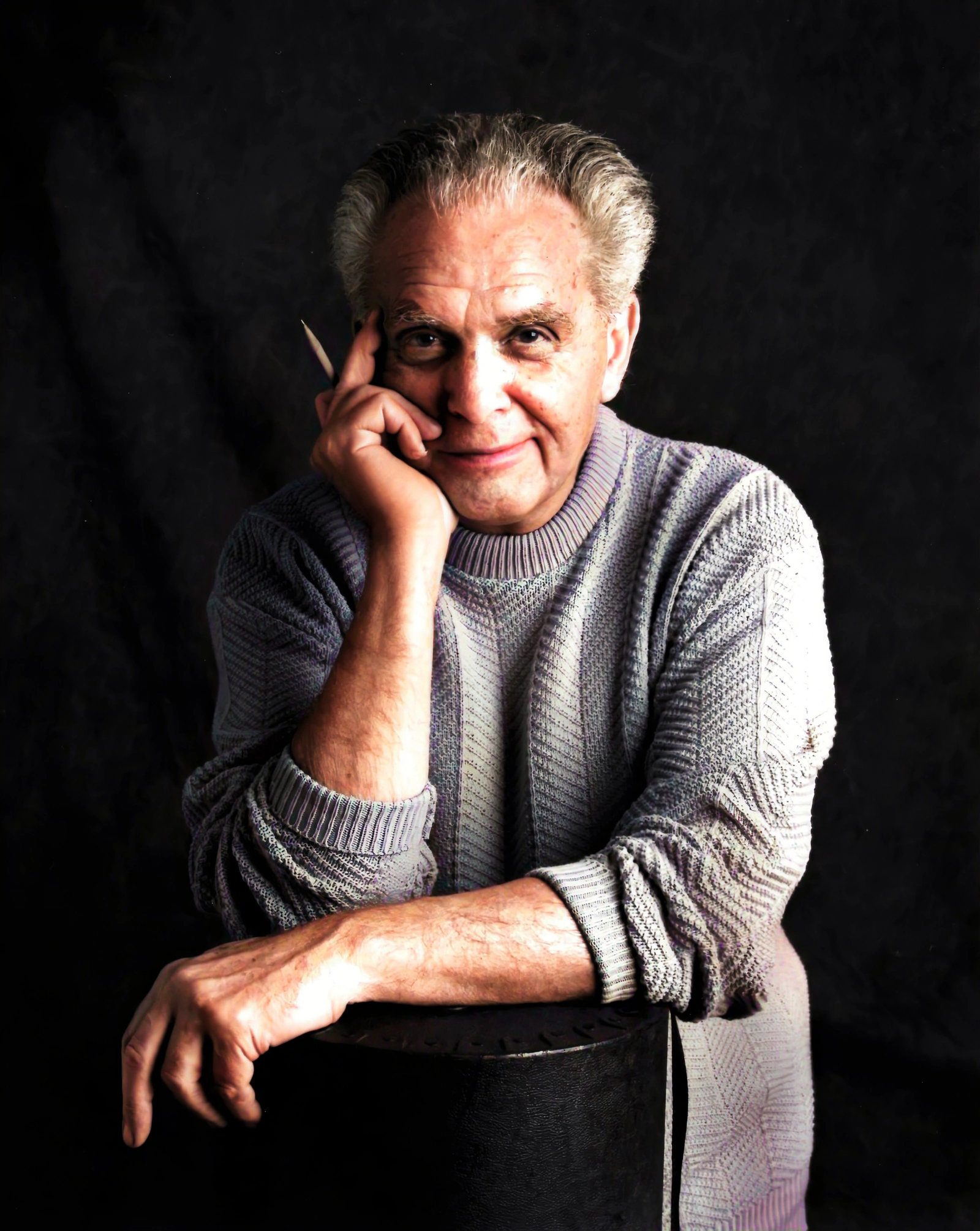
Attr: Susan Skaar, CC BY-SA 3.0
| 8 Quotes | |
| Born as | Jacob Kurtzberg |
| Occup. | Cartoonist |
| From | USA |
| Spouse | Rosalind Goldstein |
| Born | August 28, 1917 New York City, New York, USA |
| Died | February 6, 1994 Los Angeles, California, USA |
| Cause | Heart attack |
| Aged | 76 years |
| Cite | |
Citation Formats
APA Style (7th ed.)
Jack kirby biography, facts and quotes. (2026, February 11). FixQuotes. https://fixquotes.com/authors/jack-kirby/
Chicago Style
"Jack Kirby biography, facts and quotes." FixQuotes. February 11, 2026. https://fixquotes.com/authors/jack-kirby/.
MLA Style (9th ed.)
"Jack Kirby biography, facts and quotes." FixQuotes, 11 Feb. 2026, https://fixquotes.com/authors/jack-kirby/. Accessed 31 Mar. 2026.
Early Life and Background
Jacob Kurtzberg was born on August 28, 1917, on the Lower East Side of Manhattan, a crowded immigrant world shaped by Yiddish voices, tenement heat, street fights, and the churn of the Depression. His parents, Rose and Benjamin Kurtzberg, were Jewish immigrants from Austria-Hungary; his father worked in the garment trade, and the family lived close to the edge of security. The neighborhood taught him physical courage and a suspicion of bullies, lessons that would later harden into the moral geometry of his heroes - power used on behalf of the vulnerable, and violence justified only against tyranny.
As a boy he drew obsessively, absorbing newspaper strips, movie serials, pulps, and the muscular iconography of myth. Early jobs were practical and precarious: animation in the Fleischer studio orbit, then piecework in the new comic-book shops that paid fast and forgot faster. He remade himself as "Jack Kirby" in an industry that rewarded speed over credit, and learned early how easily authorship could be separated from labor - an injustice that would shadow him even as his imagination helped define American popular culture.
Education and Formative Influences
Kirby attended local public schools, including Boys High School in Brooklyn, but his real education came from self-directed study and the city itself: museums, movie houses, anatomy from life and memory, and the drama of working-class survival. He studied the expressive force of composition and foreshortening, the snap of a pose that could carry story at a glance, and he internalized the cadences of Yiddish humor and streetwise argument. The era gave him two enduring templates - the immigrant search for dignity and the modern spectacle of mass media - and he fused them into a visual language that felt both ancient and urgently contemporary.
Career, Major Works, and Turning Points
After early work under multiple shop names, Kirby became a major talent at Timely (later Marvel), where with Joe Simon he co-created Captain America in 1941, a blunt answer to fascism months before Pearl Harbor. Drafted in World War II, he served in the European theater, including reconnaissance work; returning, he and Simon built a prolific studio that moved across genres - romance, crime, horror, and adventure - and proved he could stage human intimacy as forcefully as he staged combat. In the 1960s, reunited with Stan Lee, Kirby co-created or co-defined the Fantastic Four, Hulk, Thor, Iron Man, X-Men, and Avengers, a cascade of concepts that turned superhero comics into a modern mythology of flawed families, cosmic systems, and moral ambiguity. Feeling under-credited and underpaid, he left Marvel in 1970 for DC, where his Fourth World saga (New Gods, Mister Miracle, Forever People) attempted a total cosmology of gods, propaganda, and freedom; later he returned to Marvel for projects like Eternals and Captain America before focusing on animation design and late creator-driven work, while continuing a long fight for original art and recognition.
Philosophy, Style, and Themes
Kirby's art was a physical philosophy. He drew like a man pushing against the page, compressing motion, architecture, and emotion into images that seemed to detonate. The famous "Kirby Krackle" was not mere decoration but an atomic-weather system, a way to picture forces too large for human senses: radiation, divinity, ideology, grief. His panels treat technology and mysticism as twin vocabularies for the same anxiety - that modern life enlarges power faster than wisdom. The heroes are often bruised strivers rather than paragons, and the villains frequently speak with the seductive certainty of demagogues, reflecting a mind that had watched poverty, propaganda, and war test ordinary people.
Underneath the spectacle sits an ethic of total effort and hard-earned clarity. “I've never done anything half-heartedly; it's a disservice to me and the audience if I do it half-heartedly”. That intensity fed both his productivity and his conflicts, because perfectionism and speed were constant adversaries in a deadline business where ownership was rarely granted. Kirby's wartime hatred of fascism was personal, not theoretical - “I was handed a chocolate bar and an M-1 rifle and told to go kill Hitler”. And his view of the medium carried both love and wound: “Comics will break your heart”. Taken together, the lines sketch a psychology of duty - to craft, to audience, to moral resistance - coupled with a lifelong awareness that the institutions profiting from imagination might not protect the imaginer.
Legacy and Influence
Kirby died on February 6, 1994, in California, but his visual grammar remains foundational: widescreen action, operatic anatomy, cosmic abstraction, and the idea that superheroes can be both family drama and metaphysical argument. Generations of artists and filmmakers borrow his designs, camera angles, and sense of scale; writers inherit his theme that power always creates new responsibilities and new tragedies. Just as important, his career became a touchstone in debates over creator rights, credit, and the value of original art - a reminder that modern myths have workers behind them. In the end, Kirby's enduring influence is double: he expanded what comics could imagine, and he forced the industry to confront what it owed the person who imagined it.
Our collection contains 8 quotes written by Jack, under the main topics: Art - Justice - Life - Live in the Moment - Work Ethic.
Other people related to Jack: Dave Sim (Cartoonist), Will Eisner (Cartoonist)
Source / external links