
Jack LaLanne Biography Quotes 19 Report mistakes
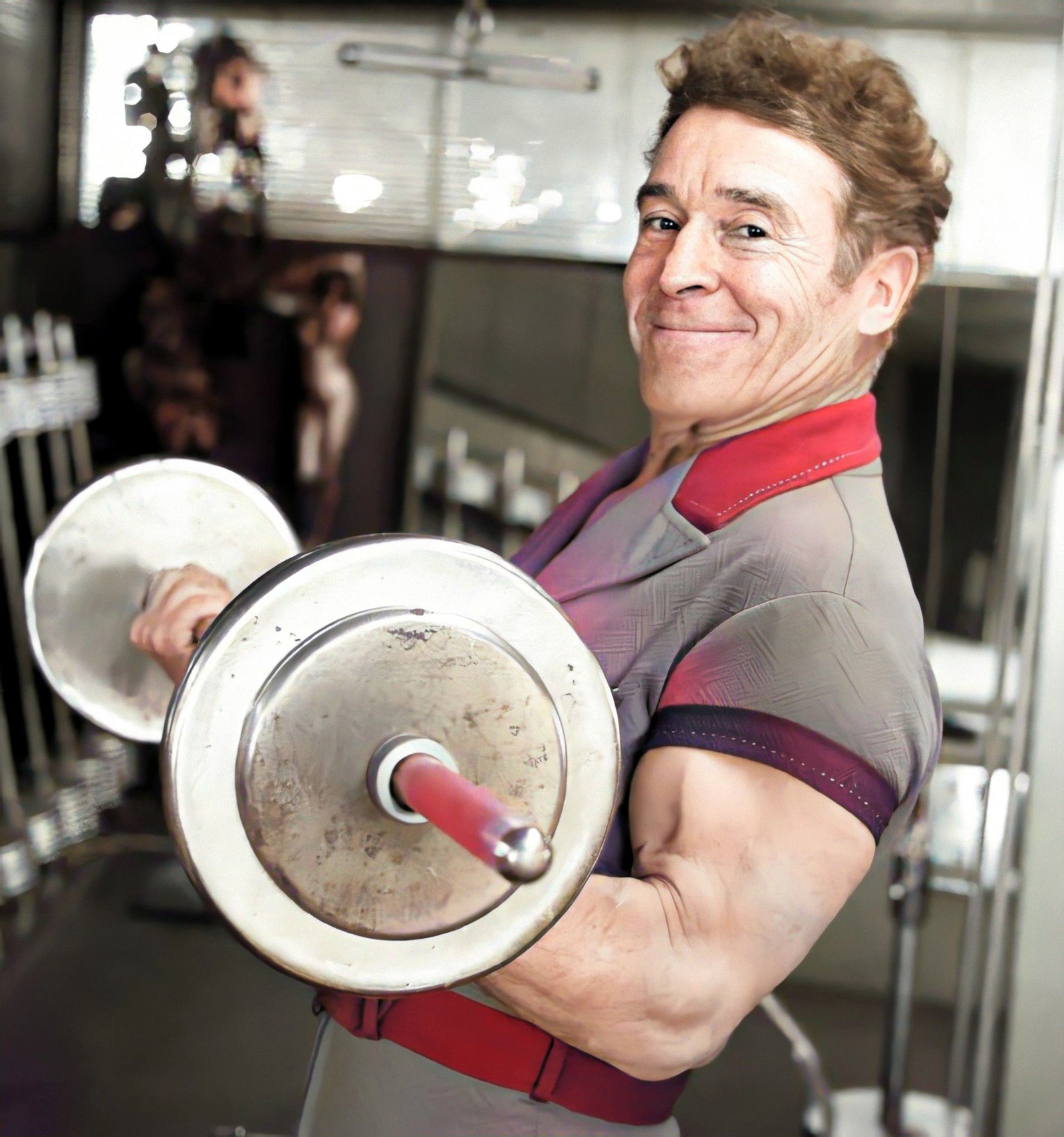
| 19 Quotes | |
| Born as | Francois Henri LaLanne |
| Occup. | Athlete |
| From | USA |
| Born | September 26, 1914 San Francisco, California |
| Died | January 23, 2011 |
| Aged | 96 years |
| Cite | |
Citation Formats
APA Style (7th ed.)
Jack lalanne biography, facts and quotes. (2026, March 14). FixQuotes. https://fixquotes.com/authors/jack-lalanne/
Chicago Style
"Jack LaLanne biography, facts and quotes." FixQuotes. March 14, 2026. https://fixquotes.com/authors/jack-lalanne/.
MLA Style (9th ed.)
"Jack LaLanne biography, facts and quotes." FixQuotes, 14 Mar. 2026, https://fixquotes.com/authors/jack-lalanne/. Accessed 27 Mar. 2026.
Early Life and Background
Jack LaLanne was born Francois Henri LaLanne on September 26, 1914, in San Francisco, California, to French immigrant parents, Jean and Jennie LaLanne. He spent part of his childhood in Bakersfield, and by his own account he was a sickly, sugar-saturated boy prone to headaches, behavioral volatility, and long stretches of junk food and inactivity. The rough edges of his early temperament mattered because they became the origin story he later sold to America: not the naturally gifted strongman, but the self-remade body. In an era when physical culture still lived at the margins - in gymnasiums, vaudeville acts, and mail-order courses - LaLanne's body became both evidence and argument.
His adolescence unfolded during the Depression, when ideas about health were changing but had not yet entered ordinary domestic life. Many doctors still advised rest over training, and weightlifting was often dismissed as narcissistic or dangerous. LaLanne encountered this skepticism directly, yet he also absorbed the American faith that discipline could overcome inheritance. He later treated his own childhood excess - sugar, white flour, processed food, listless habits - as a kind of moral captivity from which strength, routine, and self-command could liberate a person. That framing gave his later public persona its missionary force: he was not merely selling exercise, but conversion.
Education and Formative Influences
The decisive jolt came when, as a teenager, he heard nutrition lecturer Paul Bragg speak about food, vitality, and the body's capacity for renewal. LaLanne credited that encounter with changing his life. He began weight training, studied anatomy and nutrition independently, and immersed himself in gymnastics, wrestling, and the emerging culture of organized fitness. He attended college briefly and pursued chiropractic studies, but he was fundamentally self-fashioned rather than conventionally credentialed. His real education came through experiment: building his own routines, observing cause and effect in diet and performance, and testing the limits of endurance. In the 1930s he opened one of the nation's earliest modern health clubs in Oakland, with equipment and methods that now look prophetic - weight training for women, supervised exercise for older adults, and a practical synthesis of strength work, calisthenics, and nutrition counseling.
Career, Major Works, and Turning Points
LaLanne's career spanned performance, entrepreneurship, broadcasting, and cultural evangelism. In 1936 he opened his gym despite widespread suspicion of barbells and resistance exercise. He demonstrated feats - thousands of push-ups and pull-ups, towing boats while handcuffed, swimming while shackled - not as circus novelties alone but as public proof of what disciplined training could do. His greatest turning point came with television. The Jack LaLanne Show, launched locally in the early 1950s and broadcast nationally for decades, brought daily exercise into American living rooms long before the fitness boom. Wearing a fitted jumpsuit and speaking directly to homemakers, seniors, and the sedentary, he turned TV into a coach's platform. He also designed exercise equipment, helped normalize juicing and nutritional awareness, and published books that translated his creed into repeatable habits. By the time later figures such as Richard Simmons, Jane Fonda, and the cable-era trainers emerged, LaLanne had already established the grammar of mass fitness: routine, positivity, measurable effort, and the body as a lifelong project.
Philosophy, Style, and Themes
LaLanne's philosophy fused Protestant-style self-discipline, showman's simplicity, and a near-mechanical view of bodily cause and effect. He distrusted excuses, sentimentality, and magical thinking. “The only way you get that fat off is to eat less and exercise more”. That severe clarity explains both his appeal and his abrasiveness. He was not interested in wellness as mood; he wanted compliance, repetition, and visible results. His criticism of American habits could be comic, but it came from real alarm about a country drifting into abundance without restraint: “Probably millions of Americans got up this morning with a cup of coffee, a cigarette and a donut. No wonder they are sick and fouled up”. In psychological terms, LaLanne externalized his own early struggle, turning private disgust at weakness and indulgence into a national sermon.
Yet beneath the drill-sergeant rhetoric was a deeper belief that the body was not vanity but stewardship. He preached mastery in language that was both practical and metaphysical: “Remember this: your body is your slave; it works for you”. That sentence reveals the core LaLanne fantasy - not domination over others, but sovereignty over the self. He coupled nutritional exactness with an almost cosmic gratitude, suggesting that health was participation in a larger order rather than mere aesthetics. His style was therefore paradoxical: hard, repetitive, and empirical on the surface, but animated by wonder, gratitude, and the conviction that energy itself was a moral good. He made fitness feel less like leisure than like citizenship.
Legacy and Influence
Jack LaLanne died on January 23, 2011, in Morro Bay, California, at ninety-six, having outlived many of the assumptions he spent a lifetime fighting. He is remembered as the "Godfather of Fitness", but the phrase can understate how radically he shifted American norms. He helped legitimate weight training, home exercise, senior fitness, and nutrition consciousness decades before they became mainstream industries. More important, he gave postwar America a durable template for self-care as daily discipline rather than occasional cure. Some of his rhetoric now sounds austere, even moralizing, yet its historical force is unmistakable: he made exercise ordinary, made age less authoritative as an excuse, and made the disciplined body into a democratic aspiration. Behind the grin, jumpsuit, and stunts was a man who treated vitality as a serious ethical obligation - and persuaded millions to do the same.
Our collection contains 19 quotes written by Jack, under the main topics: Knowledge - Faith - Health - Self-Discipline - Aging.
Source / external links