
Jack London Biography Quotes 34 Report mistakes
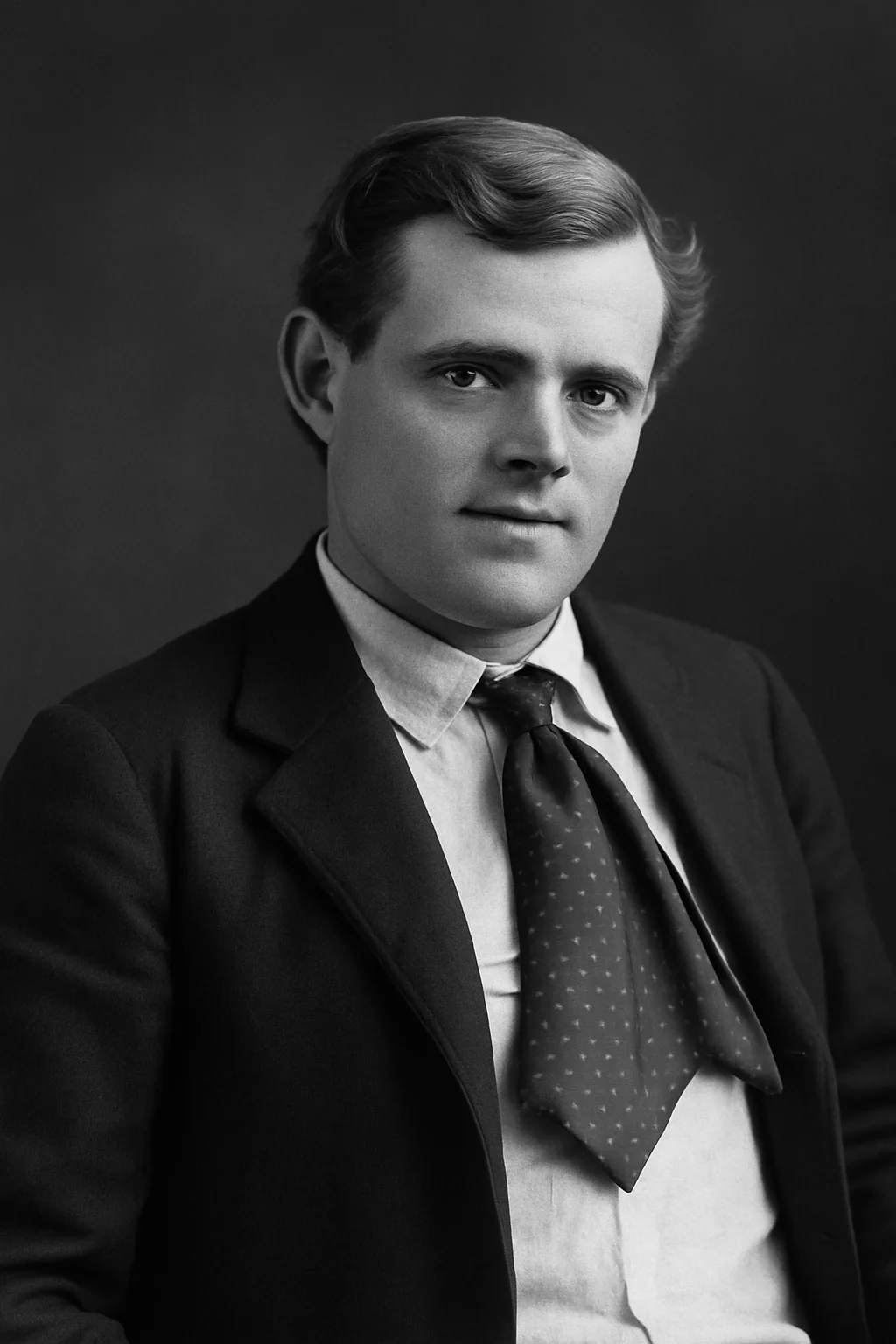
Attr: L C Page and Company Boston 1903
| 34 Quotes | |
| Born as | John Griffith Chaney |
| Occup. | Novelist |
| From | USA |
| Born | January 12, 1876 San Francisco, California, United States |
| Died | November 22, 1916 Glen Ellen, California, United States |
| Cause | Uremia |
| Aged | 40 years |
| Cite | |
Citation Formats
APA Style (7th ed.)
Jack london biography, facts and quotes. (2026, February 11). FixQuotes. https://fixquotes.com/authors/jack-london/
Chicago Style
"Jack London biography, facts and quotes." FixQuotes. February 11, 2026. https://fixquotes.com/authors/jack-london/.
MLA Style (9th ed.)
"Jack London biography, facts and quotes." FixQuotes, 11 Feb. 2026, https://fixquotes.com/authors/jack-london/. Accessed 25 Mar. 2026.
Early Life and Background
Jack London was born John Griffith Chaney on January 12, 1876, in San Francisco, California, at the ragged edge of the Gilded Age. His mother, Flora Wellman, a music teacher drawn to spiritualism and precarious finances, soon married the Civil War veteran John London, and the boy took his stepfathers surname. The question of his biological father - widely linked to the itinerant astrologer William Chaney, who denied paternity - left London with an early sense of contingency about origins and status, a theme that later hardened into his preoccupation with inheritance, luck, and social power.The family lurched between rented rooms and farm schemes in the Bay Area and Oakland, and London learned hunger not as metaphor but as household arithmetic. He read voraciously in stolen time, yet his first education was in work: newspaper selling, canning, heavy labor, and the waterfront culture that offered both escape and danger. In his teens he became the self-styled "Prince of the Oyster Pirates" on San Francisco Bay before joining the California Fish Patrol on the other side of the law - an early rehearsal of the moral reversals and survival calculations that animate his fiction.
Education and Formative Influences
London briefly attended Oakland High School and, for a short spell in 1896, the University of California, Berkeley, but poverty cut the experiment short. His real university was the public library and the road: he absorbed Darwin, Spencer, Marx, and popular science, alongside Stevenson and Melville, and tested ideas against experience as a laborer and tramp. In 1894 he rode the rails amid the unemployment crisis of the Panic of 1893, was arrested for vagrancy in Niagara Falls, and spent time in jail - an ordeal that sharpened his socialism and his distrust of institutions even as it intensified his determination to write his way out.Career, Major Works, and Turning Points
The Klondike Gold Rush of 1897 was Londons catalytic ordeal: he returned without gold, sick with scurvy, but carrying a trove of remembered cold, hunger, and human extremity that became his signature material. After a disciplined apprenticeship in magazines, he broke through with "The Son of the Wolf" (1900) and achieved international fame with "The Call of the Wild" (1903) and "White Fang" (1906), narratives that fused frontier adventure with evolutionary pressure. He wrote at an industrial pace - "The Sea-Wolf" (1904), "Martin Eden" (1909), "The Iron Heel" (1908), and later "The Star Rover" (1915) - while also producing reportage such as "The People of the Abyss" (1903), based on time spent among Londons East End poor. His public life expanded with celebrity lectures, socialist campaigns, and travel as a war correspondent (notably in the Russo-Japanese War), even as his private life tightened around strain: a first marriage to Bessie Maddern (two daughters), divorce, then marriage to Charmian Kittredge; the dream of building Beauty Ranch in Glen Ellen; chronic pain, alcohol dependence, and kidney disease. He died on November 22, 1916, at age 40, in California, leaving behind both the aura of self-made triumph and the evidence of a body and psyche driven beyond sustainable limits.Philosophy, Style, and Themes
London wrote with a journalists velocity and a naturalists eye, compressing sensory detail into moral pressure-cookers where weather, hunger, and violence become agents of philosophy. His core drama is the contest between will and environment: men and animals are stripped to essentials, tested by cold seas, frozen rivers, and the social blizzard of class conflict. Yet his books are not merely celebrations of toughness; they stage a recurring argument between his socialist ethics and his fascination with Nietzschean vigor, between solidarity and the lonely blaze of individualism. That tension made him both readable and volatile, capable of tenderness toward the defeated and harsh verdicts on weakness.His inner life is legible in the way he turned urgency into creed. “The proper function of man is to live, not to exist. I shall not waste my days in trying to prolong them. I shall use my time”. This is not decorative bravado but self-diagnosis: London feared stagnation more than death, and he organized his life around output, risk, and intensity, writing as if time itself were a creditor. At the same time, his moral imagination kept circling back to what hunger does to ethics - and what ethics demand in hunger. “A bone to the dog is not charity. Charity is the bone shared with the dog, when you are just as hungry as the dog”. In his best work, the sentiment is tested rather than preached: compassion is measured under scarcity, and the choice to share becomes a form of rebellion against brutal selection, whether in a Yukon camp or an urban slum.
Legacy and Influence
London helped define the modern adventure story while smuggling into it arguments about labor, empire, and the meaning of strength; his tales made naturalism popular and made the working class legible to mass readership. His influence runs from wilderness writers and survival fiction to political dystopias that echo "The Iron Heel", and his vivid animal narratives reshaped how generations imagined instinct, domestication, and freedom. Controversy has traveled with his reputation - his racial thinking and romanticization of violence complicate admiration - but his enduring power lies in the clarity with which he dramatized the cost of living at full speed, and the way his own life became a parable of ambition, ideology, and the body pushed past its limits.Our collection contains 34 quotes written by Jack, under the main topics: Witty One-Liners - Motivational - Ethics & Morality - Wisdom - Friendship.
Other people related to Jack: Jack Johnson (Athlete)
Frequently Asked Questions
- Jack London books in order: 1903 The Call of the Wild; 1904 The Sea-Wolf; 1906 White Fang; 1909 Martin Eden; 1915 The Star Rover.
- Jack London famous works: The Call of the Wild; White Fang; The Sea-Wolf; Martin Eden; To Build a Fire.
- Jack London short stories: To Build a Fire; The Law of Life; Love of Life; A Piece of Steak; The Mexican.
- Jack London Awkarin: No relation. Awkarin is an Indonesian influencer; Jack London is the novelist.
- Jack London cause of death: Uremic poisoning (kidney failure) in 1916; suicide not proven.
- Jack London books: The Call of the Wild; White Fang; The Sea-Wolf; Martin Eden; The Iron Heel.
- How old was Jack London? He became 40 years old
Jack London Famous Works
- 1917 Michael, Brother of Jerry (Novel)
- 1916 The Little Lady of the Big House (Novel)
- 1915 The Star Rover (Novel)
- 1913 John Barleycorn (Autobiography)
- 1911 South Sea Tales (Collection)
- 1910 Burning Daylight (Novel)
- 1909 Martin Eden (Novel)
- 1908 The Iron Heel (Novel)
- 1908 To Build a Fire (Short Story)
- 1907 Before Adam (Novel)
- 1907 The Road (Essay)
- 1906 White Fang (Novel)
- 1904 The Sea-Wolf (Novel)
- 1903 The Call of the Wild (Novel)
- 1903 The People of the Abyss (Non-fiction)
- 1901 The Law of Life (Short Story)
- 1900 A Son of the Wolf (Collection)
Source / external links