
Jack Ruby Biography Quotes 5 Report mistakes
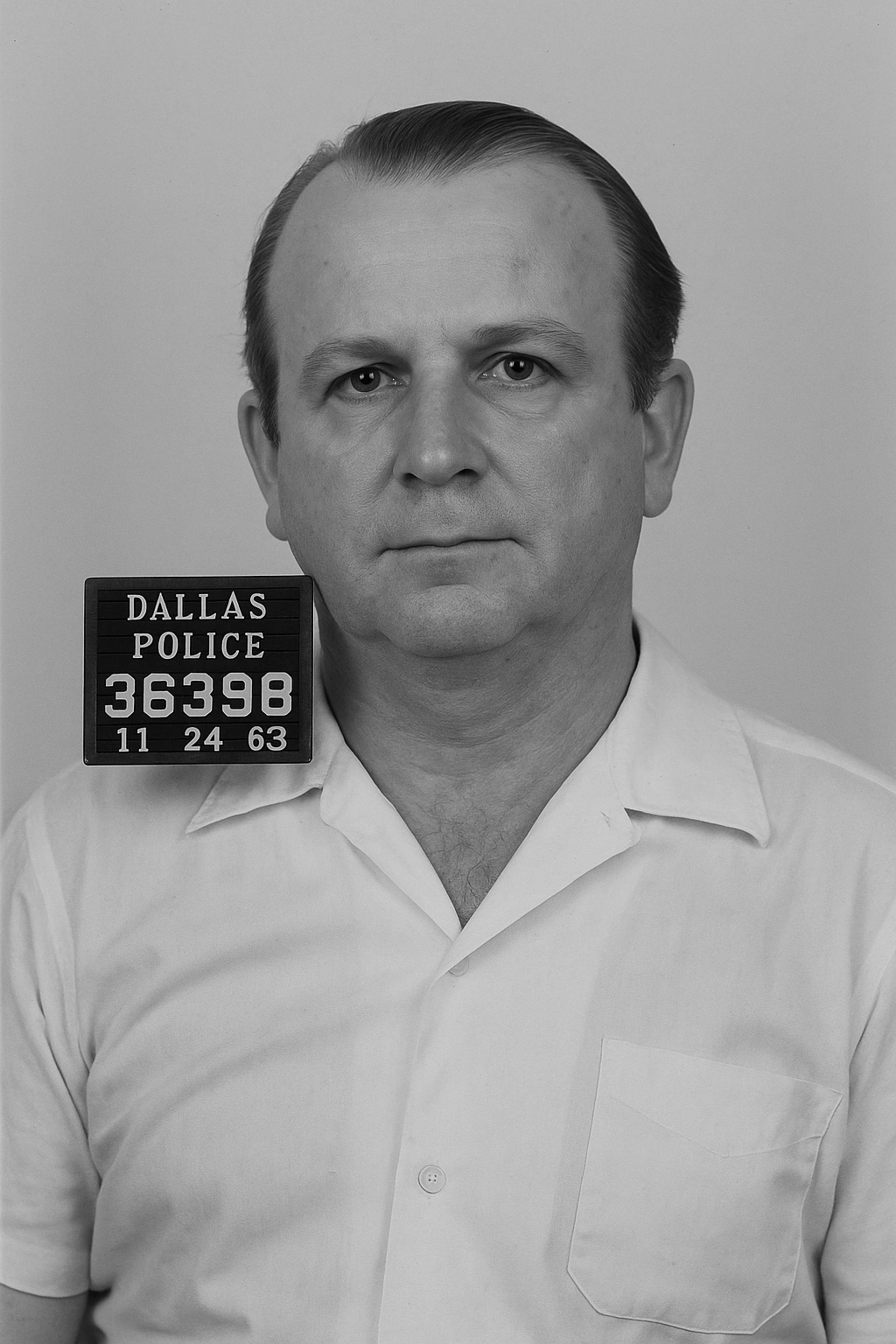
| 5 Quotes | |
| Born as | Jacob Leon Rubenstein |
| Occup. | Criminal |
| From | USA |
| Born | March 25, 1911 Chicago, Illinois, U.S. |
| Died | January 3, 1967 Dallas, Texas, U.S. |
| Cause | Pulmonary embolism (lung cancer) |
| Aged | 55 years |
| Cite | |
Citation Formats
APA Style (7th ed.)
Jack ruby biography, facts and quotes. (2026, February 11). FixQuotes. https://fixquotes.com/authors/jack-ruby/
Chicago Style
"Jack Ruby biography, facts and quotes." FixQuotes. February 11, 2026. https://fixquotes.com/authors/jack-ruby/.
MLA Style (9th ed.)
"Jack Ruby biography, facts and quotes." FixQuotes, 11 Feb. 2026, https://fixquotes.com/authors/jack-ruby/. Accessed 7 Apr. 2026.
Early Life and Background
Jack Ruby was born Jacob Leon Rubenstein on March 25, 1911, in Chicago, Illinois, the son of Jewish immigrants in a crowded, hard-pressed city of stockyards, street politics, and Prohibition-era hustle. His childhood unfolded amid the churn of working-class neighborhoods where family instability and economic anxiety could feel like a permanent weather system. Accounts from those who knew him later suggest a boy quick to feel slighted, hungry for belonging, and drawn to the drama of attention - traits that would harden into a public persona of restless energy and private volatility.As a young man he drifted through small jobs and petty schemes, circling the margins of Chicago's underworld without becoming a major figure in it. He changed his name to Jack Ruby and gravitated toward nightlife, where charm, intimidation, and favors were currencies as real as cash. By the 1940s he was moving between cities and contacts, learning how doors open when you can supply entertainment, introductions, or information - and how quickly they slam when you cannot.
Education and Formative Influences
Ruby's formal schooling was limited, and his real education came from streets, unions, and clubs - environments where loyalty was demanded and reputation was everything. He absorbed a distinctly urban code: perform toughness, cultivate connections, and never look powerless. The era shaped him as much as any mentor did: the Great Depression taught improvisation; World War II and postwar boom taught showmanship and the value of access; and the rise of television news began turning local men into national images overnight.Career, Major Works, and Turning Points
After wartime service in the U.S. Army, Ruby settled in Dallas, Texas, and by the 1950s operated or managed strip clubs and nightspots, most notably the Carousel Club. He cultivated ties with police officers, journalists, and entertainers, positioning himself as a familiar face in a city where law enforcement and vice often coexisted through informal understandings. The turning point came on November 24, 1963, two days after President John F. Kennedy was assassinated: Ruby entered the basement of Dallas Police Headquarters and shot Lee Harvey Oswald, killing the accused assassin on live television. Convicted of murder in 1964 and sentenced to death, Ruby saw the conviction overturned on appeal in 1966 due to venue and procedural concerns, but he died of a pulmonary embolism related to lung cancer on January 3, 1967, before a new trial could begin.Philosophy, Style, and Themes
Ruby left no coherent philosophy in writing, but his statements and behavior form a psychological portrait: a man who craved significance, feared humiliation, and tried to control chaos through sudden, theatrical action. He presented the Oswald killing as a patriotic reflex and a protective gesture toward Jacqueline Kennedy, yet it also read as a desperate bid to step into history rather than be brushed aside by it. In his blunt self-justification - “Someone had to do it. That son of a bitch killed my President”. - Ruby framed violence as civic duty, collapsing moral complexity into a single, cleansing act. The intensity of that sentence suggests more than anger; it reveals how Ruby converted grief and national shock into a story where he could play the decisive role.After his arrest, Ruby oscillated between protestations of innocence regarding broader plots and darker intimations that he was in danger. “I am as innocent regarding any conspiracy as any of you gentlemen in the room”. carries the tone of a man insisting on ordinary status even as he inhabits extraordinary notoriety - a plea to be seen as an impulsive patriot, not a cog. Yet his later fear-ridden remarks point to paranoia and a need for vindication: “I have been used for a purpose, and there will be a certain tragic occurrence happening if you don't take my testimony and somehow vindicate me so my people don't suffer because of what I have done”. The push-pull between these claims - lone avenger versus manipulated pawn - became the central theme of his inner life in confinement: a spiraling attempt to explain an act that could not be unmade, and to locate himself somewhere other than simple criminality.
Legacy and Influence
Ruby's enduring influence is less about his earlier nightclub career than the way his single, televised gunshot altered American memory of 1963. By killing Oswald, he eliminated the possibility of a full public trial and intensified suspicion around the Kennedy assassination, feeding decades of investigations, conspiracy theories, films, and historical argument. In popular culture he remains a symbol of the volatile bystander who becomes actor, the nightlife operator who stepped from local vice into national trauma - and a reminder that in the television age, one impulsive moment can permanently reshape both history and the stories people tell to survive it.Our collection contains 5 quotes written by Jack, under the main topics: Truth - Justice - Hope - Anger.
Other people related to Jack: Henry Wade (Lawyer), Dorothy Kilgallen (Actress)
Frequently Asked Questions
- Jack Ruby real name: Jacob Leon Rubenstein
- Jack Ruby gun: A .38-caliber Colt Cobra revolver
- Jack Ruby religion: Jewish
- Jack Ruby shooting: He fatally shot Lee Harvey Oswald on Nov 24, 1963, at Dallas police HQ
- Is Jack Ruby still alive: No, he died in 1967
- Jack Ruby death: January 3, 1967, Dallas, Texas
- Jack Ruby cause of death: Pulmonary embolism due to lung cancer
- How old was Jack Ruby? He became 55 years old
Source / external links