
Jackson Pollock Biography Quotes 24 Report mistakes
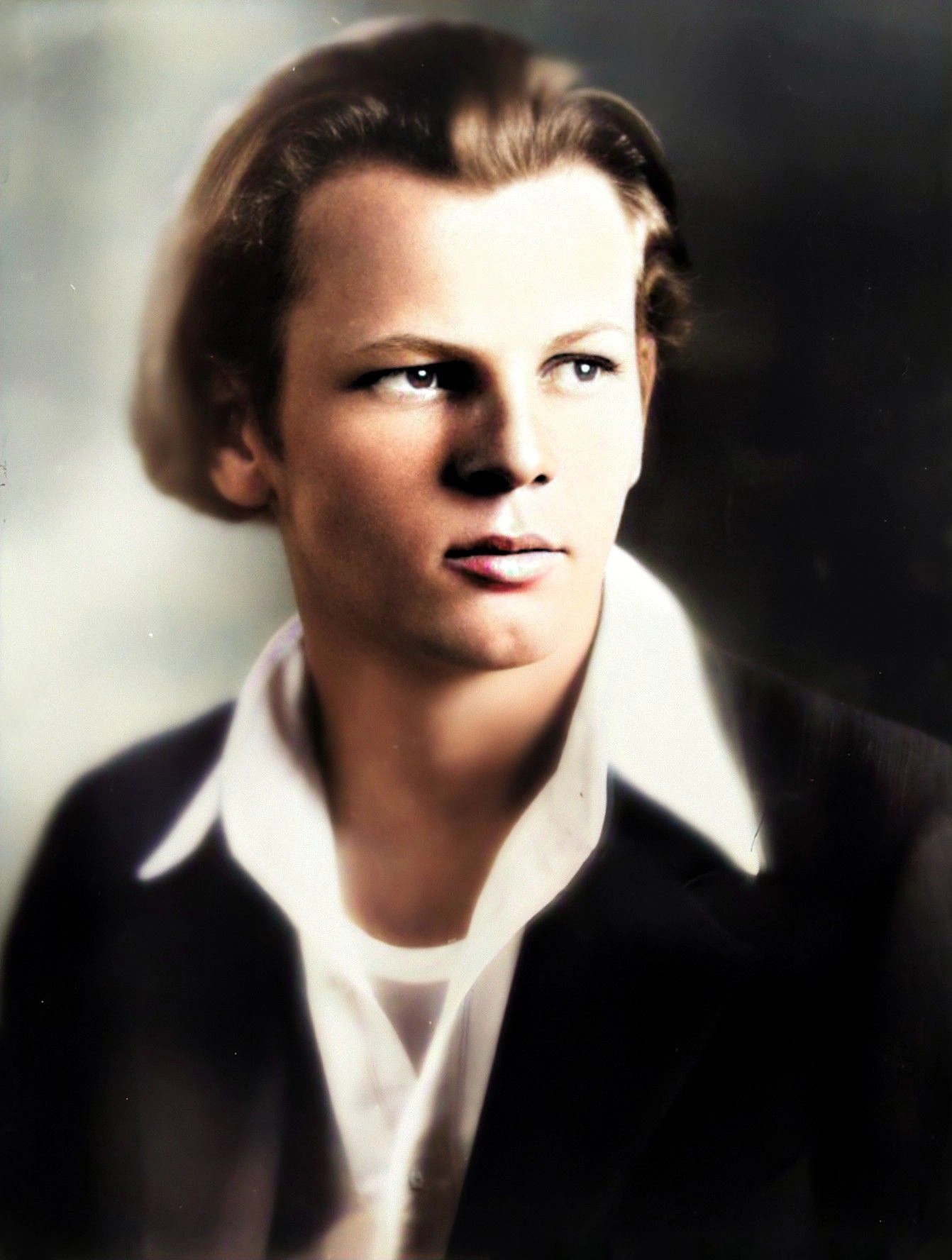
Attr: Smithsonian Institution
| 24 Quotes | |
| Born as | Paul Jackson Pollock |
| Occup. | Artist |
| From | USA |
| Spouse | Lee Krasner |
| Born | January 28, 1912 Cody, Wyoming, USA |
| Died | August 11, 1956 East Hampton, New York, USA |
| Cause | Alcohol-related car crash |
| Aged | 44 years |
| Cite | |
Citation Formats
APA Style (7th ed.)
Jackson pollock biography, facts and quotes. (2026, February 11). FixQuotes. https://fixquotes.com/authors/jackson-pollock/
Chicago Style
"Jackson Pollock biography, facts and quotes." FixQuotes. February 11, 2026. https://fixquotes.com/authors/jackson-pollock/.
MLA Style (9th ed.)
"Jackson Pollock biography, facts and quotes." FixQuotes, 11 Feb. 2026, https://fixquotes.com/authors/jackson-pollock/. Accessed 27 Mar. 2026.
Early Life and Background
Paul Jackson Pollock was born on January 28, 1912, in Cody, Wyoming, the youngest of five sons in a restless, itinerant family shaped by the American West. His father, LeRoy Pollock, worked as a farmer and later as a surveyor, and the family moved repeatedly through Arizona and California - a geography of wide distances, hard labor, and provisional homes that left Pollock with both a frontier self-reliance and a chronic sense of displacement.As a boy he was volatile, magnetic, and frequently in trouble; expulsions and fights followed him, as did an early pull toward drawing. The 1920s and early 1930s offered him little stability: the Great Depression pressed on the household, and Pollock carried forward a lifelong pattern of extremes - intense ambition and self-doubt, discipline and bingeing, tenderness and rage. That temperament, rather than any single event, became the engine of his art: a need to make an inner storm visible without domesticating it.
Education and Formative Influences
In 1930 Pollock joined his older brother Charles in New York City and enrolled at the Art Students League, studying under Thomas Hart Benton, whose muscular murals and rhythmic compositions imprinted Pollock with a sense of painting as orchestrated movement. He absorbed the era's competing currents - Mexican muralism (especially Siqueiros and Orozco), the Surrealists' automatism, and a hunger for mythic universals fed by Jungian ideas - while surviving on WPA-era work and camaraderie among artists who treated modernism as both vocation and wager.Career, Major Works, and Turning Points
Pollock's early 1940s canvases fused totemic figures, scumbled paint, and occult symbolism, but his true turning point came after meeting the painter Lee Krasner, who became his partner, fiercest editor, and eventual wife (married 1945). With Peggy Guggenheim's patronage and a 1943 solo show at Art of This Century, he moved from promise to public scrutiny; the 1944-45 "Mural" announced scale and velocity as subjects in themselves. In Springs, Long Island, he converted a barn into a studio and, from 1947, developed the poured-and-dripped method that culminated in "Full Fathom Five" (1947), "No. 1A, 1948", "Autumn Rhythm (Number 30)" (1950), and "One: Number 31, 1950". The "Life" magazine profile in 1949 - asking if he was the greatest living painter in the United States - amplified both fame and pressure, while alcoholism and periods of analysis strained his marriage. In 1951-52 he shifted to darker, more calligraphic "black pourings", then faltered amid creative blockage and renewed drinking; on August 11, 1956, he died in a car crash near Springs, New York, at 44.Philosophy, Style, and Themes
Pollock's breakthrough was not chaos but a new contract between body and picture. He treated the canvas as an arena rather than a window, unhooking painting from Renaissance composition and making it register duration, gravity, and decision. “On the floor I am more at ease. I feel nearer, more part of the painting, since this way I can walk around it, work from the four sides and literally be in the painting”. That physical intimacy was also psychological: the painting became a record of impulses permitted to happen, then judged and revised, with control distributed across time rather than imposed from the start.His remarks reveal a mind split between surrender and mastery. “When I'm painting, I'm not aware of what I'm doing. It's only after a get acquainted period that I see what I've been about. I've no fears about making changes for the painting has a life of its own”. The sentence contains his central paradox: the self must disappear for the work to begin, yet the self returns to interpret, edit, and authorize. Pollock's mature canvases keep both states in tension - trance-like flow tethered to a hard-earned sense of structure - producing images that feel inevitable without being planned.
Underneath the technique lay an ethical claim about modernity and the inner life. “The modern artist... is working and expressing an inner world - in other words - expressing the energy, the motion, and other inner forces”. Pollock internalized the century's shocks - war, mass media, acceleration - and refused illustration, instead staging energy itself as meaning. The allover field, the absence of a privileged focal point, and the refusal of tidy edges perform a worldview: consciousness as a continuous field of forces, with no safe distance from experience.
Legacy and Influence
Pollock became a fulcrum of Abstract Expressionism and, by extension, the postwar shift of avant-garde authority toward New York, even as his celebrity also became a cautionary tale about commodification and self-destruction. His methods seeded later movements - from Happenings and performance to Process Art and certain strains of Minimalism that inherited his insistence on real time, real materials, and the viewer's bodily relation to scale. Yet his lasting influence is less a recipe than an attitude: the conviction that painting can be an event of thought and feeling made visible, and that a modern life - jagged, fast, and uncertain - can be met not with nostalgia, but with a new form equal to its pressures.Our collection contains 24 quotes written by Jackson, under the main topics: Witty One-Liners - Art.
Other people related to Jackson: Morton Feldman (Composer), Henry Flynt (Artist), Ed Harris (Actor), Helen Frankenthaler (Artist), Franz Kline (Artist), Barnett Newman (Artist), Harold Rosenberg (Writer)
Source / external links