
Jacob Frey Biography Quotes 9 Report mistakes
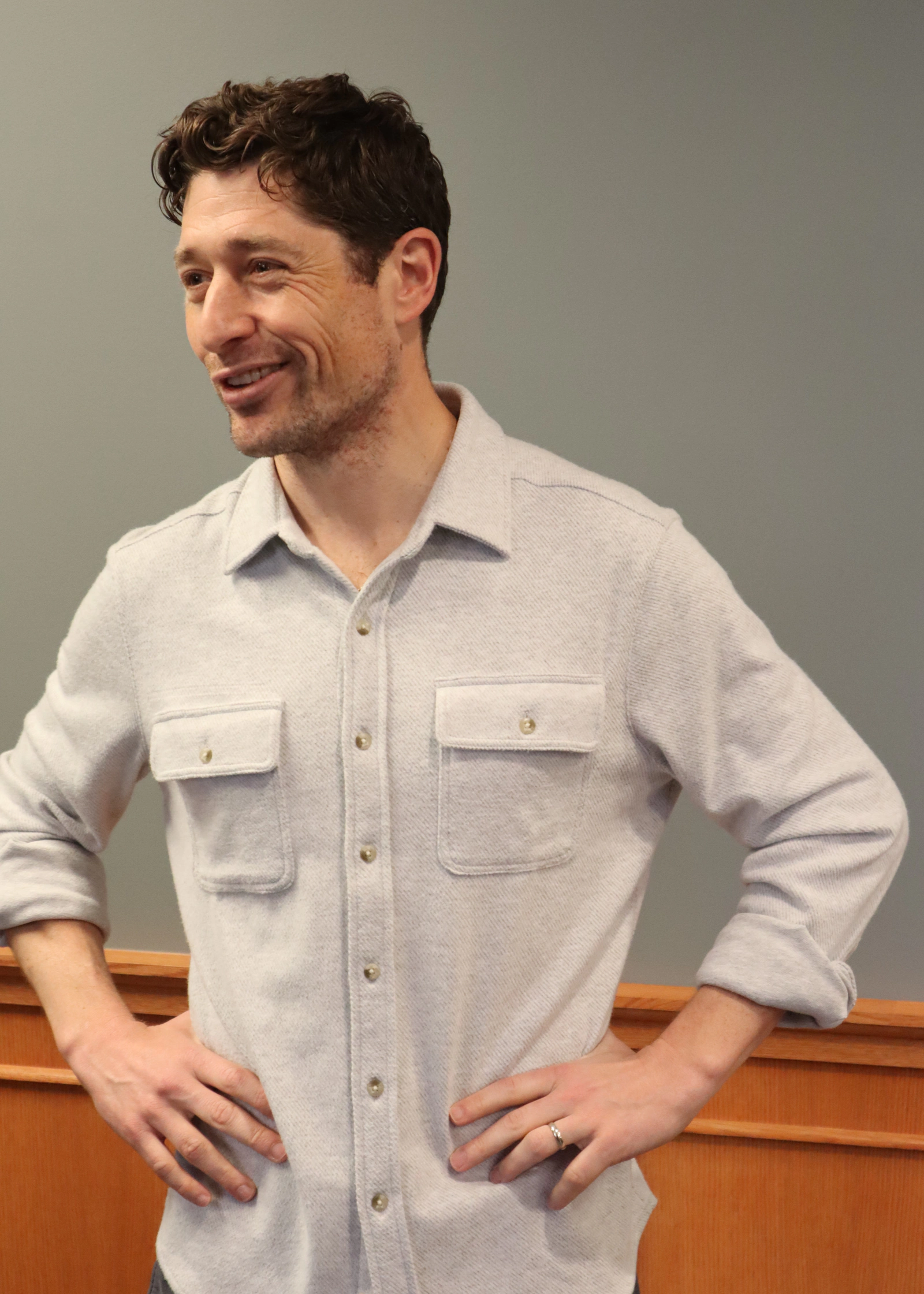
| 9 Quotes | |
| Born as | Jacob Lawrence Frey |
| Occup. | Politician |
| From | USA |
| Spouse | Sarae Frey |
| Born | July 26, 1981 Virginia, Minnesota, USA |
| Age | 44 years |
| Cite | |
Citation Formats
APA Style (7th ed.)
Jacob frey biography, facts and quotes. (2026, February 11). FixQuotes. https://fixquotes.com/authors/jacob-frey/
Chicago Style
"Jacob Frey biography, facts and quotes." FixQuotes. February 11, 2026. https://fixquotes.com/authors/jacob-frey/.
MLA Style (9th ed.)
"Jacob Frey biography, facts and quotes." FixQuotes, 11 Feb. 2026, https://fixquotes.com/authors/jacob-frey/. Accessed 25 Mar. 2026.
Early Life and Background
Jacob Lawrence Frey was born July 26, 1981, in the United States, part of a generation shaped by the end of the Cold War, the acceleration of globalization, and - by the time he reached adulthood - the security-state expansions after September 11. Long before he became a familiar civic figure in Minnesota, he cultivated a public-facing confidence that read as equal parts ambition and restlessness, the kind that often grows in people who learn early that performance matters - in classrooms, in contests, and later at the microphone.He emerged as a politician in Minneapolis, a city with a long civic tradition of progressive organizing alongside persistent racial and economic segregation. That contradiction - celebrated quality of life and deep disparities in policing, housing, and health - became the backdrop against which his identity as a reform-oriented executive would be tested. Frey would come to embody a modern municipal archetype: the mayor as coalition builder, crisis manager, and moral narrator for a city whose problems are intensely local but nationally symbolic.
Education and Formative Influences
Frey attended Villanova University and later earned a law degree from William Mitchell College of Law (now Mitchell Hamline School of Law) in Saint Paul. Those years coincided with a national turn toward technocratic governance - data, metrics, managerialism - and they helped shape his tendency to argue policy through systems and outcomes rather than ideology alone. At the same time, legal training sharpened his instinct to define responsibility, authority, and accountability precisely - a habit that would become central when he confronted the boundary between police discretion and public consent.Career, Major Works, and Turning Points
After working as a civil rights attorney, Frey entered electoral politics and served on the Minneapolis City Council before being elected mayor in 2017. His tenure quickly moved from development-and-budget politics to the defining trauma of his administration: the 2020 murder of George Floyd by Minneapolis police and the global protests that followed. The ensuing years forced repeated choices under extraordinary scrutiny - emergency response, negotiations with community leaders, clashes over policing models, and a constant balancing of immediate safety with long-term legitimacy. In that pressure cooker, Frey sought to position City Hall as both an administrator of services and a custodian of civic conscience, pushing reforms while confronting a policing institution whose culture and union power limited the speed of change.Philosophy, Style, and Themes
Frey's political psychology is rooted in the belief that institutions must earn their authority, not assume it. His defining public moments often come when he speaks as a prosecutor of civic betrayal rather than as a neutral manager, particularly on policing and accountability. “When you wear the badge, you are given a power and an authority over your fellow citizen. And I am here today to say that it is an authority that you have dishonored”. The sentence is crafted like a legal finding and delivered like a moral verdict - revealing a leader who reaches for legitimacy through ethical language when procedural language fails to meet the moment.His broader theme is inclusion as a measurable civic outcome, not simply a sentiment. He repeatedly frames Minneapolis as a project that must be rebuilt to include those historically excluded, a stance that fuses progressive aspiration with executive pragmatism. “I want Minneapolis to be known as a city that confronts our inequities and works to undo them. A city where everyone belongs”. And he casts inequality as a structural emergency rather than an unfortunate byproduct: “We will never accept a status quo where your race or your zip code determines your health, safety, or opportunity”. Taken together, these lines show a leader who wants to be judged on moral clarity and distributive results, yet whose style remains that of a negotiator - someone trying to hold together a city of competing fears while insisting that the old equilibrium is unacceptable.
Legacy and Influence
Frey's legacy is inseparable from Minneapolis's role as an epicenter of a renewed national debate over policing, race, and civic trust in the early 2020s. Whether seen as a reformer constrained by institutional limits or as an executive who moved too cautiously in a time of moral urgency, his mayoralty helped define what urban leadership looks like when local decisions carry global visibility. His lasting influence will likely be measured less by any single ordinance than by how he helped shift the city's - and the country's - expectations of accountability, inclusion, and the obligations of power.Our collection contains 9 quotes written by Jacob, under the main topics: Justice - Equality - Goal Setting - Team Building.
Source / external links
- Jewish Telegraphic Agency - Profile/news feature on Jacob Frey (Jan 8: 2026)
- Vogue - Profile of Minneapolis Mayor Jacob Frey
- Associated Press - Race call: Jacob Frey wins re-election as mayor of Minneapolis
- Associated Press - Jacob Frey wins 3rd term as Minneapolis mayor (news profile context)
- City of Minneapolis - Mayor’s Office
- City of Minneapolis - About the Mayor (Meet Jacob)
- Jacob Frey for Our City (campaign/official site)
- Jacob Frey - Wikipedia