
Jacques Prevert Biography Quotes 5 Report mistakes
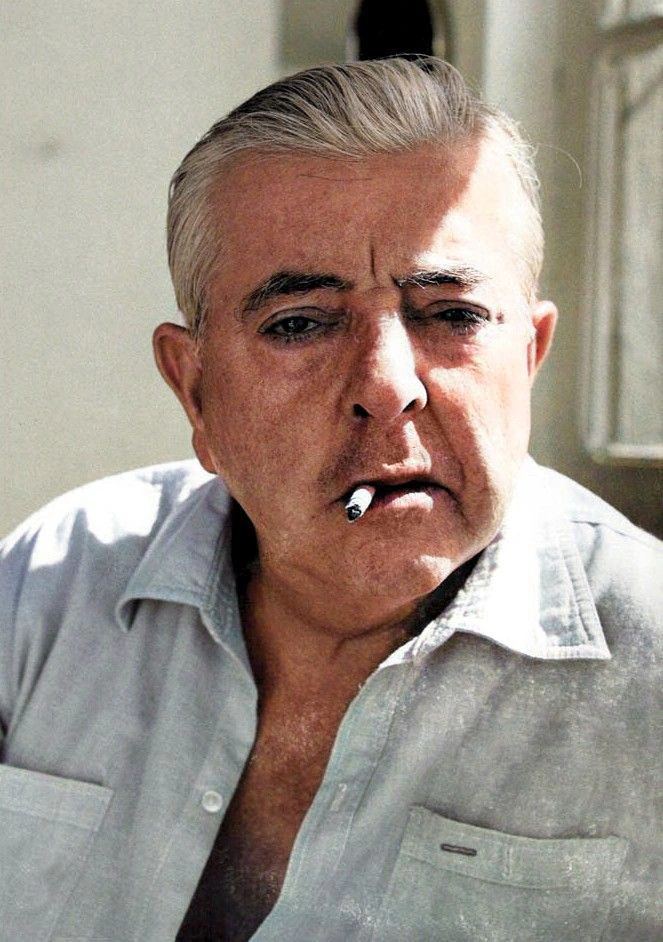
| 5 Quotes | |
| Born as | Jacques Prévert |
| Occup. | Poet |
| From | France |
| Born | February 4, 1900 Neuilly-sur-Seine, France |
| Died | April 11, 1977 Omonville-la-Petite, France |
| Aged | 77 years |
| Cite | |
Citation Formats
APA Style (7th ed.)
Jacques prevert biography, facts and quotes. (2026, February 11). FixQuotes. https://fixquotes.com/authors/jacques-prevert/
Chicago Style
"Jacques Prevert biography, facts and quotes." FixQuotes. February 11, 2026. https://fixquotes.com/authors/jacques-prevert/.
MLA Style (9th ed.)
"Jacques Prevert biography, facts and quotes." FixQuotes, 11 Feb. 2026, https://fixquotes.com/authors/jacques-prevert/. Accessed 7 Mar. 2026.
Early Life and Background
Jacques Prevert was born on February 4, 1900, in Neuilly-sur-Seine, just outside Paris, into a lower-middle-class household where conversation, theatergoing, and political curiosity mattered more than pedigree. His father, a civil servant with literary tastes, exposed him early to popular entertainment and the citys street life, while his mother anchored a home in which words were treated as tools for both pleasure and survival. Prevert grew up in the long shadow of the Belle Epoque and came of age as Europe slid toward catastrophe.The First World War marked him less by battlefield heroics than by a durable suspicion of authority and patriotic language. In the early 1920s he gravitated to Montparnasse and the bohemian Paris that was rebuilding itself through art, scandal, and radical politics. The era offered him a living laboratory: a society mourning mass death, a state asserting order, and an avant-garde determined to explode conventional morals. From the start, Prevert learned to write as an urban witness - intimate with working people, wary of institutions, and allergic to solemnity.
Education and Formative Influences
Prevert was not shaped by elite schooling; he left formal education early and educated himself in libraries, cinemas, and cafes, absorbing slang, music-hall rhythms, and the narrative punch of silent film. A formative turning point came with his immersion in Surrealist circles and, especially, his central role in the agitprop Groupe Octobre in the early 1930s, where collective creation, leftist commitments, and the discipline of performance trained him to write for voices in motion - dialogue, chants, sketches - and to treat poetry as something spoken in the street rather than consecrated on the page.Career, Major Works, and Turning Points
Prevert became one of Frances most widely loved writers by moving fluently between page and screen. As a screenwriter he helped define poetic realism, collaborating closely with director Marcel Carne and designer Alexandre Trauner on films that fused lyrical fatalism with social grit, including Quai des brumes (1938) and Le Jour se leve (1939), and reaching a summit with Les Enfants du paradis (1945), a wartime-made epic that celebrated theater, desire, and the dignity of the marginal. After the Liberation he consolidated his literary fame with Paroles (1946), a landmark collection that mixed love poems, political satire, and anti-clerical hymns in plain speech that millions could memorize. Later years brought childrens tales, collages, and continued writing amid declining health; he died on April 11, 1977, in Omonville-la-Petite in Normandy, having made a career out of refusing the border between high art and everyday life.Philosophy, Style, and Themes
Preverts inner life was powered by a double impulse: tenderness for ordinary happiness and rage at the machinery that crushes it. He wrote in a deceptively simple French - short lines, refrains, lists, and sudden cinematic cuts - that made room for humor without surrendering moral seriousness. When he insists, “When truth is no longer free, freedom is no longer real: the truths of the police are the truths of today”. , he is not theorizing abstractly; he is diagnosing a modern condition in which language itself can be commandeered, and the citizen must defend reality by defending speech. His poems repeatedly return to classrooms, barracks, police stations, and churches as theaters of coercion, yet he counters them with the stubborn sovereignty of the individual imagination.Against that coercion, Prevert staged love and small pleasure as resistance - not escapism, but an ethics of attention. The erotic inventory of “An orange on the table, your dress on the rug, and you in my bed, sweet present of the present, cool of night, warmth of my life”. shows his method: concrete objects, immediate time, and a voice that refuses grand metaphysics in favor of lived sensation. Likewise, “Even if happiness forgets you a little bit, never completely forget about it”. captures the psychology of his work - a man aware of loss, distrustful of promises, yet determined to keep a place set for joy. Under the ease of his diction lies a hard-won credo: the humane is fragile, so it must be spoken plainly and defended daily.
Legacy and Influence
Prevert endures as a rare cultural unifier: a poet quoted by schoolchildren and actors, a lyricist whose lines seep into popular memory, and a screenwriter whose humane fatalism helped shape world cinema. Paroles remains a gateway into French poetry because it made colloquial language respectable on the page, while his film work, especially Les Enfants du paradis, continues to model how dialogue can carry both social history and private longing. His influence is felt in chanson, spoken-word performance, and politically awake lyricism that prefers clarity to ornament. In an age still haunted by propaganda and bureaucratic cruelty, Prevert remains a writer who made tenderness a form of defiance and everyday speech a shelter for freedom.Our collection contains 5 quotes written by Jacques, under the main topics: Witty One-Liners - Love - Freedom - Romantic - Happiness.
Other people related to Jacques: Jean Gabin (Actor), Anouk Aimee (Actress), Marcel Carne (Director)
Jacques Prevert Famous Works
- 1980 Le Roi et L'oiseau (Screenplay)
- 1963 Histoires (Book)
- 1955 La Pluie et le Beau Temps (Book)
- 1951 Spectacle (Book)
- 1945 Paroles (Book)
- 1943 Les Enfants du Paradis (Screenplay)
Source / external links